If you need to buy 304 stainless steel wire 0.5mm soft for sourcing, fabrication, or industrial use, choosing wisely means looking beyond price. Procurement teams should compare material standards, softness consistency, supply reliability, and export experience to avoid quality risks and delivery delays. Working with a trusted Chinese steel manufacturer can help you secure stable quality, competitive costs, and dependable lead times.
What should buyers check before they buy 304 stainless steel wire 0.5mm soft?
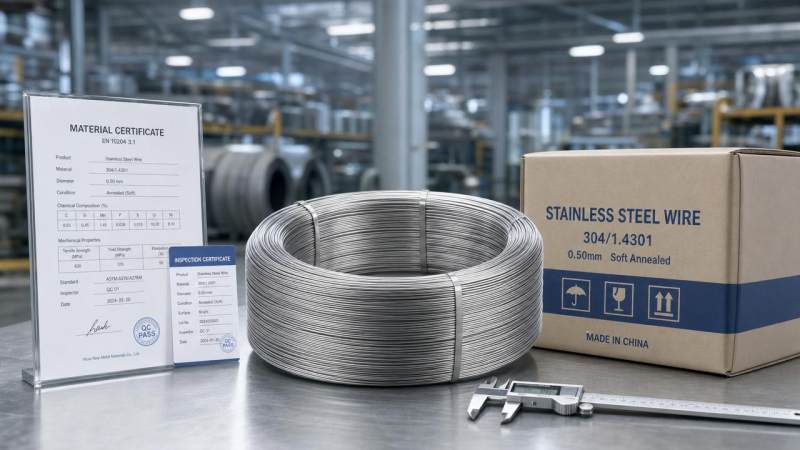
For procurement teams, a 0.5mm soft stainless wire looks simple on paper, but the actual sourcing risk is not small. Wire diameter tolerance, annealing consistency, surface cleanliness, coil weight, and packing method can directly affect downstream forming, weaving, tying, spring work, or precision fabrication.
When companies buy 304 stainless steel wire 0.5mm soft, they often focus first on quoted price per ton or per coil. In reality, the lower quote may hide unstable chemistry, loose tolerance control, mixed heat numbers, poor surface finish, or weak export packaging that creates hidden cost after arrival.
A wiser purchasing decision should evaluate not only the wire itself but also the supplier’s process discipline, testing transparency, and ability to support repeat orders. This is especially important for international buyers who cannot inspect every lot in person before shipment.
- Confirm whether the wire is truly 304 grade and whether the mill can provide chemical composition records or material certificates aligned with the requested standard.
- Check softness requirements carefully. “Soft” may refer to annealed wire, but buyers should still ask about tensile range, elongation, and forming suitability.
- Review diameter tolerance and ovality, because 0.5mm wire is sensitive to small deviations during feeding, winding, and fine-part production.
- Ask about surface condition, such as bright, clean, scale-free, or lightly oiled finish, depending on your application and storage requirements.
- Evaluate export packaging, coil labeling, traceability, and lead time reliability, especially for sea freight and multi-batch procurement.
Why is soft 0.5mm 304 stainless wire widely used in industrial sourcing?
304 stainless steel remains a practical choice for many buyers because it balances corrosion resistance, workability, and cost. In soft temper, 0.5mm wire is easier to bend, twist, tie, or form than harder conditions, making it suitable for applications where flexibility matters more than high spring-back performance.
Common demand comes from mesh production, metal accessories, binding wire, filtration parts, light industrial components, food-related equipment parts, and general fabrication. Buyers who need frequent repeat purchases usually prefer stable processability over chasing the lowest unit price.
Typical procurement-driven application scenarios
The table below helps buyers understand where it makes sense to buy 304 stainless steel wire 0.5mm soft and what properties should be prioritized in each use case.
The same material can perform very differently depending on annealing and dimensional control. That is why experienced buyers define the use scenario first, then ask suppliers to match the wire condition rather than quoting only by grade and diameter.
How to compare suppliers when you buy 304 stainless steel wire 0.5mm soft?
In steel purchasing, supplier comparison should go beyond brochure language. A capable exporter needs production control, quality documentation, and practical communication for international orders. This matters even more if your company sources from China for project-based or recurring industrial supply.
Hongteng Fengda serves global buyers with structural steel manufacturing and export support, backed by modern production facilities and quality control aligned with common international standards such as ASTM, EN, JIS, and GB. For procurement teams, that means a partner familiar with specification management, export handling, and schedule discipline.
A practical supplier evaluation checklist
Use the following comparison framework before placing a trial order or annual contract for soft stainless wire sourcing.
Buyers can save time by turning these questions into a pre-qualification sheet. Suppliers that answer clearly and consistently are usually easier to work with over the long term than those offering only a low first quote.
Which technical details matter most for procurement decisions?
When you buy 304 stainless steel wire 0.5mm soft, technical clarity protects both cost and output. Purchasing teams should align the order sheet with production use, because “0.5mm soft wire” alone may still leave too much room for interpretation between buyer and supplier.
Key points to define in the purchase specification
- Grade designation required by your market or customer, such as 304 under ASTM, EN, JIS, or GB related documentation practices.
- Wire condition, including annealed or soft temper, plus any tensile or elongation target if forming performance is critical.
- Diameter tolerance and permitted variation between coils, especially for automated feeding or woven applications.
- Surface finish, whether bright, pickled, or other treatment suited to appearance, cleanliness, and storage needs.
- Packaging unit, coil inner diameter, spool type, labeling method, and moisture protection for transport and warehousing.
Procurement teams sourcing stainless products often need more than one product line from the same supplier. For projects involving pipe or fabricated stainless components, related materials may also be considered. One example is 304L Stainless Steel Pipe, an ultra-low-carbon option known for addressing susceptibility to intergranular corrosion while retaining corrosion resistance, toughness, and machinability.
For buyers managing broader stainless packages, this pipe grade is commonly available in standards such as ASTM, GB, EN, AISI, JIS, and DIN, with wall thickness from 0.5mm to 50mm, seamless outer diameter from Φ 3mm to Φ1020mm, welded outer diameter from Φ 6mm to Φ630mm, and length from 1000mm to 12000mm. Surface options may include pickling, sandblast, bright polished, and mirror polishing.
Cost, alternatives, and hidden sourcing risks
Many buyers ask one direct question: how can we buy 304 stainless steel wire 0.5mm soft at a reasonable cost without increasing risk? The answer is to compare total procurement cost, not only invoice price. Scrap, downtime, repacking, delayed customs documents, and rejected batches can cost far more than a small difference in unit rate.
What alternatives do buyers usually compare?
Procurement teams may review 201, 304, 304L, or even 316 depending on the corrosion environment and budget. The right choice depends on service conditions, end-customer specifications, and compliance needs rather than price alone.
This comparison shows why specification review matters. Buying a cheaper grade without checking service conditions may create corrosion claims later, while over-specifying can unnecessarily increase project cost. Good sourcing balances performance, compliance, and budget.
How do standards, documentation, and export service affect the order?
For international procurement, paperwork is not secondary. It affects customs clearance, customer acceptance, and internal quality records. Buyers who plan to buy 304 stainless steel wire 0.5mm soft should confirm document requirements before production starts, not after the container is ready.
Documents and compliance points worth confirming
- Material certificate format and whether it matches your customer or market expectation.
- Packing list detail, heat number traceability, and coil identification method.
- Required standards reference, such as ASTM, EN, JIS, or GB where relevant to the order.
- Inspection method for diameter, surface, and basic mechanical properties before shipment.
- Lead time commitment, shipping term, and communication plan for production progress updates.
Hongteng Fengda supports global buyers across North America, Europe, the Middle East, and Southeast Asia. For procurement teams, that export experience can reduce friction in communication, specification alignment, and shipment coordination, especially when multiple steel items are purchased under one sourcing plan.
Common mistakes buyers make when sourcing soft stainless wire
Mistake 1: treating all “soft” wire as the same
Different mills may use “soft” loosely. Without a defined mechanical range or forming expectation, one batch may work well while another causes breakage, deformation inconsistency, or unstable machine feeding. Always define the application and ask for actual process indicators.
Mistake 2: ignoring packaging and coil format
Thin wire can be damaged by poor winding or insufficient moisture protection. Tangled coils and unclear labels waste receiving time and may cause production delays. Export packaging should be part of the sourcing discussion, not an afterthought.
Mistake 3: buying only on a one-time sample result
A sample may pass, but repeat-order stability is what matters for procurement. Ask about batch consistency, production capacity, and how the supplier manages standard orders versus customized requirements. Long-term supply discipline is more valuable than a good first impression alone.
FAQ for procurement teams
How do I confirm whether 0.5mm soft wire is suitable for my process?
Start with the downstream operation: bending, weaving, tying, forming, or automated feeding. Then ask for diameter tolerance, annealed condition details, surface type, and if needed, a sample for process validation. The more precisely you describe the use, the better the supplier can match the wire.
Is 304 always the best choice when I buy 304 stainless steel wire 0.5mm soft?
Not always. 304 is a widely used and balanced option, but the right grade depends on corrosion exposure, customer specification, and budget. Some projects can use lower-cost alternatives, while others may require higher corrosion resistance. Material selection should follow service conditions, not habit.
What should I ask for in a quotation?
Request grade, diameter, tolerance, softness condition, surface finish, coil weight, packing method, production lead time, shipping term, and document availability. A detailed RFQ reduces quotation gaps and prevents disputes after order confirmation.
How can I reduce sourcing risk with a new supplier?
Use a phased approach: technical review, sample verification, trial order, and then regular volume. Confirm document format early, and compare actual shipment performance with the agreed specification. This process helps procurement teams control risk without slowing down project schedules too much.
Why choose us for your steel sourcing plan?
For buyers who need to buy 304 stainless steel wire 0.5mm soft wisely, a capable supplier should support more than pricing. Hongteng Fengda brings manufacturing and export experience from China, with a strong focus on stable quality control, standard-based production, and dependable lead-time coordination for global industrial and construction supply needs.
We help procurement teams confirm material parameters, review suitable grades, align standards such as ASTM, EN, JIS, and GB where required, and communicate realistic delivery schedules before order placement. If your project also includes structural steel, cold formed profiles, beams, channels, angle steel, or customized steel components, we can support combined sourcing planning to improve efficiency.
Contact us to discuss your required diameter tolerance, softness condition, packaging preference, sample request, certification expectations, delivery timeline, and quotation target. If you are comparing alternatives or building a repeat-purchase program, we can also help review selection logic and reduce sourcing uncertainty before you commit volume.
Please give us a message


Please enter what you want to find