If you want to buy stainless steel pipe safely, start by checking supplier credibility, material certifications, and product standards. For buyers comparing corrosion-resistant pipes, 316 stainless steel plate, or high strength steel tubing, choosing a reliable structural steel manufacturer can reduce sourcing risks and ensure stable quality, pricing, and delivery for construction, industrial, and manufacturing projects.
How can buyers reduce risk when sourcing stainless steel pipe?
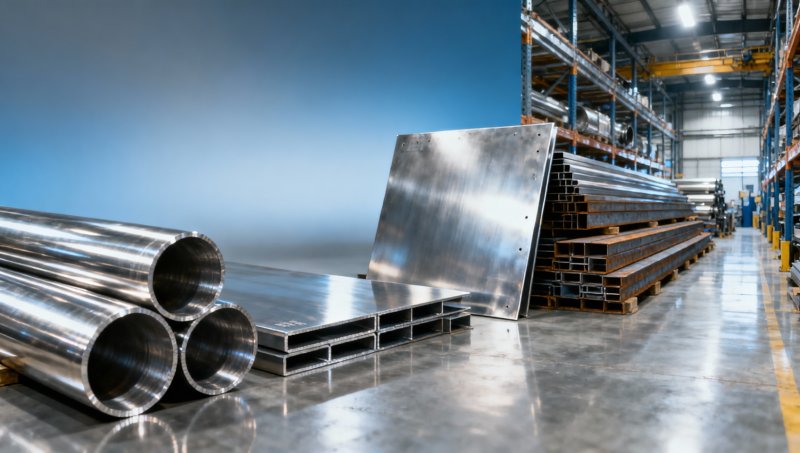
Safe stainless steel pipe purchasing starts long before shipment. Information researchers want clarity, technical reviewers need compliance, procurement teams compare cost and lead time, and project managers must avoid delays caused by wrong specifications or unstable supply. In the steel industry, the biggest risks usually appear in 4 areas: material mismatch, incomplete documentation, dimensional inconsistency, and delivery uncertainty.
A reliable supplier should be able to explain the difference between stainless steel pipe grades, production methods, tolerances, and applicable standards without vague language. For example, many buyers compare welded and seamless pipe within the same inquiry cycle of 7–15 days, but fail to define pressure demand, corrosion exposure, or fabrication method. That creates hidden cost later in installation, inspection, or maintenance.
For construction, industrial, and manufacturing projects, safe sourcing also means evaluating production capacity and export coordination. Hongteng Fengda, as a structural steel manufacturer and exporter from China, supports global buyers with standard steel products and customized solutions across ASTM, EN, JIS, and GB requirements. This is especially important when one project includes stainless pipe together with angle steel, channel steel, steel beams, or fabricated steel components.
When different steel items come from multiple vendors, the buyer may save on one unit price but lose time in communication, inspection alignment, and logistics. In many B2B projects, consolidating 3 categories of steel products under one responsive supplier improves schedule control and reduces sourcing friction for technical teams, quality departments, and commercial decision-makers.
The 5 checkpoints before placing an order
- Confirm grade and standard together, such as whether the pipe must meet a project requirement aligned with ASTM, EN, JIS, or GB rather than only a general stainless description.
- Verify dimensions in full, including outside diameter, wall thickness, length range, and tolerance expectations, especially for fabrication or mechanical connection use.
- Check corrosion environment, because indoor dry service, coastal exposure, chemical processing, and water systems require different material decisions.
- Request documentation early, including mill test certificates, inspection records, marking rules, and packing details before mass production begins.
- Align delivery milestones, such as sample approval, production release, final inspection, and shipping window, which commonly spans 2–6 weeks depending on quantity and processing.
What should you compare: supplier, material, standards, or price?
Buyers often ask where to buy stainless steel pipe safely, but the better question is what to compare first. Price matters, but in B2B steel sourcing, a low quote without stable specification control can create rework, rejection, or on-site delays. Technical evaluators and quality managers usually focus on material traceability, while procurement and commercial teams must balance budget, shipping, and supplier responsiveness.
In practical sourcing, there are 3 comparison layers. First is product compliance, including grade, dimensions, and manufacturing route. Second is supplier execution, including communication speed, production consistency, and export experience. Third is total procurement cost, which includes packaging, inspection, transit risk, and replacement expense if goods fail incoming inspection.
The table below helps procurement teams compare suppliers beyond headline pricing. It is useful for distributors, project purchasers, end users, and decision-makers who need a structured method for shortlisting 2–4 candidates.
This comparison method is more reliable than choosing only by unit price. A supplier that can provide consistent quality control, standard-based production, and dependable lead times is often the safer option, particularly for projects with repeated monthly orders, multi-location delivery, or OEM processing requirements.
Why standards and certifications matter in steel procurement
Standards are not paperwork alone. They define dimensions, chemistry, mechanical properties, and testing expectations. For stainless steel pipe, this helps technical teams judge whether the product fits pressure systems, structural support, fabrication use, or corrosive environments. For broader steel packages, standards also help align multiple items within one project.
Hongteng Fengda supplies structural steel products in line with major international standards including ASTM, EN, JIS, and GB. That matters when buyers need one supplier to coordinate standard steel sections and customized steel components under a consistent quality framework. For importers serving North America, Europe, the Middle East, and Southeast Asia, this reduces back-and-forth during approval and inspection.
A practical rule is to review 3 document layers before order confirmation: technical specification, production standard, and inspection or certificate requirement. If any one of these layers is left undefined, the risk of dispute increases significantly after production is complete.
How do application scenarios affect safe pipe buying decisions?
The safest place to buy stainless steel pipe is the supplier that understands your actual use condition. A pipe used in indoor equipment frames is not selected the same way as a pipe for marine exposure, process lines, or outdoor structural assemblies. Buyers who define use scenario clearly can often shorten supplier communication by 2–3 rounds and avoid unnecessary upgrades or under-specification.
For example, users comparing corrosion-resistant steel products may also need galvanized or structural items in the same project. In these mixed procurement situations, an insertive product solution can help streamline sourcing. For anti-corrosion structural applications such as electric power towers, communication towers, highway protection, street light poles, or building steel structure components, Galvanized Round Steel can be considered alongside stainless pipe depending on environment, fabrication method, and budget target.
This product is based on DC01 material with a galvanized surface and common size capability in Diameter 16–250 mm with customized lengths. It is used across infrastructure, light industry, mechanical processing, electronic components, household appliances, decorations, automotive accessories, pipe joints, screws, nuts, and spring seats. Its tensile strength range is 570–820 MPa, and it can be supplied against standards such as AiSi, ASTM, BS, GB, JIS, EN, and AS.
For many buyers, the key question is not stainless versus galvanized in general, but which option fits the service environment and lifecycle expectation. Hot galvanizing is a popular anti-corrosion treatment for a wide range of environments, while stainless steel pipe is often selected where corrosion resistance, hygiene, appearance, or media compatibility is more critical. Safe buying requires matching the material to the real duty, not just the name on the quote.
Typical selection logic by scenario
The table below is useful for engineers, purchasers, and project managers who need to compare steel options by use condition rather than by habit. It supports early-stage material screening before detailed quotation.
This type of scenario comparison helps prevent overbuying and underbuying. It is especially helpful when procurement teams must compare stainless steel pipe, 316 stainless steel plate, tubing, and structural steel components in one RFQ package. Safe buying depends on correct material logic as much as supplier reputation.
Useful technical details for anti-corrosion steel products
- Diameter options such as 16–250 mm affect installation method, joint selection, and transport efficiency.
- Tolerance classes like ISO h8 and ISO h9 may be relevant where precision fit or downstream machining is required.
- Heat treatment routes including soft annealing, normalising, isothermal treatment, spheroidising, stress relieving, quenching, and tempering can influence process suitability.
- Quality control tools such as ultrasonic inspection, surface control systems, and spectrotest devices help reduce mixing and surface defect risk.
What is a practical procurement workflow for stainless steel pipe and related steel products?
A safe procurement workflow should be easy to audit and easy to repeat. This matters to purchasing teams, quality personnel, project leaders, distributors, and maintenance departments alike. When the workflow is clear, it becomes easier to compare offers, track approvals, and control risk across initial samples, bulk production, and after-sales service.
In most steel projects, the sourcing process can be divided into 4 stages: requirement confirmation, technical review, order execution, and delivery verification. Each stage should have its own checkpoint. If a buyer skips the technical review stage to save 2–3 days, the total project may lose far more time due to mismatch discovered only after arrival.
Hongteng Fengda supports buyers not only with structural steel supply, but also with customized solutions that help align specification, manufacturing capability, and export delivery. For international buyers managing mixed steel procurement, this is useful because the same partner can support standard sections, OEM components, and project-based communication under one service path.
The checklist below is designed for B2B procurement. It can be used by importers, contractors, fabricators, and industrial buyers to reduce sourcing errors before final payment and shipment booking.
A 4-step sourcing process with decision points
- Requirement definition: confirm grade, standard, size range, surface condition, quantity, and use environment. This stage should also define whether the project is standard supply or OEM customization.
- Technical and commercial alignment: verify drawings, certificates, tolerance expectations, packing rules, Incoterms, and target lead time, commonly 2–6 weeks depending on process complexity and volume.
- Production and inspection: approve sample if needed, release production, perform dimensional and document checks, and confirm marking and packaging before shipping.
- Delivery and incoming verification: inspect quantity, appearance, labels, documents, and critical dimensions at destination, then record any issue within the agreed reporting period.
Common mistakes that cause costly delays
One frequent mistake is asking for a quote using only a material name such as stainless steel pipe, without grade, size schedule, standard, or end use. Another is approving a low price before reviewing quality documents or inspection method. A third is failing to define packaging and marking, which can create receiving confusion in warehouses handling multiple heat numbers or mixed steel products.
Buyers should also remember that after-sales efficiency depends on pre-sales clarity. If the contract and technical file include 5 key points—material, dimensions, standards, inspection, and delivery terms—issue resolution becomes much faster if any discrepancy appears.
FAQ and final buying advice for global steel buyers
Many searches for where to buy stainless steel pipe safely are really about avoiding the wrong supplier, the wrong grade, or the wrong delivery promise. The questions below address what buyers, engineers, and project teams most often need before sending an inquiry or approving a purchase order.
How do I know whether a supplier is reliable?
Ask for a clear response on standards, dimensions, inspection, and lead time rather than marketing claims. A reliable supplier can usually provide a structured quotation, explain production capability, and discuss documentation in the first 1–2 communication rounds. For export orders, it is also important that the supplier understands packaging, shipment coordination, and project schedule pressure.
Is the cheapest stainless steel pipe quote the best choice?
Not necessarily. A cheaper quote may exclude inspection, tighter tolerances, special packaging, or document support. Total cost should include potential rework, delays, replacement freight, and approval risk. In many industrial and construction projects, the safer decision is the quote that offers stable compliance and predictable delivery rather than the lowest initial number.
What documents should I request before bulk order confirmation?
Request at least 4 document categories: product specification, applicable standard, inspection or mill test certificate format, and packing or marking confirmation. If the project is customized, include drawings and dimensional acceptance criteria. These documents help technical evaluators, quality teams, and buyers work from the same reference.
Can one supplier support both stainless pipe and structural steel needs?
For many projects, yes, and that can reduce coordination complexity. Hongteng Fengda focuses on structural steel manufacturing and export, including angle steel, channel steel, steel beams, cold formed steel profiles, and customized structural steel components. For buyers managing broader steel packages, working with a supplier that understands both product compliance and project execution can reduce sourcing risk, improve communication speed, and support more stable delivery planning.
Why choose a professional Chinese structural steel manufacturer for sourcing support?
The real advantage is not location alone, but manufacturing discipline, export experience, and coordination ability. Hongteng Fengda supports global buyers across North America, Europe, the Middle East, and Southeast Asia with stable production capacity, consistent quality control, and dependable lead times. This is valuable when your project requires not only competitive pricing, but also specification accuracy, OEM support, and a smoother supply process from inquiry to shipment.
If you are comparing stainless steel pipe suppliers or building a complete steel procurement plan, you can contact us for practical support on parameter confirmation, material selection, applicable standards, anti-corrosion options, sample arrangements, delivery schedules, OEM customization, and quotation discussion. Clear project data in the first inquiry usually shortens evaluation time and helps us recommend a more suitable steel solution for your application.
Please give us a message


Please enter what you want to find