For architects and project teams seeking premium mirror stainless sheet for architectural decoration—without sacrificing reflectivity, flatness, or dimensional stability—the sourcing origin matters as much as the specification. As a trusted structural steel manufacturer and exporter from China, Hongteng Fengda delivers high-precision mirror stainless sheet alongside complementary solutions like stainless steel corrugated sheet for roofing, pipe stainless steel high corrosion resistance, and AZ150 Galvalume Steel Coil for construction. Whether you're evaluating ss 304 tube price per meter, sourcing stainless steel embossed plate supplier in Europe, or comparing ss 304 2 inch pipe price list, our ISO-compliant production ensures consistency, traceability, and global standard compliance (ASTM/EN/JIS/GB).
Why Mirror Stainless Sheet Sourcing Demands Precision Beyond Aesthetic Finish
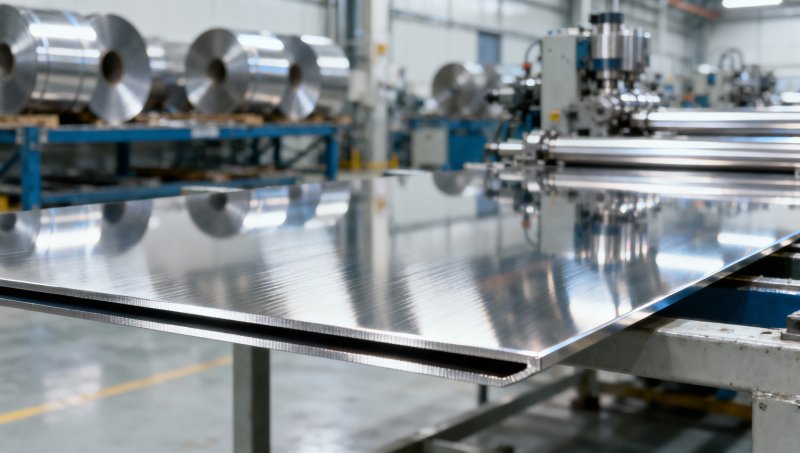
Mirror stainless sheet isn’t just about shine—it’s a functional surface material requiring tight tolerances in surface roughness (Ra ≤ 0.05 μm), flatness deviation (±0.15 mm/m²), and thickness uniformity (±0.02 mm). These specs directly impact light reflection fidelity, thermal expansion behavior, and long-term adhesion in cladding systems. In architectural applications—especially curved façades, interior feature walls, or high-traffic lobbies—even minor waviness or micro-scratches become visually amplified under directional lighting.
Most failures in field installation stem not from material grade (e.g., 304 vs. 316), but from inconsistent cold-rolling control, inadequate annealing atmosphere purity (<5 ppm O₂), or substandard polishing abrasives. That’s why sourcing from vertically integrated mills—equipped with inline surface inspection (e.g., laser profilometry at 0.01 mm resolution) and certified EN 10088-2 mill test reports—is non-negotiable for specifiers managing high-profile projects across North America, Europe, or the Middle East.
Hongteng Fengda maintains full traceability from raw coil to finished sheet, including heat number logging, surface finish verification (mirror grade: No. 8 / BA), and batch-level dimensional validation. Our mirror stainless sheets undergo triple-stage polishing (rough → intermediate → mirror) on CNC-controlled belts, achieving reflectivity >95% (measured at 633 nm wavelength) and flatness within ±0.12 mm/m²—verified per ASTM E1155.
How Structural Steel Expertise Strengthens Architectural Material Sourcing
Architects rarely source mirror stainless sheet in isolation. It often integrates with load-bearing elements—such as stainless steel beams for cantilevered canopies, cold-formed profiles for ceiling support grids, or Steel Sheet Piles for waterfront foundations where reflective cladding meets marine-grade structural integrity. This convergence demands suppliers who understand both aesthetic performance and mechanical reliability—not just commodity traders.
At Hongteng Fengda, mirror stainless sheet production shares quality infrastructure with our structural portfolio: same ISO 9001-certified heat treatment lines, identical EN 10204 3.2 mill certificates, and synchronized logistics for mixed-material shipments. For example, when delivering stainless steel corrugated sheet for roofing alongside mirror-finish wall panels, we coordinate annealing cycles and packaging protocols to prevent cross-contamination—reducing on-site rework by up to 30% based on client feedback from Dubai and Rotterdam projects.
Our engineering team supports joint technical reviews—including thermal movement calculations for large-format mirror panels (typical expansion: 17.2 × 10⁻⁶/℃), fastener compatibility testing (A2/A4 stainless vs. aluminum subframes), and fire-rated assembly documentation (EN 13501-1 Class B-s1,d0 compliant configurations).
Key Technical Parameters for Mirror Stainless Sheet
This precision is validated through third-party lab reports—available pre-shipment—and aligns with critical project milestones: 7–10 days for sample approval, 25–35 days for full container loads (20’/40’), and full EN/ASTM certification packages delivered digitally within 48 hours of dispatch.
Procurement Pitfalls to Avoid When Sourcing Mirror Stainless Sheet
- Relying solely on “304 mirror finish” labeling without requesting Ra value, flatness test reports, or annealing method (BA vs. 2B + polishing)—leading to unexpected haze or distortion in large panels.
- Ordering from distributors without mill traceability—making root-cause analysis impossible if surface defects appear during installation (e.g., periodic roll marks every 1.2 m).
- Overlooking edge condition requirements: laser-cut edges require post-process deburring and passivation to prevent micro-corrosion—especially critical for coastal or high-humidity installations.
- Neglecting packaging specifications: mirror sheets must be interleaved with acid-free paper and shipped in rigid wooden crates—not cardboard—to avoid pressure-induced waviness during ocean freight (typical transit: 25–45 days).
Hongteng Fengda addresses these proactively: all mirror sheets ship with individual batch IDs, surface inspection photos, and custom crating options—including vacuum-sealed anti-tarnish film for extended storage (>6 months).
Why Global Project Teams Choose Hongteng Fengda for Integrated Steel Solutions
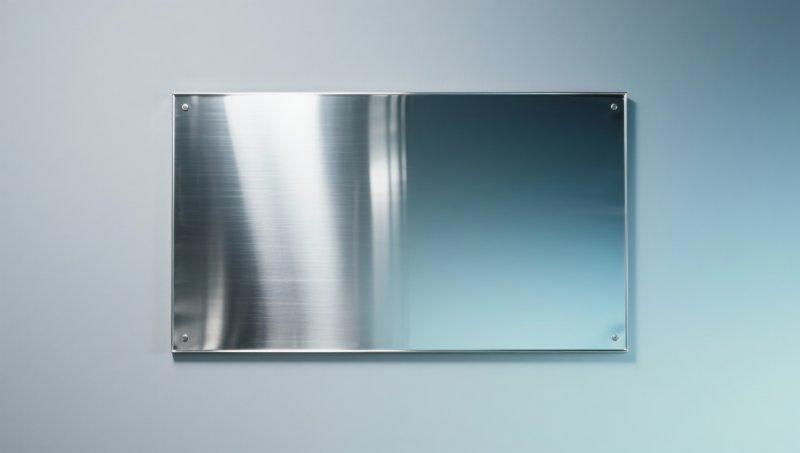
We don’t sell stainless sheet—we deliver coordinated material systems. Whether your project needs mirror stainless sheet for elevator interiors, stainless steel embossed plate for tactile wayfinding, or Steel Sheet Piles for deep-water foundation work, our one-point accountability eliminates interface risk between suppliers. Our clients report 20–40% faster procurement cycles versus fragmented sourcing—thanks to unified documentation, shared QA protocols, and consolidated logistics planning.
From initial technical consultation (including CAD-based panel layout optimization) to customs documentation support (HS Code 7219.32.00 for mirror-finish stainless), our team engages at three key decision points: specification alignment (ASTM A240 vs. EN 10088), delivery staging (just-in-sequence for façade contractors), and post-installation support (on-site defect assessment, replacement coordination).
Ready to validate mirror stainless sheet performance for your next architectural project? Request a certified sample kit—including surface roughness report, flatness map, and EN 10204 3.2 certificate—or discuss OEM panel sizing, edge finishing, or hybrid structural-cladding integration. Contact us for lead time confirmation, custom packaging quotes, or compliance review against local fire/safety codes.
Please give us a message


Please enter what you want to find