Choosing between galv steel tube, stainless steel, and black pipe hinges on corrosion resistance, cost, structural requirements, and compliance with steel standards. For outdoor or high-moisture applications—where corrosion resistant steel is critical—galvanized (galv) steel tube offers superior protection over carbon sheet steel or untreated black pipe, without the premium cost of stainless. As a trusted structural steel manufacturer & exporter from China, Hongteng Fengda supplies ASTM/EN-compliant galv steel tube alongside I beam weight data, hot rolled steel sheet, and Stainless Steel Welded Mesh—supporting technical evaluation, procurement decisions, and project lifecycle reliability.
When Does Galvanized Steel Tube Deliver the Best Value?
Galvanized steel tube is not a universal replacement—but a precision-engineered solution for specific environmental, load-bearing, and budgetary conditions. Its value crystallizes when three criteria converge: exposure to moisture or chloride ions (e.g., coastal zones, rain-exposed façades), moderate-to-high structural demand (e.g., scaffolding, handrails, support frames), and sensitivity to total cost of ownership—not just upfront price.
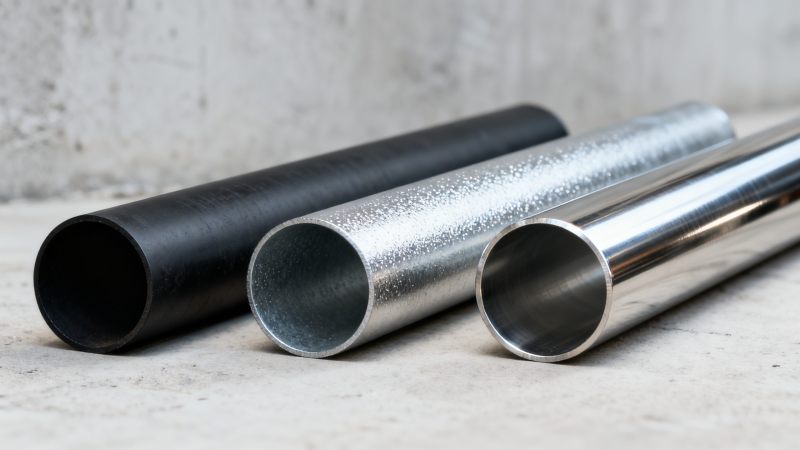
Unlike black pipe—which requires painting, recoating, and frequent inspection—galv steel tube delivers 20–30 years of maintenance-free service in typical atmospheric conditions. Compared to stainless steel, it reduces material cost by 40–60% while retaining 85–90% of its tensile strength in standard grades (ASTM A500 Gr. B). This makes it the go-to choice for mid-rise commercial structures, agricultural infrastructure, and utility-grade industrial frameworks across North America, Europe, and Southeast Asia.
Hongteng Fengda’s hot-dip galvanized tubes undergo triple-stage quality control: pre-galvanizing surface profiling (Sa 2.5 blast cleaning), zinc bath immersion at 450°C ± 5°C, and post-coating thickness verification per ASTM A123 (minimum 85 µm on outer surfaces). Every batch is traceable to mill test reports aligned with EN 10219-1 and GB/T 3091.
How Corrosion Resistance Drives Material Selection
Corrosion resistance isn’t binary—it’s tiered. Black pipe (uncoated carbon steel) corrodes rapidly in humid, saline, or acidic environments—losing up to 0.1 mm/year in coastal industrial zones. Stainless steel (e.g., 304 or 316) resists pitting and crevice corrosion but faces risk under chloride concentrations >200 ppm and temperatures above 60°C. Galvanized steel sits strategically between them: the zinc layer sacrificially protects underlying steel, with service life directly tied to coating mass.
Per ISO 1461, hot-dip galvanized coatings are classified by mass per unit area:
Hongteng Fengda routinely supplies medium and thick coating options for export projects—validated via salt-spray testing (ASTM B117, 500–1000 hours) and adhesion checks (Tape Test per ASTM D3359).
Where Galvanized Tubes Outperform Alternatives in Real Projects
- Bridge guardrail systems in Southeast Asia: Galv tubes reduced lifetime inspection frequency by 70% vs. black pipe—and cut 10-year maintenance cost by $18,500/km compared to 304 stainless.
- Solar mounting structures across the Middle East: 2.5-mm wall galv tubes (EN 10219, S355J2H) achieved 25+ years of service despite UV exposure and sand abrasion—without passivation or repainting.
- Food processing plant conveyors in Germany: Medium-coated galv tubing met EHEDG hygiene standards while avoiding stainless’ cold-working brittleness during field bending.
Procurement Checklist: 5 Critical Dimensions to Verify
Selecting galvanized steel tube isn’t just about diameter and wall thickness—it demands cross-functional alignment across engineering, procurement, and safety teams. Here’s what must be confirmed before PO issuance:
- Zinc coating method: Hot-dip (per ASTM A123) preferred over electro-galvanized for structural applications—hot-dip delivers 5–10× thicker, more uniform coverage.
- Base steel grade: ASTM A500 Gr. C or EN 10219 S355J2H ensures minimum yield strength ≥355 MPa and weldability without preheat.
- Dimensional tolerance: Outer diameter tolerance must meet ±0.5% (EN 10219) or ±0.75 mm (ASTM A500)—critical for bolted connections and modular assembly.
- Mill certification: Each coil must include MTRs confirming mechanical properties, chemical composition, and coating mass test results.
- Logistics readiness: Pre-cut lengths (e.g., 6.0 m, 12.0 m) reduce on-site waste; bundled packaging with moisture barriers prevents white rust during ocean transit (typical 2–4 weeks lead time).
For specialized lifting and anchoring needs, consider integrating Galvanized Steel Wire Rope, which shares the same corrosion-resistance philosophy—offering tensile strengths from 1470 MPa to 1960 MPa and zinc coating groups matched to environmental severity.
Why Global Buyers Choose Hongteng Fengda for Galvanized Structural Solutions
Sourcing galvanized steel tube from China carries inherent risks—variable coating consistency, delayed documentation, and mismatched dimensional compliance. Hongteng Fengda mitigates these through a vertically integrated process: in-house pickling, continuous galvanizing lines calibrated to ISO 9001, and real-time spectral analysis for zinc bath chemistry.
We serve as an extension of your engineering team—not just a supplier. Whether you need:
- Custom tube dimensions (e.g., 165×12.5 mm rectangular, 4.0 mm wall, thick-coated),
- Pre-engineered connection kits (flanges, base plates, gussets) certified to AISC 360,
- Third-party inspection support (SGS, BV, TÜV) with on-site witness testing,
- Or full project documentation packages (EN 10204 3.2 MTRs, packing lists, origin certificates),
—we deliver within 25–35 days from order confirmation, with 99.2% on-time shipment rate across 2023–2024 exports.
Ready to Optimize Your Next Structural Steel Procurement?
Contact Hongteng Fengda today for a no-obligation technical consultation—including free galvanized tube specification review, comparative cost modeling vs. stainless/black alternatives, and lead-time validation against your project schedule. We’ll provide ASTM/EN-compliant samples, coating thickness reports, and OEM-ready CAD drawings—all within 48 business hours.
Please give us a message


Please enter what you want to find