When selecting materials for outdoor construction projects, procurement professionals must prioritize longevity, structural integrity, and overall cost-efficiency. Specifying hot-dip galvanized steel is a strategic decision that significantly enhances the corrosion resistance and operational lifespan of critical structural components. By understanding the optimal applications for hot-dip galvanized materials, global buyers can effectively minimize long-term maintenance costs, ensure project durability, and make highly informed sourcing decisions for their most demanding infrastructure requirements.
Evaluating the Environmental Toll on Structural Steel
Not every outdoor project automatically demands hot-dip galvanized steel, and treating it as a blanket solution is a quick way to inflate your material budget. The real decision-making starts with a hard look at the specific micro-environment where the structure will live.
If you are building a temporary storage shed in a dry, inland region with low industrial pollution, a standard painted carbon steel system might suffice for the project's lifespan. But the calculus changes entirely when you introduce moisture, salt, or chemical pollutants. Coastal developments, wastewater treatment facilities, and agricultural structures face constant attacks from chloride ions and ammonia. In these environments, the sacrificial protection provided by a zinc coating isn't just a premium upgrade; it is a baseline requirement. The zinc corrodes at a predictable, slow rate, protecting the underlying steel even if the coating gets scratched during transport or installation.
Procurement teams need to push their engineering partners to define the exact corrosivity category of the site (often参照 ISO 12944 standards). If the site falls into C3, C4, or C5 categories, specifying hot-dip galvanized components becomes non-negotiable for long-term viability.
The "Inaccessible" Factor: When Maintenance is a Nightmare
Let’s be realistic about maintenance. The initial purchase price of galvanized steel is almost always higher than bare or painted steel. However, smart procurement looks at the lifecycle cost (LCC), not just the invoice from the mill.
Consider structures where access for future maintenance is difficult, dangerous, or prohibitively expensive. Highway gantries, high-voltage transmission towers, and the undersides of bridge decks are prime examples. If your maintenance crew requires a cherry picker, lane closures, or specialized rigging just to repaint a beam, your initial savings on a paint system are wiped out by year three. Hot-dip galvanizing offers a maintenance-free lifespan of 50 to 100 years in many rural and suburban environments. When the cost of a single repaint exceeds the premium paid for galvanizing, the choice is mathematically obvious.
Of course, a galvanized superstructure relies entirely on a solid foundation. For load-bearing and stirrup scenarios within concrete structures, specifying high-quality materials like HPB300 Rebar is just as critical as the steel above ground. The interface between the concrete foundation and the galvanized steel columns is where moisture often gets trapped, so ensuring the entire structural ecosystem is specified correctly is vital.
Hot-Dip Galvanizing vs. Paint Systems: Knowing When to Pivot
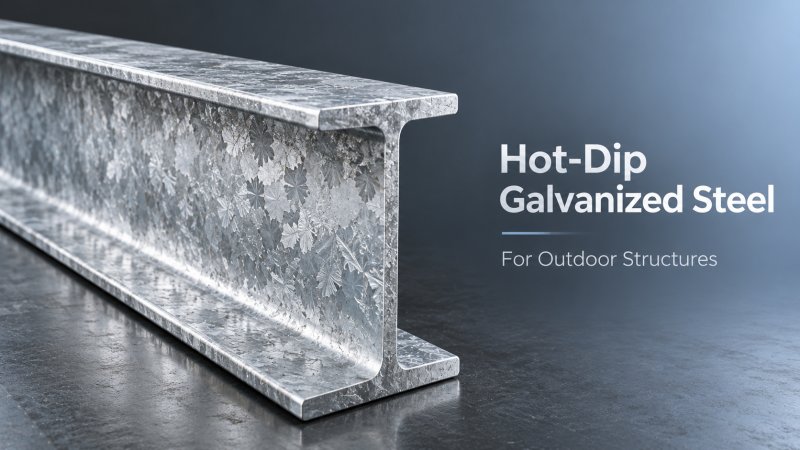
There is a common misconception in the market that hot-dip galvanized steel is the final answer for every outdoor aesthetic. It isn't. The spangled, shiny grey finish of fresh zinc is great for industrial applications, but it rarely satisfies the architectural color requirements of modern commercial buildings or public spaces.
This is where you need to evaluate a "Duplex System." If the project demands specific colors or requires protection in an environment with severe abrasion (like a mining chute or a heavily trafficked pedestrian walkway), hot-dip galvanizing alone will eventually wear down or fail to meet aesthetic goals. By specifying hot-dip galvanized steel as the base, and then applying a powder coat or paint system over it, you get the best of both worlds. The zinc provides cathodic protection if the topcoat gets chipped, while the topcoat provides the color and slows down the zinc consumption rate by a factor of 1.5 to 2. As a buyer, you need to ensure your supplier understands this sequence and prepares the surface correctly before the topcoat is applied.
Supply Chain Realities: Sourcing Galvanized Components Globally
When sourcing globally, the gap between a reliable supplier and a problematic one often lies in process control and material traceability. Hot-dip galvanizing is highly sensitive to the base steel's chemistry. If the silicon content in the steel is too high (reactive steel), the zinc-iron alloy layer grows too thick, becoming brittle and flaking off. A good manufacturer knows how to adjust the galvanizing bath temperature and withdrawal speed to compensate for this.
This is why partnering with an experienced structural steel manufacturer and exporter is critical. At Hongteng Fengda, we understand that global buyers need more than just a price quote; they need predictable quality. We specialize in angle steel, channel steel, steel beams, cold formed steel profiles, and customized structural steel components. Our modern manufacturing facilities enforce strict quality control to ensure every piece of steel meets major international standards, including ASTM, EN, JIS, and GB.
For international buyers in North America, Europe, the Middle East, and Southeast Asia, lead time consistency is just as important as material quality. Delays in structural steel delivery can halt an entire construction site. By supporting global buyers with stable production capacity and dependable lead times, we help partners reduce sourcing risks and complete projects efficiently. We don't just supply steel; we provide customized OEM solutions that fit your exact engineering drawings.
Practical Checklists for Procurement Teams
Before you finalize your purchase orders for outdoor structural steel, run through these practical checks to ensure you are getting what you paid for:
First, verify the coating thickness requirements. Standards like ASTM A123 dictate minimum zinc coating thickness based on the steel's base thickness. Thicker steel requires a thicker zinc coating. Make sure your purchase order explicitly states the required coating class or minimum microns/mils.
Second, check the venting and draining requirements in your fabrication drawings. If hollow sections or complex assemblies aren't designed with proper holes for the zinc to flow in and out, you will end up with internal corrosion or dangerous steam explosions during the galvanizing bath. Catching these design flaws before fabrication saves massive rework costs.
Finally, demand proper handling and storage protocols. Galvanized steel is highly resistant to corrosion, but it is not immune to "wet storage stain" (white rust) if it is stacked tightly and exposed to condensation during ocean freight. Ensure your supplier uses adequate separators and desiccants during the packing phase.
Specifying hot-dip galvanized steel is a commitment to long-term asset performance. By aligning the material choice with the actual environmental threats, maintenance realities, and aesthetic needs of your project, you protect both the structure and your project's bottom line. Work with suppliers who understand the metallurgy and the logistics, and your infrastructure will stand strong for decades.
Please give us a message


Please enter what you want to find