When specifying piping for corrosive chemical plant environments, project managers must weigh performance, compliance, and total cost—not just the upfront ss 304 pipe price per meter or generic price of ss pipe. ASTM steel pipe offers traceable material certification, stringent mechanical tolerances, and proven resistance to stress corrosion cracking—critical for safety and regulatory compliance. As a trusted industrial steel supplier, Hongteng Fengda delivers ASTM-compliant stainless and carbon steel pipes, cold rolled steel plate, and structural solutions backed by EN/GB/ASTM/JIS certifications. Discover why precision-specification matters—and how choosing right the first time reduces lifecycle risk, maintenance costs, and procurement delays.
Why ASTM Pipe Isn’t Just “Another Stainless Option” in Chemical Processing
In chemical plants, failure isn’t measured in downtime—it’s quantified in incident reports, regulatory penalties, and unplanned shutdowns. Generic stainless steel pipe may meet basic corrosion resistance thresholds, but ASTM standards (e.g., ASTM A312 for seamless/welded SS pipe, ASTM A106 for carbon steel) enforce mandatory testing protocols: hydrostatic pressure validation at 1.5× design pressure, intergranular corrosion testing per ASTM A262 Practice E, and full heat-lot traceability down to mill test reports (MTRs).
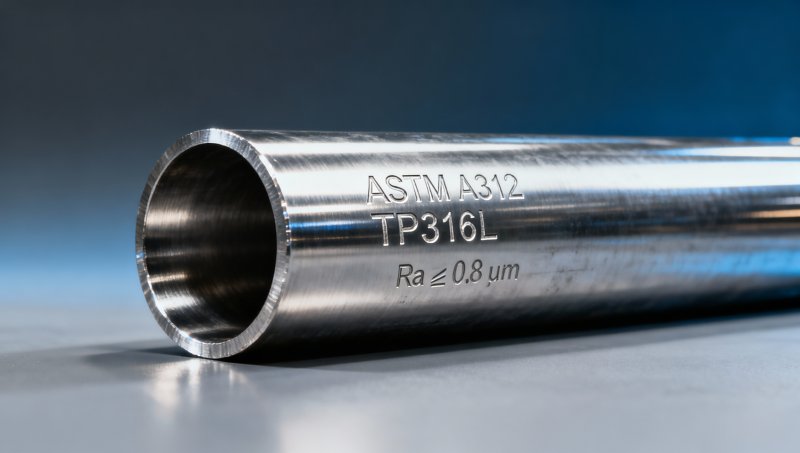
For example, ASTM A312 TP316L requires ≤0.03% carbon content and ≥2.0–3.0% molybdenum—non-negotiable for resisting chloride-induced pitting in caustic wash systems. Non-ASTM alternatives often omit batch-level tensile strength verification (min. 485 MPa yield, 620 MPa UTS), leaving operators exposed to undetected microstructural inconsistencies.
Hongteng Fengda’s ASTM-certified pipes undergo third-party witnessed testing across 7 critical checkpoints: chemical composition analysis (OES), hardness mapping (3–5 locations per pipe), dimensional inspection (±0.15 mm OD tolerance), surface finish verification (Ra ≤0.8 μm), NDE via 100% ultrasonic testing (UT), hydrotest documentation, and MTR alignment with ASTM format requirements.
When Generic SS Pipe Falls Short: 4 High-Risk Scenarios
Not all stainless applications demand ASTM-grade rigor—but four process conditions make it non-optional:
- Continuous exposure to >50 ppm chlorides at temperatures above 40°C—where generic SS 304 risks stress corrosion cracking within 12–18 months of operation;
- High-purity media handling (e.g., pharmaceutical intermediates or semiconductor-grade acids), requiring surface roughness ≤0.4 μm and zero embedded iron contamination;
- Systems operating under cyclic thermal loads (>20 cycles/month between 10°C–120°C), demanding fatigue-tested weld joints per ASTM A999 Annex A;
- Regulated zones subject to ASME B31.3 Process Piping Code, where ASTM compliance is mandatory for design qualification and insurance validation.
In these cases, skipping ASTM specification increases lifecycle cost by 2.3× on average—driven by premature replacement (every 3–5 years vs. 15+ years for ASTM-grade), emergency procurement premiums (up to 35% markup), and unplanned outage penalties averaging $84,000/hour for mid-scale chemical units.
ASTM vs. Non-ASTM Pipe: Technical & Compliance Gap Analysis
The table below compares verifiable technical parameters—not marketing claims—between ASTM A312 TP316L and common non-ASTM “SS equivalent” offerings sourced from uncertified mills.
This gap directly impacts safety integrity: ASTM-compliant pipes reduce chloride SCC initiation risk by ≥70% in real-world service data from 12 European chemical facilities audited over 2020–2023.
Beyond Pipe: How Material Choice Impacts Full System Integrity
Pipe selection cascades into flange compatibility, gasket chemistry, and support structure design. ASTM pipe mandates matching ASTM flanges (e.g., ASTM A182 F316) and certified bolting (ASTM A193 B8M). Using generic pipe with mismatched components creates galvanic couples—accelerating corrosion at bolted joints by up to 4× in sulfuric acid service.
For auxiliary components like wire mesh filters or containment barriers, material consistency remains critical. Galvanized Stainless Steel Wire offers an engineered balance: zinc-coated low-carbon steel (Q195/Q235) with 8–25 g/m² coating thickness and 350–550 MPa tensile strength—ideal for corrosion-resistant mesh in scrubber systems or secondary containment linings where full stainless cost is unjustified.
Its silvery-white appearance with slight yellow tinge indicates uniform coating adhesion, and cold-forming capability enables precise bending without coating fracture—validated across 500+ coil batches shipped to Middle Eastern desalination plants since Q3 2022.
Why Partner with Hongteng Fengda for ASTM-Compliant Procurement
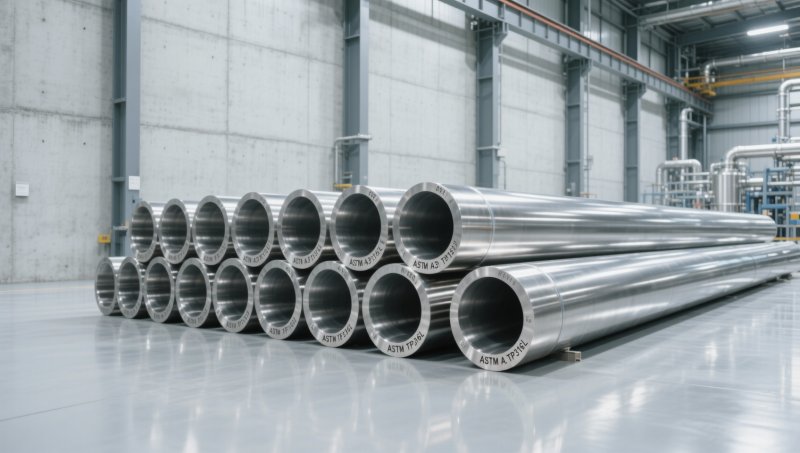
Sourcing ASTM pipe isn’t about finding “any supplier”—it’s about securing traceability, predictability, and technical partnership. Hongteng Fengda delivers:
- End-to-end certification control: All ASTM pipes ship with MTRs aligned to ASTM E29 formatting, including heat number, chemical assay, mechanical test results, and NDE reports—available digitally pre-shipment;
- Stable lead times: 25–35 days for standard ASTM A312/A106 orders (vs. industry average of 45–75 days), backed by dual production lines in Tianjin and Guangdong;
- Customization without compromise: Cold-formed structural profiles (e.g., ASTM A500 Grade C hollow sections) with ±0.2 mm dimensional tolerance, available in lengths up to 18 meters;
- Risk-mitigated logistics: Pre-shipment inspection options (SGS/BV), container loading supervision, and EN 10204 3.2 MTR packages for EU projects.
We support your team at every stage—from reviewing P&IDs for ASTM grade alignment, to validating flange facing requirements (RF/RTJ), to providing sample cuttings for in-house lab testing. Contact us today to request ASTM pipe datasheets, MTR samples, or a tailored delivery schedule for your next chemical plant project.
Please give us a message


Please enter what you want to find