Choosing a custom carbon steel pipe supplier can seem like a higher upfront investment, but for enterprise buyers, the long-term value often outweighs the cost. When project specifications, quality compliance, delivery reliability, and sourcing efficiency matter, customized supply helps reduce operational risks and avoid expensive delays. Understanding when a tailored steel solution makes financial and strategic sense is essential for smarter procurement decisions.
When does a custom carbon steel pipe supplier make financial sense?
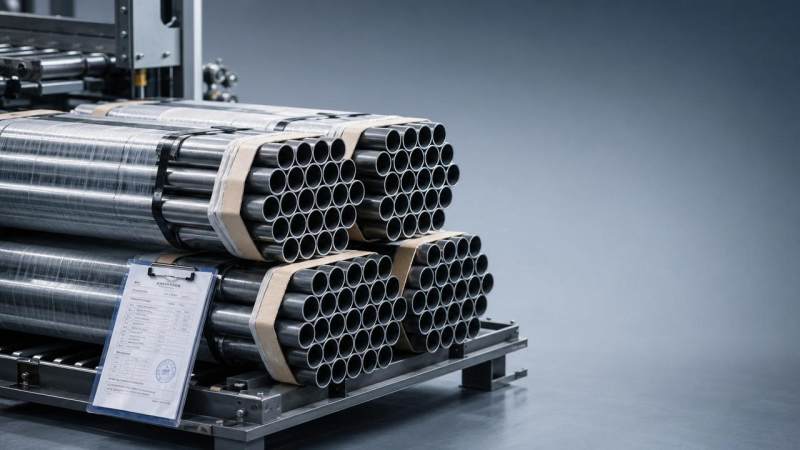
For many procurement teams, the first comparison starts with unit price. That is understandable, but incomplete. A custom carbon steel pipe supplier often becomes the better choice when your project carries tight tolerances, non-standard dimensions, complex fabrication needs, export compliance requirements, or strict delivery milestones.
In steel-intensive industries, the real cost does not sit only in the purchase order. It also appears in cutting waste, rework, coating mismatch, welding problems, failed inspections, emergency freight, and delayed installation. Enterprise buyers usually feel these costs more sharply than small-volume purchasers because even a minor error can affect an entire production schedule or construction sequence.
This is why a custom carbon steel pipe supplier is worth the cost when standard stock material creates more downstream risk than savings. If your engineering team already knows the exact wall thickness, length tolerance, end preparation, mechanical requirements, or surface treatment required, customization is often the more controlled and economical route.
- Projects with non-standard pipe diameters, wall thicknesses, or cut lengths that would otherwise require extra processing on site.
- International orders that must align with ASTM, EN, JIS, or GB specifications and pass third-party inspection smoothly.
- Applications where welding consistency, structural integrity, and dimensional accuracy directly affect installation efficiency.
- Procurement programs seeking supplier consolidation, stable lead times, and lower sourcing risk across repeated shipments.
What enterprise buyers should compare beyond the quoted price
A cheaper standard pipe order may look attractive at first, but the total procurement result depends on more than the list price. Decision-makers should compare total landed value, operational fit, and the cost of deviations. This is especially true in structural steel, manufacturing, and industrial construction projects where installation timing is tied to labor, equipment, and contract milestones.
The table below shows where a custom carbon steel pipe supplier often delivers stronger business value than a standard stock-only source.
The key lesson is simple: enterprise buyers should evaluate cost in the context of installation efficiency, compliance confidence, and schedule protection. A custom carbon steel pipe supplier may cost more per ton, yet save more across the full project lifecycle.
Which project scenarios justify customized pipe supply?
Not every order needs customization. For common utility runs or low-risk replacement work, standard stock can be enough. However, several scenarios make custom supply a more practical procurement strategy.
Complex structural and industrial assemblies
If pipe components integrate into larger structural steel systems, dimensional mismatch can create compounding errors. In these cases, buyers need consistent wall thickness, straightness, cut accuracy, and weldability across batches.
Export projects with multi-standard requirements
Global buyers often need products aligned with ASTM, EN, JIS, or GB references. A capable Chinese manufacturer with export experience can help coordinate specifications, marking, packing, and inspection documents more effectively than a trader focused only on spot availability.
High-volume repeat procurement
When a buyer places recurring orders for similar configurations, customization can improve consistency and shorten internal approval cycles. Once drawings, tolerances, and test expectations are fixed, repeat procurement becomes more efficient and less error-prone.
Tight construction or manufacturing timelines
If your project has little room for field modification, using a custom carbon steel pipe supplier reduces the risk of site delays. The earlier fabrication is aligned with your exact needs, the fewer surprises emerge during installation.
How to judge whether the supplier can really support customization
Customization only adds value when the supplier has real manufacturing discipline. Decision-makers should not confuse “we can make it” with “we can make it consistently.” The supplier must control raw materials, forming, cutting, inspection, packing, and export coordination with measurable reliability.
For this reason, many buyers prefer working with manufacturers that already serve construction, industrial, and manufacturing projects across multiple regions. Hongteng Fengda, as a structural steel manufacturer and exporter from China, supports global buyers with stable production capacity, customized steel solutions, and quality control aligned with commonly requested international standards such as ASTM, EN, JIS, and GB.
The procurement checklist below helps evaluate whether a custom carbon steel pipe supplier can support enterprise-level requirements.
A supplier that answers these points clearly is usually better positioned to support serious project procurement. This matters more than a low headline price that fails under execution pressure.
Mid-project sourcing often requires more than one steel solution
In real procurement environments, buyers rarely source only one material category. A project that needs custom carbon steel pipe may also require stainless components for equipment housings, food-contact surfaces, decorative applications, or fabricated assemblies exposed to different service conditions.
For example, buyers comparing cost-sensitive stainless options may also evaluate 201 Stainless Steel Coil for applications such as countertops, kitchenware, urban decoration, automotive parts, conveyor belts, and low-grade household products. This grade offers tensile strength of at least 520MPa, yield strength of at least 275MPa, elongation of about 55% to 60%, and hardness limits of up to 183HB or 100HRB.
It is also available in thicknesses from 2.5mm to 10.0mm, widths from 610mm to 2000mm, and common lengths such as 2000mm, 2440mm, 3000mm, 5800mm, and 6000mm, with finishes including BA, 2B, NO.1, NO.4, 4K, HL, and 8K. For buyers managing mixed-material projects, working with a supplier familiar with both structural steel requirements and broader metal sourcing can simplify coordination and reduce procurement fragmentation.
How customized pipe supply lowers hidden project costs
Many decision-makers ask a practical question: if customization costs more upfront, where does the savings actually come from? The answer usually lies in hidden cost reduction rather than direct material discounts.
- Less field processing. Pre-cut or specification-matched pipe reduces labor hours, equipment use, and scrap generation.
- Lower rejection risk. Better control over dimensions and documentation decreases failed inspections and return disputes.
- Fewer schedule interruptions. Accurate supply reduces emergency replacement orders and costly shipment upgrades.
- Improved inventory efficiency. Buyers can order closer to actual project demand instead of stocking excess standard material as a safety buffer.
These savings become more significant in large industrial projects, phased construction, and long-distance export procurement. A custom carbon steel pipe supplier adds value when the cost of getting it wrong is high.
What standards, documents, and compliance points should buyers confirm?
Compliance review is one of the main reasons enterprise buyers move toward experienced manufacturers. If your end market requires traceable documentation, inspection readiness, or reference to international standards, these items should be clarified before order placement, not after production begins.
The following table outlines common checkpoints for custom steel procurement in export-oriented projects.
A disciplined supplier will discuss these points early. That reduces ambiguity in both production and delivery, which is often where procurement savings are either protected or lost.
Common misconceptions about choosing a custom carbon steel pipe supplier
“Custom always means slow”
Not necessarily. If the supplier has planned capacity and clear drawings, custom orders can be more predictable than searching the market for exact stock. Delay often comes from unclear specifications, not from customization itself.
“Standard stock is always cheaper”
Only at the line-item level. Once cutting loss, adaptation labor, quality claims, or delayed installation are included, standard stock can become more expensive than a tailored solution.
“A trader can manage the same project just as well”
Some traders are useful for spot sourcing, but custom industrial procurement often benefits from direct manufacturing control. Better factory visibility usually means stronger traceability, schedule management, and technical communication.
FAQ for enterprise procurement teams
How do I know if my order is too small for a custom carbon steel pipe supplier?
The decision should depend less on volume alone and more on technical complexity, risk, and repeat potential. If the order has strict tolerances, special lengths, or recurring demand, customization may still be justified even at moderate volume.
What information should I prepare before requesting a quote?
Prepare size details, grade requirements, application conditions, quantity, drawing references, tolerance expectations, coating or finish requirements, destination market, and expected delivery schedule. The clearer the brief, the more accurate the quotation and lead time will be.
Can a custom carbon steel pipe supplier help reduce sourcing risk for global projects?
Yes, especially when the supplier combines manufacturing capability with export execution experience. Stable production, consistent quality control, and familiarity with international documentation requirements all help reduce procurement uncertainty.
What is the biggest mistake buyers make when comparing suppliers?
The most common mistake is comparing only unit price while ignoring tolerance control, compliance support, scrap reduction, and schedule reliability. In project procurement, execution quality often matters more than the cheapest quotation.
Why choose us for customized structural steel and pipe-related sourcing support?
Hongteng Fengda supports enterprise buyers as a professional structural steel manufacturer and exporter from China. Our focus is not limited to standard steel supply. We help global customers coordinate customized structural steel components, common steel sections, and project-oriented sourcing requirements with attention to specification accuracy, production stability, and dependable delivery planning.
We serve construction, industrial, and manufacturing projects across North America, Europe, the Middle East, and Southeast Asia. With modern manufacturing facilities and strict quality control, we align supply with internationally recognized standards such as ASTM, EN, JIS, and GB, helping buyers reduce sourcing risk and improve procurement predictability.
- Confirm technical parameters, dimensions, and standard references before order placement.
- Discuss product selection based on application, budget, fabrication method, and destination market.
- Review lead time expectations, shipment planning, and batch delivery arrangements for phased projects.
- Evaluate customized solutions, OEM requirements, and document support for compliance-sensitive orders.
- Request sample coordination, quotation discussion, and packaging details for export procurement.
If you are assessing whether a custom carbon steel pipe supplier is worth the cost for your project, contact us with your drawings, specification list, target standards, and delivery timeline. We can help you review feasibility, clarify sourcing options, and build a steel supply plan that supports both cost control and execution reliability.
Please give us a message


Please enter what you want to find