Choosing the wrong steel channel supplier can quietly turn a construction project into a costly risk. In practice, the biggest problems rarely start with dramatic failures. They start with small inconsistencies: channel dimensions that do not match drawings, material grades that are unclear, delivery dates that keep moving, or documents that cannot fully support compliance checks. For buyers comparing structural steel beams for construction, checking angle steel price, or even using a steel beam weight calculator, supplier reliability is not secondary to product specifications—it is part of the specification. The safest buying decision is usually not the cheapest offer, but the supplier with stable quality, verifiable standards, clear communication, and dependable delivery performance.
Why does a steel channel supplier become a project risk in the first place?
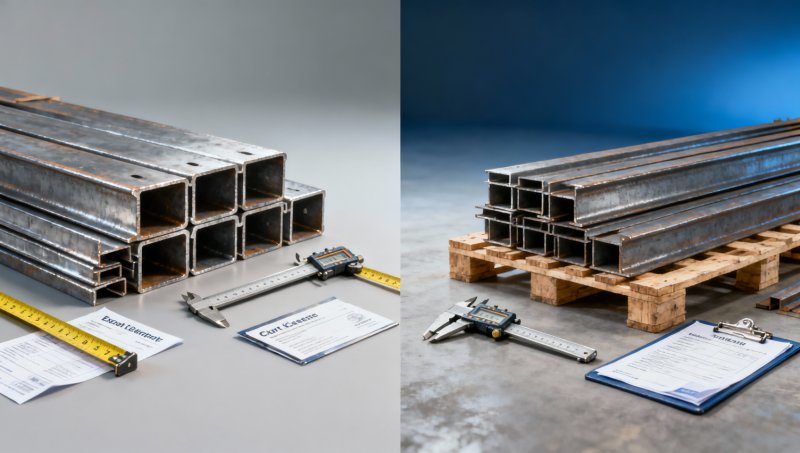
A steel channel supplier becomes a project risk when it cannot consistently deliver what the project actually needs: correct dimensions, correct grade, traceable quality, and on-time shipment. In structural work, even a small deviation can affect fabrication, fit-up, installation speed, coating performance, and long-term safety.
For project managers, procurement teams, quality inspectors, and technical evaluators, supplier risk usually appears in five areas:
- Dimensional inconsistency: channels that vary in web thickness, flange size, straightness, or length tolerance can create assembly and welding problems.
- Material uncertainty: unclear standards, mixed grades, or missing test reports increase compliance and performance risk.
- Weak production control: unstable manufacturing processes often lead to batch-to-batch variation.
- Delivery unreliability: late shipment can delay fabrication, installation, and downstream subcontractors.
- Poor documentation and service: incomplete certificates, slow responses, and unclear issue handling make risk harder to control once problems appear.
In other words, the supplier is not just a vendor. It is a risk point inside your schedule, budget, and quality system.
What are the early warning signs buyers should never ignore?
Many supply problems can be identified before placing the order if buyers know what to check. The following warning signs often indicate a higher probability of project disruption:
- Prices that are far below market level without a clear explanation. Lower cost can be legitimate, but it can also signal thinner tolerances, lower-grade raw material, poor finishing, or hidden service gaps.
- Vague answers about standards. If a supplier cannot clearly explain compliance with ASTM, EN, JIS, or GB standards, technical risk increases immediately.
- Inconsistent documentation. Material test certificates, inspection reports, packing lists, and production records should align. If they do not, traceability becomes weak.
- No clear lead time commitment. A supplier that avoids confirmed production and shipping schedules may not have real capacity control.
- Limited customization ability. Projects often need special lengths, punching, welding preparation, surface treatment, or OEM components. If the supplier cannot support these needs, extra work shifts to your side.
- Slow technical communication. Delayed replies before the order usually become bigger delays after payment.
For distributors and engineering buyers, another warning sign is the inability to discuss application-specific performance. A reliable supplier should be able to talk not only about product dimensions, but also about fabrication, loading conditions, corrosion environment, and logistics requirements.
How do supplier failures affect budget, safety, and project schedule?
The most damaging supplier problems are often indirect costs rather than the original purchase price. A low initial quote can become expensive once the project absorbs the consequences.
Budget impact: incorrect dimensions or grade mismatches can cause rework, scrapping, urgent replacement orders, additional freight, idle labor, and contract penalties. Even a moderate delay may create significant cost escalation across fabrication and site teams.
Safety impact: if steel channels do not meet expected mechanical properties or dimensional requirements, the structural system may not perform as designed. Safety managers and quality teams then face greater inspection pressure, potential rejection, and liability exposure.
Schedule impact: delayed steel affects drawing approval, fabrication sequencing, assembly, coating, transport, and final installation. One missed shipment can interrupt the entire critical path.
This is why experienced buyers evaluate total procurement risk, not just unit cost. A supplier with stable production capacity and strict quality control often protects project profitability more effectively than a supplier with the lowest quotation.
What should technical and procurement teams verify before placing an order?
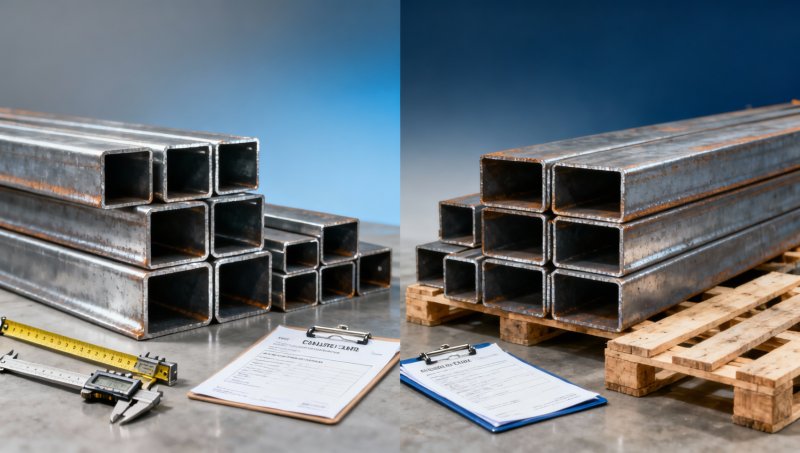
Before confirming a steel channel supplier, teams should use a practical verification checklist. This is where many sourcing mistakes can be prevented.
- Confirm applicable standards and grade requirements. Make sure the ordered product aligns with project drawings, regional codes, and customer specifications.
- Review dimensional tolerances in detail. Do not assume “standard size” is enough. Ask for exact tolerance control on thickness, flange width, web depth, straightness, and length.
- Check mill test certificates and inspection process. Verify chemistry, mechanical properties, and traceability procedures.
- Assess production capability. Ask whether the supplier can handle your required volume, repeat orders, and custom processing without instability.
- Evaluate lead time credibility. Confirm production schedule, port arrangement, packing method, and export experience.
- Request sample photos, previous shipment records, or third-party inspection support. Real evidence matters more than sales promises.
- Clarify non-conformance handling. If a batch fails inspection, who responds, how quickly, and at whose cost?
In multi-material sourcing projects, buyers often evaluate not only carbon structural sections but also corrosion-resistant materials for related applications. For example, where hygiene, chemical exposure, or decorative finish matters, teams may also compare stainless products such as 304 Stainless Steel Plate. This type of material is widely used in food industry, medical equipment construction, chemical environments, transportation components, kitchen supplies, and equipment parts. Typical technical references include tensile strength of at least 520MPa, yield strength of at least 275MPa, elongation around 55-60%, and compliance options covering ASTM, JIS, GB, EN, ISO, SGS, and BV. For buyers, this comparison reinforces an important sourcing principle: the right supplier must match both the product and the application risk level.
How can buyers distinguish a dependable supplier from a risky one?
A dependable structural steel supplier usually shows consistent strength in four areas:
- Manufacturing discipline: modern facilities, repeatable processes, and controlled quality checkpoints.
- Standard compliance: the ability to supply products according to major international standards such as ASTM, EN, JIS, and GB.
- Export reliability: experience serving global markets with proper packing, documentation, and shipment coordination.
- Problem-solving service: responsive communication, customization support, and practical handling of technical questions.
For construction firms, distributors, and project owners, the best supplier is usually the one that reduces uncertainty. That means stable production capacity, consistent quality across batches, accurate documents, and realistic lead times.
Hongteng Fengda, as a structural steel manufacturer and exporter from China, focuses on angle steel, channel steel, steel beams, cold formed steel profiles, and customized structural steel components. With modern manufacturing facilities and strict quality control, the company supports international buyers with products aligned to ASTM, EN, JIS, and GB standards, while helping customers reduce sourcing risk, control cost, and keep projects on schedule. For decision-makers, this kind of capability matters more than a one-time low quote, because it directly supports project continuity.
What is the smartest buying approach for steel channel projects?
The smartest buying approach is to treat supplier selection as part of project risk management, not only as a purchasing task. Buyers should compare quotations together with production stability, technical clarity, inspection support, customization ability, and logistics performance.
A practical decision framework is simple:
- Choose suppliers that can clearly prove compliance.
- Prioritize consistent quality over lowest visible price.
- Confirm realistic lead times with documented commitments.
- Check whether the supplier understands the end-use environment.
- Make traceability, inspection, and communication part of the purchase decision.
When a steel channel supplier is reliable, it helps protect structural performance, procurement efficiency, and project profitability. When it is unreliable, it becomes a hidden cost center that affects every department—from engineering and QA to finance and site execution. The right conclusion for most buyers is clear: supplier reliability is not an extra advantage; it is a core requirement for safe, cost-controlled, and on-time project delivery.
Please give us a message


Please enter what you want to find