When evaluating steel coil price per ton, buyers often overlook the hidden factors that shape total sourcing cost, from quality compliance and processing requirements to freight, lead time, and risk control. For construction and industrial projects, comparing carbon steel price, steel sheet price, or galvanized steel price alone is not enough. This article explains how global buyers can make smarter steel purchasing decisions beyond the initial quote.
Why does steel coil price per ton often fail to show the real procurement cost?
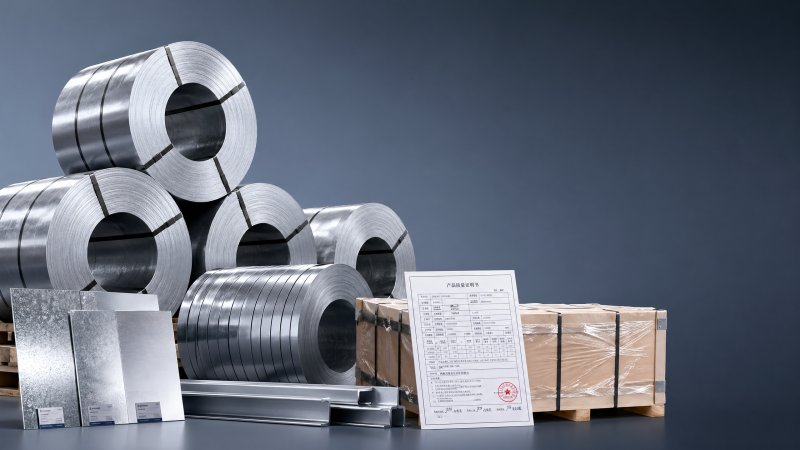
In steel purchasing, the quoted steel coil price per ton is only the visible layer of cost. For procurement teams, project managers, and financial approvers, the final expense usually includes at least 5 core variables: grade selection, dimensional tolerance, coating or surface treatment, logistics structure, and inspection or compliance cost. A low ex-works price can quickly become a high landed cost if any of these factors are underestimated.
This is especially true in global sourcing. A buyer comparing carbon steel price from 3 suppliers may receive quotations based on different assumptions: one may be for base material only, another may include slitting, and another may include export packing but exclude testing documents. When quotation scope is inconsistent, per-ton comparison becomes misleading rather than useful.
In structural steel and industrial supply chains, total cost is often shaped over a 3-stage process: pre-production confirmation, manufacturing and inspection, and transportation plus destination handling. If one stage is not clearly defined, hidden expenses may emerge after order confirmation, causing budget pressure, schedule delays, or even installation mismatch on site.
For buyers working on construction, machinery, or fabrication projects, the decision should move from “Which supplier has the lowest steel sheet price?” to “Which supplier can offer the most controllable total acquisition cost over 2–8 weeks of delivery and project execution?” That shift is where professional sourcing creates real value.
What costs are commonly missed in early quotation reviews?
The most common omissions are not dramatic, but they are expensive. Buyers often focus on tonnage and base grade while overlooking how final use affects downstream processing. For example, a coil intended for structural fabrication may require stricter flatness, edge condition, or mechanical consistency than one used for general forming.
- Testing and documentation cost, such as MTC requirements, third-party inspection coordination, or additional standard verification under ASTM, EN, JIS, or GB.
- Processing cost, including slitting, cut-to-length service, punching, beveling, or tolerance control for fabrication readiness.
- Packaging and freight variables, such as seaworthy packing, container optimization, inland transport, and destination port handling.
- Risk cost related to inconsistent lead time, rework, claim handling, or replacement shipment if quality mismatch is found after arrival.
For this reason, experienced buyers rarely approve a steel coil order based on one unit price line alone. They compare the full commercial and technical package, usually across 4–6 checkpoints, before making a sourcing decision.
Which factors influence total steel cost more than buyers expect?
Many cost drivers become important only after a project moves from inquiry to execution. The most significant are grade suitability, compliance level, dimensional precision, corrosion protection, and delivery reliability. In some applications, a small price premium per ton can reduce fabrication waste, field adjustment time, or replacement risk, making the overall project more economical.
For example, galvanized steel price may appear higher than untreated material at quotation stage, but if the project environment includes humidity, coastal air, or intermittent chemical exposure, the difference in maintenance cycle can justify the initial premium. A similar logic applies when comparing structural carbon steel with stainless material for selected process sections.
At this stage, some buyers also evaluate complementary materials used in connected systems. In process lines where corrosion resistance and hygienic conditions matter, products such as 316 Stainless steel pipe are often considered alongside structural steel packages. This is common in petroleum, foodstuff, chemical industry, electric power, biotechnology, shipbuilding, and boiler fields where mixed-material procurement requires a broader cost view.
A typical evaluation window includes 4 technical dimensions: corrosion resistance, high-temperature stability, mechanical properties, and standards compliance. For stainless piping in those environments, buyers may review outer diameter ranges from 6mm to 2500mm, wall thickness from 1mm to 150mm, and common lengths such as 4000mm, 5800mm, 6000mm, or 12000mm, depending on fabrication and transport needs.
Cost drivers that frequently change project economics
The table below shows why a lower steel coil price per ton does not always produce a lower total purchase cost. This is useful for procurement managers, technical evaluators, and business approvers reviewing competing offers.
The practical lesson is simple: base price matters, but controllability matters more. A supplier able to define specifications, inspection scope, and shipping terms clearly often helps buyers achieve lower real cost than a cheaper but incomplete quotation.
Where technical specifications directly affect price decisions
In international purchasing, technical requirements should be translated into procurement language before price comparison begins. A request with undefined coating mass, uncertain tolerance, or unclear standard reference is likely to generate quotations that cannot be compared fairly. That creates confusion for procurement teams and risk for project owners.
When evaluating stainless or specialty components integrated into the same project, buyers should also confirm appearance and finishing requirements such as polishing, annealing, pickling, or bright surface. These are not cosmetic choices alone. They can affect cleaning, corrosion behavior, and processing suitability in sectors with strict operational conditions.
How should buyers compare carbon steel price, steel sheet price, and galvanized steel price?
These three price references are often searched together, but they serve different decision purposes. Carbon steel price is usually the starting point for cost-sensitive applications. Steel sheet price may be more relevant when thickness, width, and forming process dominate the selection. Galvanized steel price becomes important when corrosion protection, outdoor durability, or reduced maintenance interval is a project priority.
The correct comparison method is not to ask which one is cheaper per ton. Instead, ask which option delivers the required performance over the expected service cycle. For some indoor structural uses, carbon steel may be the most practical choice. For exposed infrastructure or equipment enclosures, galvanized material may lower lifecycle expense despite a higher initial unit price.
Buyers should also consider procurement volume. Small-batch, medium-batch, and large-batch orders behave differently. In a small order, freight, packing, and document costs may represent a larger percentage of total landed value. In larger monthly or quarterly purchasing plans, price stability, production scheduling, and supplier consistency become more critical than one-time discount differences.
A structured comparison is especially helpful for distributors, OEM buyers, and project contractors who must explain purchasing logic to technical reviewers and finance teams. The table below can be used as a decision shortcut during internal approval.
Comparison table for common steel buying scenarios
This comparison shows why buyers should not treat all steel price signals as interchangeable. Matching the material type to the operating environment, fabrication route, and maintenance expectation is usually more important than achieving the lowest quoted number.
A 4-point method for better price comparison
- Compare under the same Incoterm and packing basis, otherwise freight and handling distort the result.
- Match the same standard set, such as ASTM, EN, JIS, or GB, before reviewing price gaps.
- Confirm whether processing is included, especially cut-to-length, slitting, and edge requirements.
- Review lead time in realistic ranges such as 7–15 days for stocked items or 2–6 weeks for mill-based production.
This approach helps users, engineers, procurement staff, and managers evaluate offers using the same logic and avoid internal disagreement caused by incomplete quotation analysis.
What should technical teams and procurement teams check before placing an order?
A reliable order review should connect technical acceptance with commercial control. In practice, this means confirming not only the steel coil price per ton but also the manufacturing assumptions behind it. For structural and industrial buyers, at least 6 inspection points should be checked before purchase order release.
Hongteng Fengda supports this process by aligning standard specifications and OEM requirements with export execution. As a structural steel manufacturer and exporter from China, the company supplies angle steel, channel steel, steel beams, cold formed steel profiles, and customized structural steel components for projects across North America, Europe, the Middle East, and Southeast Asia. This matters because stable production and clear communication reduce sourcing uncertainty.
For quality control personnel and safety managers, compliance is not only a document issue. It affects whether the supplied material can move smoothly through receiving inspection, fabrication, installation, and final acceptance. A missing standard reference or unclear tolerance can create delays of several days or even require re-approval across multiple departments.
For distributors and project leaders, the same checklist also protects commercial outcomes. Fewer claims, fewer substitutions, and better schedule predictability lead to healthier margins and stronger end-customer confidence.
Pre-order checklist for steel procurement
- Confirm grade, dimensions, tolerance, and applicable standard in one technical sheet rather than across fragmented emails.
- Clarify whether the quote covers raw material only or includes processing, packing, and export preparation.
- Define inspection route: mill test certificate only, buyer witness, or third-party inspection before shipment.
- Check delivery schedule by production stage, such as drawing confirmation, manufacturing, inspection, and loading.
- Review shipping mode and batch size, especially when mixing standard items with customized structural steel components.
- Verify destination-specific requirements, including marking, packing labels, and document format for customs or project filing.
When these checkpoints are handled early, buyers gain a more accurate total-cost picture and reduce the chance that an attractive initial quote becomes an expensive execution problem.
Why supplier capability matters beyond price
In export steel business, supplier capability is measured by repeatability. Can the supplier maintain consistent quality across batches? Can lead times remain dependable during demand fluctuation? Can the team support both standard products and customized solutions without losing specification control? These questions matter as much as unit price, especially in projects running on fixed milestone schedules.
A manufacturer with modern production facilities and strict quality control can often reduce hidden cost through better consistency. That is why buyers sourcing structural steel for multi-country projects often prioritize process stability over short-term price advantage alone.
What are the most common steel buying mistakes and how can they be avoided?
The first mistake is treating all quotations as technically equal. Two suppliers may quote the same nominal grade but work to different tolerance assumptions, testing scope, or production routes. Without alignment, the lower steel coil price per ton may simply reflect a narrower supply scope.
The second mistake is separating technical approval from procurement timing. If engineers review after the commercial negotiation is nearly complete, required changes may trigger cost revision, lead time extension, or even order restart. A better practice is parallel review within the first 3–5 working days after quotation receipt.
The third mistake is underestimating logistics risk. Steel products are heavy, often long-length, and sensitive to packing integrity. For international shipments over 2–6 weeks, poor packing can lead to rust, deformation, or handling damage, especially for mixed loads and port transfers.
The fourth mistake is ignoring lifecycle value. Buyers sometimes reject a material option because the initial price is higher, even when it reduces maintenance frequency or field replacement risk. This is where project owners and finance teams should look beyond the invoice amount and consider service context.
FAQ for buyers comparing steel pricing and total cost
How many quotations should a buyer compare?
In most B2B steel sourcing situations, 3 comparable quotations are enough for an efficient first-round review. More than that can create noise if specifications are not unified. The key is not quantity of quotes, but consistency of technical and commercial basis.
What lead time is considered normal for export steel orders?
Typical lead time depends on stock status, processing depth, and destination. Standard items may move in 7–15 days if inventory is available. Mill production, custom profiles, or mixed structural packages often require 2–6 weeks before shipment, excluding ocean transit.
Is a higher galvanized steel price always justified?
Not always. It depends on the operating environment and maintenance expectation. For indoor dry applications, standard carbon steel with proper post-treatment may be more economical. For outdoor or humid conditions, galvanized material may reduce long-term maintenance burden.
When should stainless material be considered in the same project?
Stainless should be reviewed when the system involves chemical exposure, high hygiene demands, elevated temperatures, or corrosive service media. In such cases, components like 316-grade piping can improve corrosion resistance and thermal stability compared with more basic alternatives, but the decision should be tied to the exact process environment.
Why choose a structural steel partner that helps control total cost?
For global buyers, the best supplier is not simply the one offering the lowest steel coil price per ton. It is the partner that can combine manufacturing discipline, export coordination, quality control, and responsive communication into one workable sourcing process. This is what reduces hidden cost across specification confirmation, production, inspection, and delivery.
Hongteng Fengda supports buyers with structural steel products and customized solutions for construction, industrial, and manufacturing projects. With experience serving markets in North America, Europe, the Middle East, and Southeast Asia, the company understands how different projects balance price, compliance, lead time, and fabrication practicality.
If you are comparing carbon steel price, steel sheet price, galvanized steel price, or broader structural steel packages, a productive next step is to review 4 decision areas together: specification accuracy, quantity planning, delivery timeline, and compliance requirements. This usually leads to a more reliable quotation and fewer downstream changes.
You can contact us for parameter confirmation, product selection, OEM or custom structural steel solutions, lead time planning, standard and certification review, sample support, and quotation discussion. A clear inquiry with grade, size, quantity, application, and destination port will help us provide a more practical and decision-ready proposal.
Please give us a message


Please enter what you want to find