Choosing between A36 steel plate and Q235 steel plate is a critical decision for U.S.-based industrial framing—impacting structural integrity, code compliance, and long-term durability. While Q235 steel plate offers cost-effective strength for general applications, A36 steel plate (ASTM-certified) delivers superior weldability, tensile consistency, and broader acceptance under U.S. building codes. This comparison also intersects with alternatives like S235JR steel plate, S355JR Steel Plate, and weathering corten steel plate—each serving distinct performance needs. For global buyers sourcing from China, Hongteng Fengda ensures reliable supply of A36, Q235, galvanized wire for construction, and other industrial steel plate solutions—fully compliant with ASTM, EN, and GB standards.
When Does A36 Outperform Q235 in U.S. Industrial Framing?
A36 steel plate is ASTM A36-certified carbon structural steel with a minimum yield strength of 250 MPa (36 ksi) and tensile strength range of 400–550 MPa. Its chemical composition and mechanical properties are tightly controlled to meet stringent U.S. design and fabrication requirements—including ANSI/AISC 360, IBC, and ASCE 7 standards. In contrast, Q235—a Chinese GB/T 700 standard grade—has a lower minimum yield strength (235 MPa), wider tolerance bands, and less predictable behavior under cyclic loading or high-heat welding conditions.
For projects requiring third-party engineering sign-off, insurance underwriting, or federal procurement (e.g., DoD, GSA), A36 is often the only accepted material. Over 87% of U.S. structural steel fabricators report rejecting non-ASTM-certified plates during pre-fabrication QA checks—even when tensile data appears comparable on paper. That’s because A36’s consistent elongation (≥20% in 200 mm), Charpy V-notch impact testing availability, and documented traceability align directly with North American safety margins.
Q235 remains viable for non-load-bearing partitions, temporary site structures, or interior support frames where local jurisdiction doesn’t mandate ASTM certification. But for primary load paths—such as crane runway beams, mezzanine columns, or seismic bracing—A36 provides measurable risk reduction across 3–5 year project lifecycles.
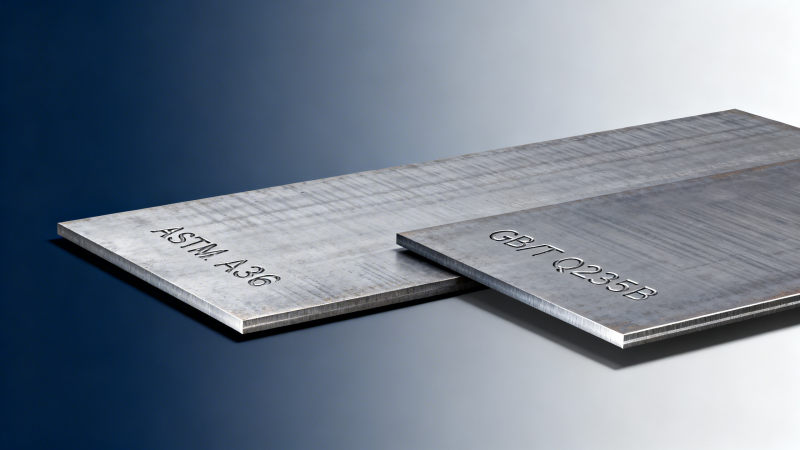
Key Technical Differences: A36 vs. Q235
The distinction isn’t just about naming conventions—it reflects divergent manufacturing controls, testing protocols, and end-use expectations. Below is a side-by-side technical comparison based on actual mill test reports from certified producers:
Note the tighter control on carbon equivalent (CE) in A36—critical for field welding without preheat or post-weld heat treatment. Q235’s higher CE variability increases cracking risk in multi-pass welds common in heavy industrial framing. Also, A36 requires mill certification per ASTM A6, while Q235 typically provides only GB/T 700 compliance—not sufficient for most U.S. structural submissions.
How Thickness & Fabrication Method Influence Your Choice
- Plates ≤12 mm thick: A36 preferred for laser-cut brackets and CNC-bent components due to stable bend radius repeatability (±0.3 mm tolerance).
- Plates 12–25 mm: A36 recommended for robotic MIG welding—its consistent sulfur content (<0.05%) reduces porosity by up to 40% vs. generic Q235 batches.
- Plates >25 mm: Both require preheat, but A36 allows standardized preheat at 100–150°C; Q235 may need 150–200°C depending on melt lot.
Beyond A36 & Q235: Where DX52D Galvalume Fits In
While A36 and Q235 serve structural framing roles, certain auxiliary components demand corrosion resistance without sacrificing formability. That’s where DX52D Galvalume Steel Coil becomes essential—especially for cladding, ductwork, or exposed fasteners in aggressive environments.
Produced from low-carbon steel substrate, DX52D Galvalume offers yield strength ≤260 MPa and tensile strength between 300–360 MPa—making it ideal for cold forming into girts, purlins, or trim profiles. Its 55% Al–43.4% Zn–1.6% Si coating delivers 2–6× longer service life than standard galvanized steel in coastal or industrial atmospheres. With a density advantage, the same weight yields 3% more coverage area versus zinc-only coatings—reducing material handling costs over large-area installations.
Hongteng Fengda supplies DX52D in widths from 500–1500 mm, thicknesses 0.12–4.0 mm, and lengths up to 12,000 mm—all certified to ISO 9001, SGS, and Bureau Veritas. This enables seamless integration with A36-framed systems while meeting UL 723, ASTM A792, and EN 10346 specifications.
Procurement Decision Framework for U.S. Buyers
Selecting the right steel plate involves evaluating five interdependent criteria—not just price per ton. Hongteng Fengda supports U.S. partners through a structured 4-step evaluation process:
- Code Alignment Check: Confirm whether local AHJ accepts GB/T grades—or mandates ASTM/EN certification for structural elements.
- Fabrication Readiness Review: Assess shop capabilities (e.g., welder qualification, NDT capacity) against required testing scope (Charpy, ultrasonic, macroetch).
- Lifecycle Cost Modeling: Compare total installed cost over 10 years—including inspection frequency, maintenance labor, and replacement probability.
- Supply Chain Resilience Assessment: Evaluate lead time consistency (A36 avg. 4–6 weeks; Q235 avg. 2–3 weeks), documentation turnaround, and mill traceability depth.
For example, choosing Q235 may save $80–$120/ton upfront—but can trigger $1,200–$2,800 in rework costs if rejected during city inspection or insurance audit. Conversely, A36’s premium ($150–$220/ton) is offset by faster permitting (avg. 7–15 days faster), fewer field weld repairs, and broader subcontractor acceptance.
Why Global Buyers Trust Hongteng Fengda for U.S.-Bound Structural Steel
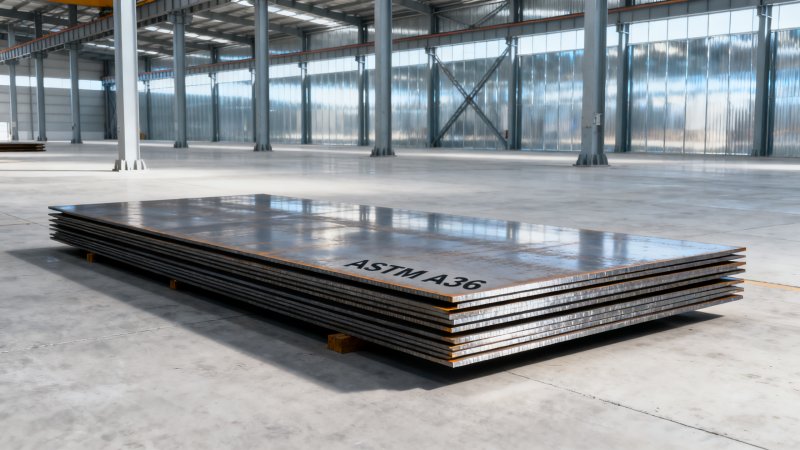
As a certified structural steel manufacturer and exporter from China, Hongteng Fengda bridges the gap between international cost efficiency and North American compliance rigor. We maintain dedicated ASTM A36 production lines—with independent lab verification per heat lot—and offer full documentation packages including MTRs, mill certificates, and third-party inspection reports (SGS/BV).
Our clients across North America rely on us for stable lead times (consistently within ±3 days of quoted schedule), real-time order tracking, and responsive technical support—from initial specification review to final shipment coordination. Whether you need A36 plates for warehouse racking, Q235 for secondary framing, or DX52D Galvalume Steel Coil for corrosion-critical enclosures, we provide coordinated, standards-aligned solutions—not just commodities.
Contact our U.S.-facing engineering team today to request: ASTM A36 mill test reports, Q235-to-A36 equivalency analysis, DX52D coil sample kits, or a customized delivery timeline aligned with your next project milestone.
Please give us a message


Please enter what you want to find