Choosing between stainless round and bar stock can directly affect machining efficiency, structural performance, and project cost. For project managers and engineering leaders, understanding when stainless round offers better strength distribution, corrosion resistance, and processing advantages is essential to making smarter sourcing decisions and reducing execution risks across construction and industrial applications.
What does stainless round really mean in project procurement?
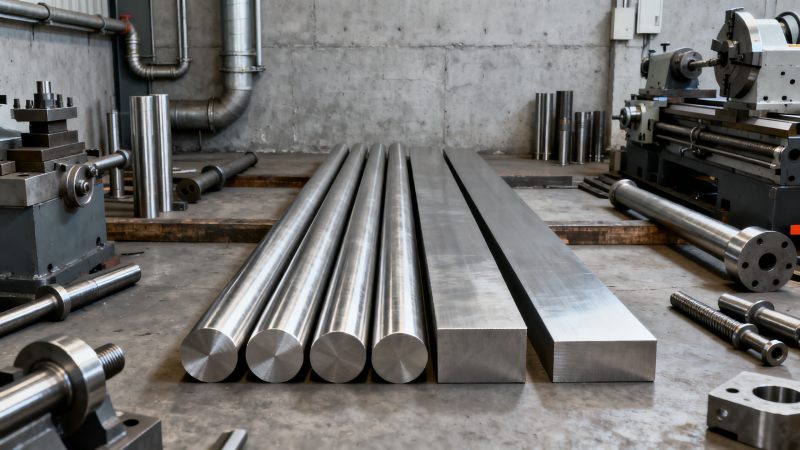
In steel sourcing, stainless round usually refers to stainless steel material supplied in a circular cross-section, commonly used for shafts, pins, fasteners, machined parts, supports, and structural elements that benefit from uniform load distribution. By contrast, bar stock is a broader category that may include round, square, flat, and hexagonal forms. This distinction matters because many procurement discussions treat the two terms as interchangeable when they are not.
For a project manager, the key question is not simply whether stainless round is stronger or more expensive. The real issue is whether its geometry and material behavior reduce manufacturing waste, simplify downstream processing, improve corrosion performance, or lower the probability of installation problems. In many industrial and construction-related applications, that answer is yes.
Why the distinction affects delivery and budget
- A round profile often requires less secondary machining when the final part is cylindrical.
- It provides more even stress distribution around the center axis than many non-round profiles.
- It can reduce corner-related corrosion traps that are more common in square or flat sections.
- It may improve fit and movement in rotating or bearing-related assemblies.
For teams managing multi-country supply chains, profile choice also affects mill availability, lead times, packing efficiency, and inspection methods. A good sourcing decision is therefore not only a material selection issue, but also a schedule and risk control decision.
When is stainless round a better choice than other bar stock forms?
Stainless round becomes the better choice when the end-use part requires circular symmetry, rotational performance, or balanced load transfer. This is common in anchors, tie rods, marine fittings, pump components, conveyor parts, framework connectors, food-grade equipment, and corrosion-prone exposed assemblies. The more the application depends on consistent radial strength and clean machining, the stronger the case for stainless round.
The following comparison helps procurement teams decide faster by linking geometry to project outcomes rather than focusing only on per-ton purchase price.
The table does not mean stainless round is always superior. It means round stock is more efficient when the final function is already round. If the project needs flat bearing surfaces, welded tabs, or rectangular interface points, another bar stock shape may still be the better engineering and cost decision.
Typical conditions where stainless round adds value
- The part will rotate, slide, or carry torsional loads.
- The operating environment includes moisture, chemicals, salt spray, or hygiene requirements.
- The machining route involves turning, drilling from center, threading, or precision finishing.
- The project schedule benefits from reducing rework, material removal, and fabrication complexity.
How do performance, machining, and corrosion resistance compare?
In many construction-adjacent and industrial projects, performance is measured through service life, fabrication compatibility, dimensional stability, and maintenance frequency. Stainless round often performs well because its shape naturally supports turning operations and because stainless grades are selected for corrosion resistance under outdoor or wet conditions.
However, project teams should avoid selecting stainless round based on the alloy name alone. Surface finish, tolerance, straightness, diameter consistency, and the final connection method all influence actual field performance.
For project managers, the most useful insight is that stainless round can lower total manufacturing friction even when the unit material price is higher. Reduced scrap, better machinability for cylindrical parts, and lower maintenance exposure can offset the difference over the project lifecycle.
How should project managers evaluate cost instead of price alone?
A common mistake is comparing stainless round and general bar stock only by purchase price per ton or per meter. That approach ignores yield loss, labor hours, machine occupancy, coating needs, and replacement exposure. In structural and industrial procurement, the winning option is often the one that reduces the total cost of conversion and service.
Hidden cost items that can change the decision
- Extra turning waste when non-round bar stock is converted into a round part.
- Longer machining cycles caused by inconsistent material or poor straightness.
- Additional surface treatment costs if corrosion protection is needed on carbon steel alternatives.
- Higher reinspection and fit-up costs when tolerance control is weak.
- Maintenance downtime where corrosion or wear can stop operations.
This same total-cost logic applies broadly across structural steel procurement. For example, a project may use stainless round for corrosion-sensitive connectors or machined elements, while using formed structural sections for the main frame to keep the budget balanced. In that context, products such as C-beam are often selected for purlins, wall beams, lightweight roof trusses, brackets, and light manufacturing supports where galvanized coating, perforation options, and processing services such as bending, welding, punching, decoiling, and cutting improve installation efficiency.
For buyers managing mixed steel packages, it is practical to combine corrosion-resistant machined round materials with structural profiles produced to ASTM, EN, JIS, or GB-related requirements. That sourcing strategy helps control cost without forcing a single material form into every function.
Where this mixed-material strategy works well
- Industrial workshops where primary members use structural sections, while moving or exposed parts use stainless round.
- Agricultural or coastal buildings where galvanized structural members pair with stainless fittings and pins.
- OEM assemblies requiring both formed components and precision-machined round elements.
What should you check before ordering stainless round from an overseas supplier?
Overseas procurement can deliver strong cost-performance value, but only if technical details are aligned before production. For project leaders, the main risks are not always material failure. More often, the problems come from unclear standards, diameter tolerance mismatch, packaging damage, traceability gaps, or assumptions about machining allowance.
Pre-order checklist for stainless round
- Confirm the application: structural connector, machined shaft, anchor, threaded element, or exposed component.
- Define the required standard or customer specification, including dimensional tolerance and finish.
- Clarify whether the material is for direct installation or secondary machining.
- Specify length, cutting tolerance, bundle weight, and packing method for international shipping.
- Request inspection documents aligned with project needs, especially when export compliance matters.
Hongteng Fengda supports this kind of structured procurement approach across global construction, industrial, and manufacturing projects. As a structural steel manufacturer and exporter from China, the company works with standard specifications and OEM solutions, with production and quality control aligned to commonly used international standards such as ASTM, EN, JIS, and GB. For project managers, this matters because sourcing becomes easier when one supplier can coordinate both mainstream structural products and customized steel components under a consistent export process.
Stable production capacity and dependable lead times are also procurement advantages when your project involves multiple line items, phased shipments, or strict site milestones. A supplier that understands export packaging, document flow, and regional compliance expectations can reduce avoidable delays even before the goods arrive on site.
Which standards and compliance points matter most?
When evaluating stainless round, project teams should match the product to the required regional or client standard rather than relying on a generic description. The right compliance framework depends on the contract, end market, and whether the material serves a structural, mechanical, or fabricated role.
The most reliable procurement outcome comes from translating standards into practical acceptance points. A certificate alone is not enough if the delivered diameter range, cut ends, or straightness do not match the intended fabrication route.
Common mistakes and FAQ about stainless round
Is stainless round always the best option for outdoor use?
Not always. Stainless round is often a strong option for outdoor or corrosive environments, but grade selection and exposure conditions still matter. In mild environments, other steel solutions with protective coatings may be more cost-effective for non-critical components. The correct decision depends on lifecycle expectations, maintenance access, and whether the part is structural, decorative, or mechanical.
Can stainless round reduce machining cost even if the material price is higher?
Yes, especially when the final part is cylindrical. Starting with stainless round can reduce material removal, shorten turning time, improve concentricity, and lower scrap. Those benefits can outweigh a higher material price, particularly in projects with repeated part production or tight machining capacity.
What should project teams prioritize first: grade, shape, or tolerance?
They should be evaluated together, but the sequence often starts with function. First define the load and service environment. Then confirm the shape required by the final geometry. After that, specify tolerance and surface condition based on installation or machining needs. Many procurement problems happen because buyers choose the alloy but leave the dimensional details too vague.
Is bar stock a cheaper substitute for stainless round?
Only in some cases. If the final part does not need a circular profile, another bar stock form may indeed be more economical. But if the part will eventually be turned into a round shape, the apparent savings may disappear through higher waste, longer machining, and more tool wear.
Why choose us for structural steel and related sourcing support?
For project managers and engineering leaders, steel procurement is rarely about one product alone. It is about coordinating specifications, balancing cost with reliability, and keeping delivery aligned with site milestones. Hongteng Fengda supports global buyers with structural steel products and customized solutions for construction, industrial, and manufacturing projects, helping teams reduce sourcing risk and improve execution control.
If you are evaluating stainless round alongside structural sections, formed profiles, or OEM steel components, you can consult us on practical decision points such as parameter confirmation, product selection, applicable standards, processing requirements, delivery lead time, export packing, sample support, and quotation planning for mixed steel packages.
- Need help comparing stainless round with other bar stock for a specific drawing or application.
- Need a combined offer covering structural steel members and customized components.
- Need confirmation of standards, processing scope, and documentation before order placement.
- Need lead time planning for phased shipments to North America, Europe, the Middle East, or Southeast Asia.
Send your required sizes, application details, drawings, target standards, and expected delivery schedule. We can help you assess whether stainless round is the better choice, where alternative bar stock makes more sense, and how to build a sourcing plan that supports both performance and budget.
Please give us a message


Please enter what you want to find