Before choosing a carbon steel pipe supplier in USA, procurement buyers should compare quality standards, pricing stability, delivery reliability, and customization capability.
For construction and industrial projects, understanding material grades, compliance requirements, and sourcing risks can help reduce costs and avoid delays.
This guide highlights the key factors you need to evaluate before making a confident purchasing decision.
What procurement buyers should check first before buying carbon steel pipe in the USA
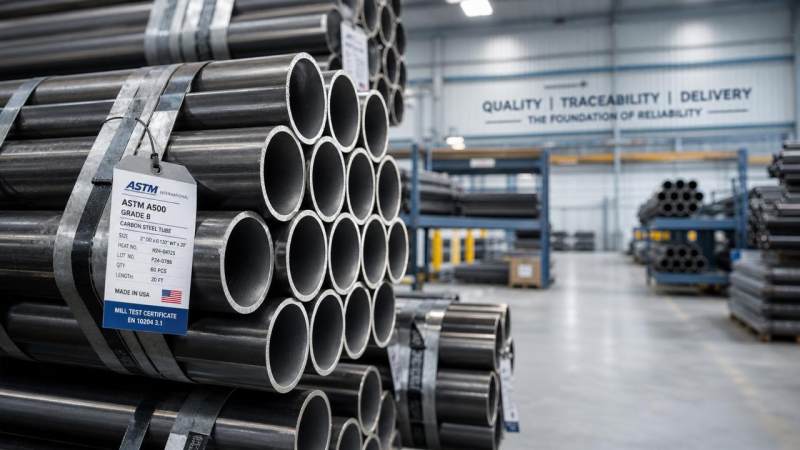
If you are sourcing carbon steel pipe for a project in the United States, the first question is not simply price.
The real issue is whether the supplier can deliver compliant material, consistent documentation, stable lead times, and commercial reliability without creating downstream project risk.
For most buyers, the best carbon steel pipe supplier in USA is not the one with the lowest quote.
It is the supplier that helps you avoid rejection, fabrication delays, hidden cost increases, and warranty or compliance problems after delivery.
That means your evaluation should begin with four practical checkpoints: product standard, traceability, logistics performance, and responsiveness to project-specific requirements.
When these four areas are weak, even an attractive unit price can quickly become expensive through schedule slippage, rework, inspection failure, or emergency replacement orders.
Are you buying the right carbon steel pipe grade for the actual application?
Many procurement problems start before supplier comparison, because buyers request a product description that is too broad for the intended use.
Carbon steel pipe can serve structural, mechanical, fluid transport, piling, fire protection, and fabrication purposes, but each use may require different standards and properties.
In the USA, buyers often need to confirm whether the pipe must comply with ASTM requirements, dimensional tolerances, pressure expectations, coating specifications, and testing obligations.
A supplier should be able to explain the difference between pipe grades, manufacturing methods, and end-use suitability in clear commercial terms, not only technical language.
Ask early whether you need seamless or welded pipe, black or galvanized finish, standard random length or cut-to-length supply, and any secondary processing.
You should also verify wall thickness, outside diameter, yield strength, tensile strength, and whether the material will be exposed to moisture, chemicals, or outdoor conditions.
For buyers supporting construction or industrial fabrication, a wrong grade decision can affect welding performance, service life, inspection approval, and total installed cost.
Why quality documentation matters as much as the pipe itself
In the US market, documentation is often as important as the physical material because project owners, inspectors, and fabricators depend on traceable records.
A reliable supplier should provide mill test certificates, heat numbers, standard references, dimensional inspection records, and coating or surface treatment details when required.
If a quote looks competitive but the supplier is slow or unclear about documentation, that is an early warning sign for procurement teams.
Missing or inconsistent paperwork can delay customs clearance, receiving inspection, internal QA approval, and release to production or installation.
Procurement buyers should ask whether the supplier can support ASTM, EN, JIS, or GB based orders with clear conversion communication where needed.
This is especially important when importing from overseas manufacturers serving US buyers, because purchasing teams may need confidence that global production aligns with local project expectations.
Good suppliers reduce risk by keeping documentation standardized, legible, and connected to each bundle, heat, and shipment lot.
How to compare suppliers beyond the quoted price
When evaluating a carbon steel pipe supplier in USA, procurement teams should compare total supply value rather than only line-item pricing.
A low ex-works or FOB price may still result in higher total cost if packaging is weak, lead time is unstable, or claim handling is slow.
Smart buyers compare suppliers across several dimensions: quote clarity, inclusions, tolerance capability, coating options, packing method, shipping terms, and after-sales response.
You should also ask how often the supplier updates pricing and what factors may trigger adjustment, such as raw material volatility, zinc cost, freight swings, or order quantity.
Price stability matters because procurement planning often extends well beyond the quotation validity period, especially for phased construction or multi-location supply.
Another useful question is whether the supplier can support repeat orders with the same specification consistency, not just a successful first shipment.
Repeatability is critical for framework contracts, OEM programs, and long-duration projects that depend on uniform dimensions and predictable mechanical performance.
How delivery reliability affects project cost more than many buyers expect
Late delivery creates visible cost, but unreliable delivery creates hidden cost across purchasing, warehousing, fabrication, and site coordination.
Even when the material itself is acceptable, uncertain lead times can force buyers to hold more safety stock or place split orders at higher cost.
For that reason, you should assess a supplier’s production capacity, planning discipline, export experience, and communication speed before placing large or urgent orders.
Ask whether they can confirm rolling schedules, galvanizing timelines if relevant, inspection windows, and realistic shipment dates rather than optimistic estimates.
Procurement teams should also check how the supplier handles shortages, specification changes, and partial shipment requests during active project execution.
A dependable supplier does not just promise fast delivery; they provide transparent milestones and alert customers early if any issue may affect the agreed schedule.
This level of predictability helps project buyers manage installation sequencing, contractor expectations, and cash flow more effectively.
When customization and secondary processing become a purchasing advantage
Not every project needs standard stock pipe only. In many industrial and construction cases, buyers can reduce total fabrication cost through customized supply.
Examples include cut-to-length pieces, special surface treatment, tighter tolerances, end preparation, bundled marking, and mixed-specification shipment planning.
If your supplier can support these details at the manufacturing stage, your team may save time in receiving, processing, and site preparation.
This sourcing logic also applies to related steel products used in the same project ecosystem, especially where corrosion resistance and dimensional consistency matter.
For example, some buyers combine pipe procurement with items such as Galvanized Round Steel for towers, infrastructure parts, equipment frames, and fabricated accessories.
With tensile strength of 570–820 MPa, galvanized surface protection, customizable diameter from 16–250 mm, and compliance with standards including ASTM, EN, JIS, and GB, such products can support broader sourcing integration.
For procurement teams, this creates a practical advantage: fewer suppliers to manage, better consistency in material control, and potentially lower handling cost across related steel components.
What compliance and coating questions should buyers ask before ordering?
US buyers should always clarify whether the carbon steel pipe will be used indoors, outdoors, underground, or in corrosive service conditions.
This affects whether black pipe is sufficient or whether galvanizing, painting, or another corrosion-control method is needed for service life expectations.
You should ask the supplier how coating thickness, surface quality, and adhesion are controlled, and whether inspection data is available upon request.
In some applications, dimensional precision and roundness may matter almost as much as corrosion resistance, especially for fit-up and machining.
That is why capable manufacturers often highlight tolerance systems, straightness control, surface inspection equipment, and heat treatment options.
Procurement buyers should not treat these as minor technical details, because they directly affect processing efficiency and acceptance rates at the next production stage.
If the supplier can explain coating and tolerance control in a structured way, it usually indicates stronger manufacturing discipline overall.
How to reduce sourcing risk when buying from overseas manufacturers for the US market
Many US buyers consider offshore sourcing to improve cost competitiveness, but they also worry about quality variation, communication gaps, and shipment uncertainty.
These concerns are valid, so the answer is not blind trust but disciplined supplier qualification and order control.
Start by reviewing export experience, major destination markets, supported standards, factory capability, and the supplier’s approach to quality assurance.
Then evaluate whether they can communicate clearly about packing, marking, inspection, production photos, and pre-shipment document submission.
A professional structural steel manufacturer and exporter should be able to support custom requirements while keeping commercial communication straightforward for procurement teams.
For buyers managing construction, industrial, or OEM programs, a supplier with stable production capacity and dependable lead times can reduce sourcing risk significantly.
This is especially important when your internal team needs confidence not only in the first order, but in long-term replenishment and multi-batch consistency.
Questions every procurement buyer should ask before selecting a supplier
To make comparisons easier, create a short qualification checklist before final negotiation.
Ask which standards the material complies with, what documentation is included, how traceability is maintained, and what inspections are performed before shipment.
Confirm minimum order quantity, price validity, lead time by tonnage range, coating options, packaging method, and claim response procedure.
You should also ask whether the supplier supports custom sizes, mixed containers, or combined supply of related structural steel products if your project needs them.
Another important question is how they handle nonconforming material, because a clear corrective action process reflects operational maturity.
If the supplier answers these questions directly and consistently, that usually signals lower transaction friction after the purchase order is issued.
Procurement success often comes from reducing uncertainty before order placement rather than solving avoidable problems after goods arrive.
Final takeaway for buyers looking for a carbon steel pipe supplier in USA
Before buying carbon steel pipe, procurement teams should focus on commercial reliability and application fit, not just headline price.
The right supplier helps you secure compliant material, stable delivery, usable documentation, and specification consistency across the life of the project.
If you compare suppliers using quality records, lead time realism, customization ability, and risk control discipline, your purchasing decision becomes much stronger.
For construction and industrial buyers, this approach reduces delays, protects budgets, and improves coordination with fabrication and installation teams.
In short, the best buying decision is made when technical requirements, sourcing strategy, and supplier capability are evaluated together.
That is what truly matters before choosing a carbon steel pipe supplier in USA.
Please give us a message


Please enter what you want to find