Before purchasing 201 stainless steel plate, buyers should understand its composition, corrosion resistance, strength, and cost advantages compared with other stainless grades. Whether you are sourcing for construction, fabrication, or industrial use, knowing the key specifications, surface finishes, and suitable applications can help you avoid quality risks and make a more cost-effective decision.
What is 201 stainless steel plate and why do buyers compare it so often?
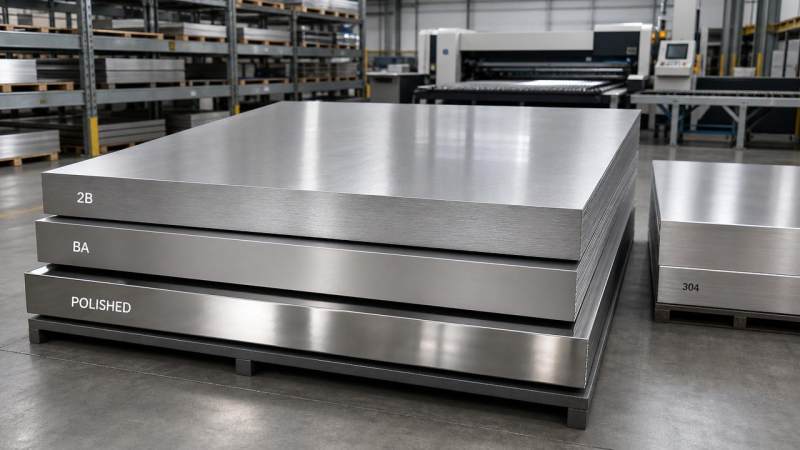
201 stainless steel plate is an austenitic stainless steel product that usually contains chromium, manganese, and lower nickel than 304. That chemistry is the reason it attracts attention from buyers who need a balance between appearance, formability, and budget.
In practical sourcing, 201 stainless steel plate is often evaluated for decorative fabrication, indoor structures, equipment covers, transport components, and general manufacturing parts. It is not a universal replacement for higher grades, but it can be a rational option in the right environment.
For information-stage buyers, the main challenge is not finding a low price. The real issue is determining whether the grade matches the service environment, processing method, and quality expectation of the end project.
- It is usually selected when cost pressure is higher than the need for premium corrosion resistance.
- It can perform well in dry indoor or mildly corrosive environments when processing and storage are controlled properly.
- It needs more careful application review than 304 in humid, coastal, chemical, or food-contact conditions.
Key properties of 201 stainless steel plate buyers should review first
Before requesting a quotation, it helps to translate technical data into purchasing impact. The table below summarizes the most relevant review points for 201 stainless steel plate in steel procurement.
This table shows why 201 stainless steel plate should be assessed as a project-specific material, not a generic stainless choice. A correct decision depends on environment, finish, fabrication, and life-cycle expectation.
Surface finish also changes performance perception
Buyers often focus on chemistry but overlook finish. Common finishes such as 2B, BA, No.1, or polished surfaces affect appearance, cleanability, and the visibility of stains or scratches. For decorative applications, a polished finish may be preferred, but the end environment still determines long-term suitability.
If the material will be laser cut, bent, or welded, ask the supplier whether the plate surface condition is optimized for downstream processing. Surface consistency matters when multiple sheets must look uniform after fabrication.
201 vs 304 stainless steel plate: where does the real difference matter?
Many sourcing decisions come down to one question: should you buy 201 stainless steel plate or move up to 304? The answer depends less on theory and more on service conditions, compliance needs, and replacement cost if the wrong grade is selected.
The comparison below helps procurement teams separate price-driven decisions from application-driven decisions.
If the project is indoors, dry, and not exposed to chloride, 201 stainless steel plate may be commercially sensible. If failure, staining, or rust complaints would be expensive, 304 often becomes the safer long-term decision.
When saving upfront can cost more later
A lower initial purchase price is attractive, but replacement, rework, and warranty pressure can erase that benefit. This is especially true for visible architectural surfaces, export equipment, or applications with seasonal humidity and cleaning chemicals.
For mixed-material projects, buyers sometimes source both stainless plate and structural components from one supply partner to simplify communication. For example, steel structure buyers who also need beam supply may coordinate stainless and carbon steel procurement together, including products such as Hot Rolled H Beam for framework-related packages.
Which applications are suitable for 201 stainless steel plate?
Application review is where many information-stage buyers gain clarity. The grade itself is not the problem. Mismatch between grade and environment is the problem. The following scenarios show where 201 stainless steel plate is usually more suitable and where caution is needed.
- Interior decoration panels, elevator trim, and partition elements in controlled indoor spaces.
- General fabrication parts where surface appearance matters but corrosion exposure is limited.
- Equipment enclosures, cabinets, and covers used in manufacturing environments without aggressive chemicals.
- Transport or fabricated components where budget and forming performance must be balanced carefully.
Applications that need extra caution
Do not assume 201 stainless steel plate is ideal for marine projects, permanently wet areas, food-processing systems, or chloride-cleaned surfaces without detailed review. In those cases, the corrosion risk may require a higher-grade stainless solution.
If the part will be welded and then used in a humid environment, discuss the fabrication route with the supplier. Welding quality, post-processing, and surface contamination control can influence final performance as much as the grade itself.
What specifications should you confirm before placing an order?
When buyers request only thickness and price, quality risk increases. A reliable inquiry for 201 stainless steel plate should define not just dimensions but also finish, tolerance, inspection expectations, and intended use.
- Thickness and size range, including whether tolerance must meet a specific project requirement.
- Surface finish such as No.1, 2B, BA, or polished, depending on fabrication and appearance needs.
- Application environment, especially humidity, cleaning agents, temperature variation, and outdoor exposure.
- Processing plan, including cutting, bending, welding, punching, or decorative polishing.
- Required standards, mill test documentation, and packing method for export or long-distance shipping.
Experienced exporters know that late-stage specification changes create avoidable delays. Hongteng Fengda supports buyers by clarifying technical details early, which helps reduce sourcing mistakes, especially for projects involving multiple steel categories and international delivery schedules.
Check processing compatibility, not just plate price
In many projects, processing cost is higher than raw material savings. If the plate must be cut, bent, welded, or integrated with structural parts, consistency matters. Buyers handling broader steel packages may also source profile products with defined functions such as bending, welding, punching, cutting, and simple construction efficiency, including options like a second package of Hot Rolled H Beam for structural assemblies.
How to evaluate suppliers of 201 stainless steel plate
Supplier selection affects far more than unit price. For export-oriented steel procurement, buyers should evaluate consistency, communication speed, technical understanding, and document support. This is particularly important when the project includes structural steel, fabricated components, and customized dimensions.
The table below can be used as a simple screening tool during supplier comparison.
For many overseas buyers, a capable supplier is one that connects technical clarification with practical execution. Hongteng Fengda serves construction, industrial, and manufacturing projects with stable production planning, standard-compliant steel products, and customized support across global markets.
Common mistakes when buying 201 stainless steel plate
Most purchasing problems happen before production starts. They come from incomplete specifications, unrealistic assumptions, or confusion between visual appearance and actual durability.
- Choosing by price alone without defining exposure conditions.
- Assuming all stainless steel grades perform the same in humidity or salt-containing air.
- Ignoring packaging and storage, which can affect surface condition before installation.
- Not confirming whether the plate will be welded, polished, or formed after delivery.
- Failing to request standard references or inspection records for export projects.
A disciplined sourcing process reduces these risks. That is especially useful when buyers manage mixed orders involving stainless plate, structural profiles, and custom steel components under one delivery deadline.
FAQ about 201 stainless steel plate
Is 201 stainless steel plate good for outdoor use?
It can be used outdoors in some mild environments, but caution is necessary. If the area has high humidity, marine exposure, industrial pollution, or frequent chloride contact, a higher grade is usually safer.
How do I know whether 201 stainless steel plate is enough for my project?
Start with the service environment, expected lifespan, appearance standard, and maintenance conditions. Then compare those factors against corrosion risk and total replacement cost, not just purchase price.
What should be included in an inquiry?
Include grade, thickness, width, length, finish, quantity, end use, processing method, destination market, and document requirements. A complete inquiry allows the supplier to recommend a more accurate solution.
Can one supplier handle stainless plate and structural steel together?
Yes, that is often efficient for project buyers. A supplier with experience in angle steel, channel steel, beams, cold formed profiles, and customized components can simplify communication, scheduling, and export coordination.
Why choose us for steel sourcing consultation and project support?
For buyers researching 201 stainless steel plate, the best support is not a generic sales pitch. It is clear technical guidance, realistic application advice, and dependable execution. Hongteng Fengda is a China-based structural steel manufacturer and exporter serving global construction, industrial, and manufacturing projects with standard and customized steel solutions.
We can help you confirm whether 201 is suitable for your environment, compare it with other stainless grades, review plate specifications, and align your order with fabrication needs. If your project also involves beams, profiles, or OEM steel components, we can coordinate broader package sourcing to reduce communication gaps and delivery risk.
You can contact us for parameter confirmation, material selection, surface finish review, delivery lead time discussion, export packing details, customized steel solutions, standard reference checks, sample support, and quotation communication based on your actual project conditions.
Please give us a message


Please enter what you want to find