Choosing a galvanized pipe manufacturer affects coating performance, dimensional accuracy, delivery stability, and long-term cost control.
For steel sourcing projects, the best option is rarely the lowest quote.
A careful comparison helps reduce claims, delays, and hidden expenses across construction, industrial, and distribution supply chains.
This guide explains what to compare before selecting a galvanized pipe manufacturer, with practical checks for different application scenarios.
Why application scenario matters when comparing a galvanized pipe manufacturer
Different steel pipe projects require different priorities.
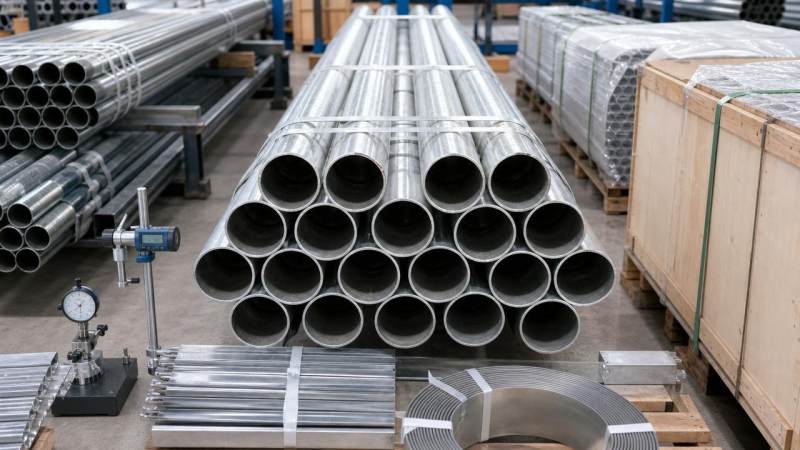
A galvanized pipe manufacturer suitable for water conveyance may not fit structural support, fencing, or fabrication needs.
Surface coating, zinc thickness, pipe tolerance, welding quality, and packaging standards can vary by end use.
That is why comparison should start with the actual application scene, not only unit price.
In steel trading, poor matching often causes more loss than high initial cost.
Returns, rust complaints, delayed customs clearance, and project rejection usually come from wrong supplier selection criteria.
Scenario 1: Construction projects need standards, consistency, and documentation
Construction applications usually demand consistent mechanical properties and traceable compliance.
When evaluating a galvanized pipe manufacturer for this scene, start with standards and test records.
Check whether the supplier can produce according to ASTM, EN, JIS, or GB requirements.
Also verify mill test certificates, coating thickness reports, and dimensional inspection procedures.
For building frames, handrails, scaffolding, and support systems, consistency between batches is critical.
A reliable galvanized pipe manufacturer should maintain stable outside diameter, wall thickness, straightness, and weld seam quality.
Key checks for construction supply
- Production meets target standards and project specifications.
- Zinc coating is suitable for outdoor exposure.
- Batch traceability supports inspection and claims handling.
- Packing protects pipes during port and inland transport.
Scenario 2: Distribution business needs lead time control and flexible specifications
For stock supply and regional resale, variety and replenishment speed often matter more than one-time pricing.
A suitable galvanized pipe manufacturer should offer broad size coverage and stable shipping schedules.
Ask whether regular sizes are available from standing production plans or only from made-to-order runs.
This directly affects stock rotation and urgent order response.
It is also useful to compare related galvanized steel products from the same supplier.
For example, some projects combine pipes with roofing, enclosure, or fabricated steel components.
In such cases, access to Galvanised Steel Sheet Metal can improve sourcing efficiency.
Common grades include DX51D, SGCC, and S250GD, with widths from 600mm to 1500mm and thickness from 0.12mm to 6.00mm.
Products compliant with ASTM, EN, JIS, or GB can support broader steel package supply.
What to compare for distribution scenarios
- Standard stock range and size completeness.
- Minimum order quantity by size and coating type.
- Production lead time during peak season.
- Container loading efficiency and mixed-size shipment support.
- Export document accuracy and customs readiness.
Scenario 3: Industrial processing needs customization and fabrication compatibility
Industrial projects often process galvanized pipes further through cutting, bending, welding, threading, or assembly.
In this scene, a galvanized pipe manufacturer should be evaluated beyond basic dimensions.
The steel base material, coating uniformity, and processing behavior all matter.
Ask whether the supplier can support custom lengths, end treatment, hole punching, or bundled kit packing.
If your project includes related galvanized materials, the same supplier may also provide Galvanised Steel Sheet Metal for formed parts.
This material is used in construction, transportation, home appliances, communications, and industrial fabrication.
Its corrosion resistance, weldability, and processing adaptability are useful reference points when judging broader galvanizing capability.
Processing-related comparison points
- Tolerance control for downstream fabrication.
- Weld seam performance after cutting and forming.
- Custom production support and drawing-based manufacturing.
- Technical communication speed before mass production.
How scenario needs differ when selecting a galvanized pipe manufacturer
The table below helps compare priorities across common supply scenes.
Practical comparison checklist before placing an order
When reviewing a galvanized pipe manufacturer, use a structured checklist instead of relying on sales promises.
- Confirm production standards, steel grade, and galvanizing process.
- Request recent inspection reports and sample photos.
- Compare actual lead time, not only estimated shipment date.
- Review export packaging, marking, and loading method.
- Check communication efficiency for technical questions and claims.
- Evaluate whether the supplier can scale for repeat orders.
A strong galvanized pipe manufacturer should demonstrate consistency in product, paperwork, and service.
This is especially important for international steel sourcing where errors cost time and freight.
Common mistakes when comparing a galvanized pipe manufacturer
The most common mistake is choosing only by price per ton.
Low pricing may hide thinner coating, wider tolerance, weak packing, or unstable raw material sourcing.
Another mistake is ignoring export experience.
Even qualified production can become a problem if labeling, documents, and shipment coordination are poor.
Some buyers also skip factory capability checks for customized orders.
That increases the risk of sample approval but mass production inconsistency.
Finally, many overlook long-term cooperation factors such as repeatability, complaint response, and capacity during market volatility.
A smarter next step for stable steel sourcing
The right galvanized pipe manufacturer should fit your application scene, quality target, and delivery rhythm.
Comparing standards, customization ability, export reliability, and supply stability creates a more dependable sourcing decision.
For broader structural steel needs, it also helps to work with a supplier experienced in international standards and customized steel solutions.
Hongteng Fengda, a structural steel manufacturer and exporter from China, supports global projects with stable production, strict quality control, and dependable lead times.
If you are comparing options now, prepare your specification list, target market standard, and quantity plan first.
Then request samples, test documents, and delivery confirmation before the final order.
That process will help you choose a galvanized pipe manufacturer with lower risk and stronger long-term value.
Please give us a message


Please enter what you want to find