Choosing the right ss coil supplier can directly affect your product quality, delivery reliability, and profit margins. For steel sourcing, the decision goes beyond price alone.
A dependable ss coil supplier helps reduce sourcing risks, improve inventory stability, and support long-term market competitiveness. Careful evaluation before ordering is essential.
What should you verify first when reviewing an ss coil supplier?
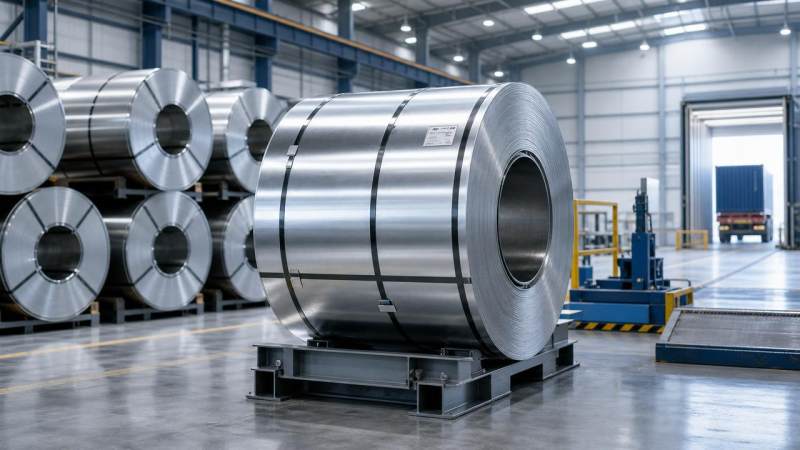
Start with basic legitimacy. Confirm business registration, export licenses, factory location, and years of operation in the steel industry.
An experienced ss coil supplier usually provides clear company information, product catalogs, inspection procedures, and communication records without hesitation.
Next, verify whether the supplier is a trader, factory, or integrated exporter. This affects pricing, response speed, and production control.
For steel projects, factory-backed suppliers often offer better consistency. They can control rolling schedules, surface treatment, and packaging more effectively.
It is also wise to check export destinations. A supplier serving North America, Europe, the Middle East, and Southeast Asia often understands international documentation and standards.
- Company registration and export qualification
- Manufacturing capability or verified production partners
- Main steel product range and material grades
- Quality management and inspection process
- Document support for overseas shipments
How do quality standards reveal whether an ss coil supplier is reliable?
Quality standards are one of the clearest indicators. A reliable ss coil supplier should state which standards each product follows.
For steel coil and structural steel products, common standards include ASTM, EN, JIS, GB, DIN, and AiSi. These standards reduce confusion in cross-border orders.
Ask for mill test certificates, chemical composition reports, and dimensional tolerance records. Do not rely only on sales promises.
Surface condition matters too. Coil edges, coating uniformity, flatness, thickness control, and packing condition can affect downstream fabrication and resale value.
A useful example is Rolled Coil for boiler plate and related applications. It may use carbon steel grades such as Q235, Q235B, Q345, St37, and St52.4.
Its chemistry can include carbon from 0.12% to 0.20%, manganese from 0.30% to 0.70%, with phosphorus and sulfur not exceeding 0.045%.
These details matter because weldability, cold working performance, and hot working suitability directly influence fabrication quality and production efficiency.
Quality documents worth requesting
- Mill test certificate
- Third-party inspection report
- Material grade confirmation
- Coating or surface inspection data
- Packing and loading photos before shipment
Why are production capacity and lead time critical when selecting an ss coil supplier?
Supply stability is just as important as quality. A strong ss coil supplier should explain monthly capacity, rolling schedules, and normal lead times.
This is especially important when projects require repeated orders. Irregular production can disrupt installation plans, cash flow, and customer commitments.
Ask how the supplier handles urgent orders, peak season congestion, and raw material shortages. Practical answers are better than optimistic estimates.
Reliable exporters often maintain stable relationships with steel mills, process lines, and logistics channels. That network improves shipment predictability.
Packaging also affects delivery performance. Proper moisture protection, edge protection, strapping, and container loading can reduce damage claims and port delays.
Lead time questions to ask
- What is the standard production cycle for each steel grade?
- How much tonnage can be supplied monthly?
- What is the average export lead time by destination?
- How are delays reported and managed?
- Can the supplier support repeat orders with the same specification?
How can customization and technical support improve sourcing results?
Not every order fits a standard catalog. A capable ss coil supplier should support customized width, thickness, length, coating, and packing requirements.
This matters in structural steel distribution, fabrication, and industrial processing. Small specification mismatches can create scrap, rework, or delayed assembly.
Technical support should include grade selection, tolerance guidance, welding advice, and processing recommendations based on the application.
For example, coated carbon steel coil with widths from 0.1mm to 300mm and tolerance around ±1% may suit different fabrication needs.
Products with good weldability and cold working properties can support bending, stamping, forging, and hot rolling without unnecessary complications.
A supplier with broad steel expertise may also support related products such as angle steel, channel steel, steel beams, and cold formed profiles.
What pricing mistakes should you avoid before confirming an ss coil supplier?
The lowest quote is not always the best offer. Comparing only unit price can hide quality gaps, reduced coating weight, loose tolerances, or weaker packaging.
A professional ss coil supplier should provide transparent quotations with grade, thickness, width, standard, quantity, packing, Incoterms, and delivery schedule.
Check whether the offer includes inspection, documentation, inland transport, port charges, or export packaging. Missing cost items can distort comparisons.
Payment terms deserve equal attention. Secure arrangements help balance trust, cash flow, and shipment control.
If a quote looks unusually low, review the material source and compliance history. Short-term savings can become expensive after claims or rejected cargo.
Common hidden cost areas
- Non-standard packaging charges
- Extra testing and inspection fees
- Port storage caused by delayed documents
- Replacement costs for off-spec steel coils
- Production downtime from unstable supply
How do you compare suppliers quickly without missing important details?
A side-by-side review helps simplify the decision. Use a structured checklist instead of relying on general impressions.
This method makes it easier to compare each ss coil supplier objectively, especially when multiple offers look similar on the surface.
Which warning signs suggest an ss coil supplier may create future problems?
Several warning signs should not be ignored. One is vague answers about material origin, inspection process, or production schedule.
Another issue is inconsistent quotation details. If grade, thickness, coating, or tolerances change between messages, risk increases.
Be cautious if the ss coil supplier refuses third-party inspection, avoids sample review, or cannot provide recent shipping documents.
Poor communication before the order often becomes a bigger problem after payment. Slow replies can lead to errors and delayed claims resolution.
A trustworthy steel partner should combine clear communication, consistent quality, and reliable export execution from inquiry to delivery.
Quick risk checklist
- No clear standard or grade confirmation
- Unrealistic lead time promises
- Incomplete export documents
- No inspection evidence
- Very low pricing without explanation
Before selecting an ss coil supplier, focus on verifiable quality, stable capacity, export experience, and practical customization support. These factors protect both delivery performance and long-term profitability.
A strong steel sourcing decision is built on details, not assumptions. Review documents, compare terms carefully, and test communication quality early.
If you need a dependable structural steel partner from China, choose one with proven standards compliance, steady production, and responsive service across global markets.
Please give us a message


Please enter what you want to find