Choosing the right steel girder manufacturer in China can directly affect project quality, delivery schedules, and long-term costs. For business decision-makers sourcing structural steel, it is essential to evaluate production capability, quality standards, customization support, and export experience before making a commitment. This guide outlines the key factors to check so you can reduce sourcing risks and select a reliable supplier with confidence.
What business buyers really need to verify first
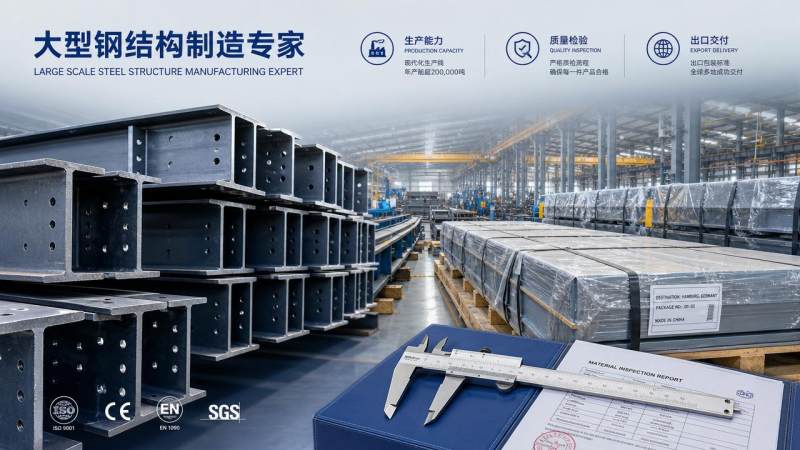
The core search intent behind finding a steel girder manufacturer in China is not simply to compare prices. Decision-makers want to identify a supplier that can deliver consistent quality, reliable lead times, and manageable sourcing risk.
In practice, the best supplier is rarely the one with the lowest quotation. It is the one that can meet technical requirements, support project documentation, communicate clearly, and keep delivery commitments under real production pressure.
For procurement leaders, project managers, and company owners, the biggest concerns usually include hidden quality issues, delayed shipments, specification mismatches, weak export support, and poor after-sales accountability once goods leave the factory.
That is why supplier evaluation should focus less on marketing language and more on evidence. Factory capability, process control, inspection systems, and export experience reveal much more than a polished quotation sheet.
Can the manufacturer actually produce your girder requirements?
The first checkpoint is production capability. Many trading companies present themselves as manufacturers, while some real factories still outsource critical processes. Buyers should confirm whether the supplier has in-house production for the girder types they are quoting.
Ask what steel sections they produce regularly, what size ranges they handle, and whether they can manage custom fabrication such as drilling, cutting, welding, cambering, coating, or assembly preparation. This matters when your project has non-standard specifications.
You should also verify monthly output and typical order volumes. A supplier may produce excellent samples but still struggle with scale. For larger infrastructure, industrial, or commercial building projects, production capacity must match your delivery schedule.
It is useful to ask for recent project references with similar complexity. A supplier that has already delivered structural steel for export markets will usually understand packaging, marking, traceability, and documentation requirements much better than an inexperienced producer.
Do their quality standards match your market requirements?
Quality control is one of the most important factors when choosing a steel girder manufacturer in China. A supplier should be able to explain not only what standards they follow, but how they control compliance during actual production.
Check whether the company works with recognized standards such as ASTM, EN, JIS, or GB, depending on your target market. If your project is governed by local engineering codes, make sure the factory can align materials and tolerances accordingly.
Request mill test certificates, inspection reports, and examples of quality documentation from previous export orders. Serious manufacturers can usually provide chemical composition data, mechanical property reports, dimensional inspection records, and surface treatment details.
It is also wise to review how they manage raw material sourcing. Stable product quality begins with stable billet or coil supply. If upstream material control is weak, consistency problems can appear later even if final inspection looks acceptable.
Business buyers should ask whether third-party inspection is welcome. A reliable factory will not resist independent verification. In fact, openness to inspection often signals confidence in internal quality systems and production discipline.
How strong is their customization and technical support?
Not every order is a standard commodity order. Many buyers need fabricated or semi-fabricated structural steel that fits project drawings, budget limits, installation timelines, and logistics constraints. Technical support therefore becomes a major decision factor.
A good manufacturer should be able to review drawings, confirm tolerances, propose processing options, and identify possible cost-saving adjustments before production begins. This early communication can prevent expensive errors later in the project cycle.
For example, some projects combine girders with related steel items such as beams, channels, profiles, or bars. In broader sourcing programs, having one supplier that understands multiple structural steel categories can simplify procurement coordination and reduce supplier management costs.
That is also why some buyers review adjacent product capabilities. A supplier offering items such as A36 Carbon Steel Round Bar may be better positioned to support mixed structural and engineering orders, especially when materials must meet ASTM, EN, JIS, or GB-related expectations.
In such cases, details matter. Availability in different lengths and diameters, strong mechanical performance, and optional surface treatments like oiling, phosphating, passivation, or anti-rust coating can improve fit for manufacturing and construction use.
How reliable are lead times, packaging, and export execution?
Late delivery can damage project schedules far more than a small difference in unit price. For international buyers, supplier reliability must include not only production speed but also packaging quality, shipment planning, and export coordination.
Ask how long production takes for standard and custom orders. Then ask a more important question: how often are those lead times achieved in real orders? A credible manufacturer should be able to discuss scheduling discipline, not just ideal timelines.
Packaging should also be reviewed carefully. Steel girders and related components must be packed and marked in ways that reduce handling damage, simplify unloading, and support site identification. Poor export packaging can create avoidable losses after arrival.
Documentation capability is another practical checkpoint. International shipments may require packing lists, commercial invoices, certificates of origin, inspection records, and compliance documents. Delays often happen because paperwork is treated as an afterthought.
If the supplier serves customers in North America, Europe, the Middle East, or Southeast Asia, ask for examples of those export workflows. Market experience often translates into smoother customs handling and fewer communication gaps.
How should you assess price without increasing total risk?
Price evaluation should go beyond the quoted steel cost per ton. A low initial quotation may hide risk in material substitution, weak tolerances, poor surface condition, inconsistent weight control, delayed delivery, or extra charges during production.
The better approach is to compare total procurement value. That includes product quality, usable yield, compliance certainty, shipping readiness, communication efficiency, and the probability that the goods will arrive as specified and on schedule.
When comparing suppliers, ask for quotation transparency. Clarify what is included in the price, such as raw material grade, fabrication steps, coatings, testing, packaging, inspection, and export service. Hidden exclusions are common sources of later disputes.
It is also useful to calculate the cost of failure. Rework, site delays, rejected material, or emergency replacement purchases can quickly eliminate any savings from a lower quote. For business buyers, risk-adjusted cost is more meaningful than nominal price.
What signs indicate a dependable long-term manufacturing partner?
If you are sourcing repeatedly rather than for a single order, long-term supplier value matters even more. A dependable steel girder manufacturer in China should combine stable production, consistent quality, responsive communication, and a practical problem-solving attitude.
Look at how the supplier handles questions before the order is placed. Are answers clear and technical, or vague and purely sales-driven? Early communication quality often predicts how smoothly production and issue resolution will go later.
Factory transparency is another positive sign. Reliable companies are usually willing to share production photos, workshop information, inspection procedures, and export case references. They understand that trust is built through evidence, not promises alone.
You should also assess whether the company can grow with your needs. Suppliers with modern facilities, quality discipline, and OEM support are often better suited for buyers seeking stable long-term cooperation across different structural steel categories.
Manufacturers focused on structural steel exports often create value beyond supply alone. They can help reduce sourcing risk, improve procurement efficiency, and support project completion through dependable scheduling and professional coordination.
A practical checklist before making your final decision
Before selecting a supplier, confirm five areas clearly. First, verify that the company is a real manufacturer with relevant in-house capability. Second, confirm standards compliance and documentation support for your market.
Third, evaluate customization and engineering communication, especially if your order involves fabricated or non-standard girders. Fourth, test delivery reliability by reviewing production planning, packaging, and export documentation ability.
Fifth, compare quotations on total value rather than headline price alone. The best sourcing decision protects project quality, schedule, and cost control at the same time. That is the standard a serious supplier should meet.
For decision-makers, choosing well means reducing uncertainty before the purchase order is issued. A structured review process helps you avoid expensive surprises and identify manufacturers that can truly support your business goals.
Conclusion
When evaluating a steel girder manufacturer in China, the most important question is not who offers the cheapest quote, but who can deliver the right product with consistent quality, reliable timing, and professional export execution.
If a supplier can demonstrate proven production capability, compliance with international standards, customization support, stable lead times, and transparent communication, they are far more likely to be a safe and valuable long-term partner.
For business buyers, this approach leads to better procurement outcomes, lower project risk, and stronger supply chain confidence. In global structural steel sourcing, disciplined supplier selection is one of the smartest investments you can make.
Please give us a message


Please enter what you want to find