Choosing the right corrosion-resistant plate supplier in Middle East can directly affect project quality, delivery schedules, and long-term cost control. For procurement teams, it is essential to evaluate product standards, supply stability, customization capability, and export experience before making a decision. A reliable supplier helps reduce sourcing risks and ensures consistent performance for construction and industrial applications.
Why supplier selection matters more in Middle East steel procurement
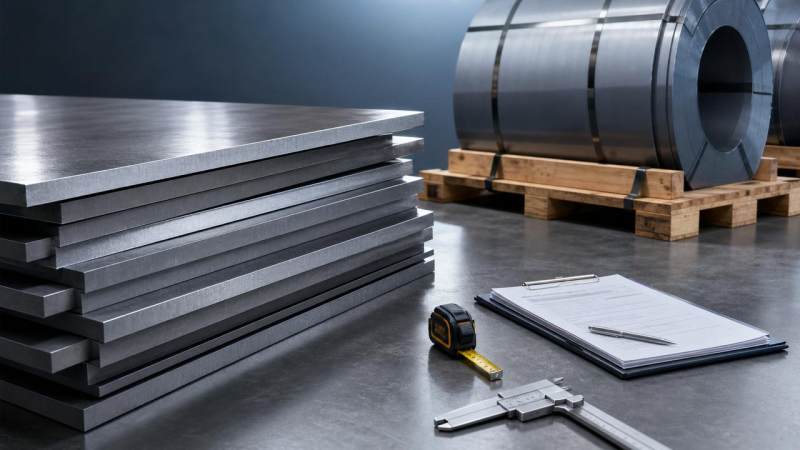
For buyers in the steel industry, supplier selection is not only a price decision. In the Middle East, many projects face high temperature, coastal humidity, salinity, aggressive soil, and tight construction schedules. These factors increase the importance of steel plate quality, coating suitability, material traceability, and stable delivery.
When procurement teams search for a corrosion-resistant plate supplier in Middle East, they usually compare more than quotations. They need to confirm whether the supplier understands end-use conditions, follows international standards, supports third-party inspection, and can keep consistency across multiple batches.
This is especially important for construction, industrial fabrication, marine works, storage facilities, and infrastructure projects where corrosion risk can shorten service life and increase maintenance costs. A lower ex-works price may become expensive if the plate grade, tolerance, or protective performance does not match the actual environment.
- Harsh service environments require better material selection and sometimes special grades.
- Import projects depend on realistic lead times, export packing, and document accuracy.
- Large-volume purchasing needs repeatable quality, not just a good first shipment.
- Project delays often come from weak communication on standards, testing, or customization.
What should procurement teams check first?
Before approving any corrosion-resistant plate supplier in Middle East, buyers should create a practical evaluation sequence. This helps avoid decisions based only on unit price or brochure claims. The most useful approach is to check standard compliance, production capability, export support, and actual response quality during quotation.
Core pre-qualification checklist
- Confirm applicable standards such as ASTM, EN, JIS, or GB based on project drawings and contract requirements.
- Verify available steel grades, thickness range, dimensional tolerance, and whether the supplier can meet custom cutting or fabrication needs.
- Review mill test certificates, inspection workflow, and traceability from raw material to final shipment.
- Check export experience to Middle East ports, including packing, marking, shipping coordination, and document handling.
- Ask for realistic production lead time by quantity, not generic promises.
- Evaluate communication speed and technical clarity during inquiry response.
A capable supplier should be able to explain not only what they can sell, but also why a certain material, standard, or processing method fits the project. That technical conversation often reveals whether the supplier is ready for long-term cooperation.
How to compare suppliers beyond price
The table below helps buyers compare a corrosion-resistant plate supplier in Middle East using practical procurement criteria. It focuses on total sourcing risk rather than only the headline price.
This comparison shows why the cheapest offer is not always the most economical. Procurement teams should calculate total landed value, including quality risk, inspection cost, processing efficiency, and delivery certainty.
Which technical points define a reliable corrosion-resistant plate supplier?
A qualified corrosion-resistant plate supplier in Middle East should understand that corrosion resistance is not a single product label. It depends on steel grade selection, surface condition, intended coating system, fabrication method, and actual service environment. Buyers should ask technical questions early, especially for coastal, industrial, or underground use.
Key technical checks
- Does the supplier recommend grades according to environmental exposure and structural load?
- Can they provide plates matching ASTM, EN, JIS, or GB requirements specified by the project?
- Do they control thickness tolerance, flatness, and edge condition for downstream fabrication?
- Can they support processing such as cutting, drilling, welding preparation, or prefabricated components?
- Do they understand coating compatibility and transport protection for export shipments?
For buyers handling retaining, marine, and deep-foundation projects, it is also useful to review complementary steel solutions from the same supplier. For example, Steel Sheet Piles are often selected for construction in deep water and cofferdams because they offer high strength, good waterproof performance, reusable value, and flexible interlock options such as Larssen locks, cold rolled interlock, and hot rolled interlock.
Where project scope includes both corrosion-resistant plates and structural sections, a supplier with broader steel manufacturing capability can simplify communication, reduce vendor coordination time, and improve consistency in documentation and shipping.
Standards, certification, and traceability: what documents should you request?
Documentation is often where hidden supplier differences appear. Procurement personnel should request documents before order confirmation, not after production. This is a key step when screening a corrosion-resistant plate supplier in Middle East for infrastructure, fabrication, and industrial applications.
The table below summarizes common document checks and why they matter in steel purchasing.
If a supplier cannot clearly provide these documents or delays answers to simple compliance questions, buyers should treat that as an early warning. Strong documentation control usually reflects stronger production and export discipline.
How do lead time, capacity, and customization affect total cost?
Many procurement teams focus on tonnage price but underestimate indirect costs. A capable corrosion-resistant plate supplier in Middle East should help buyers reduce total project cost through stable scheduling, practical processing options, and fewer on-site corrections.
Cost factors that matter in real projects
- Long or uncertain lead time may stop fabrication lines or site installation.
- Poor dimensional consistency increases cutting waste and labor hours.
- Weak packing can create edge damage, rust issues, and claim disputes.
- Lack of OEM or prefabrication support pushes more work to the buyer or contractor.
Hongteng Fengda supports global buyers with structural steel manufacturing and export service from China. Its product range includes angle steel, channel steel, steel beams, cold formed steel profiles, and customized structural steel components. For procurement teams, this broader capability is useful when a project needs bundled sourcing, standard sections, or OEM solutions under controlled quality procedures.
Because the company works with ASTM, EN, JIS, and GB related requirements, buyers can discuss specification matching earlier in the sourcing cycle. That reduces the chance of misalignment between drawings, local consultant expectations, and supplied material documents.
Common mistakes when choosing a corrosion-resistant plate supplier in Middle East
Mistake 1: treating all corrosion-resistant steel as the same
Different environments require different material strategies. Coastal works, chemical exposure, buried structures, and dry indoor industrial use do not create the same risk. Buyers should define environment, coating plan, and service life expectation before comparing offers.
Mistake 2: buying by lowest quotation without checking scope
Some quotations exclude testing, cutting, special packing, marking, or inspection support. The lower unit price then leads to add-on costs later. Procurement teams should compare scope line by line.
Mistake 3: ignoring supplier communication quality
Fast and precise technical replies usually indicate stronger project handling. Slow or vague answers on standards, tolerances, and lead times often lead to problems after order placement.
Mistake 4: not planning for repeat orders
Many projects need phased delivery. A supplier may perform well on a sample order but struggle on larger or repeated lots. Capacity planning and batch consistency should be checked in advance.
FAQ for buyers evaluating steel plate suppliers
How can I judge whether a supplier really has export experience to the Middle East?
Ask about destination port handling, export packing methods, common document sets, marking requirements, and shipping coordination. An experienced supplier will answer clearly and align production, inspection, and loading with delivery needs rather than giving only general sales language.
What is more important, plate grade or coating?
Both matter. The grade affects strength and base material behavior, while the coating system affects environmental protection. A good corrosion-resistant plate supplier in Middle East should discuss them together based on use conditions, fabrication process, and maintenance expectations.
Should I request samples or only documents?
For standard plate procurement, documents and traceability are often the first requirement. For custom processing, special surface expectations, or trial projects, sample confirmation can also help reduce purchasing risk before mass production.
Can one supplier support more than plates?
Yes, and this can improve procurement efficiency. Suppliers with structural steel manufacturing capabilities may also support beams, channels, angles, cold formed profiles, and related fabricated parts. In some foundation or marine works, they may additionally supply solutions such as Steel Sheet Piles produced to EN10248, EN10249, JIS5528, JIS5523, or ASTM related standards, with grades including S275, S355, S390, S430, SY295, SY390, and ASTM A690.
Why choose us for your next sourcing inquiry
For procurement teams looking for a dependable corrosion-resistant plate supplier in Middle East, working with a manufacturer-exporter that understands both steel production and international project execution can reduce sourcing pressure. Hongteng Fengda provides structural steel products and customized solutions for construction, industrial, and manufacturing projects, supported by modern facilities and strict quality control.
Our experience with global buyers helps us focus on the issues that matter in real purchasing decisions: standard matching, stable capacity, consistent quality, dependable lead times, and practical communication. We support buyers who need standard specifications as well as OEM-oriented requirements across structural steel categories.
- Parameter confirmation for grade, size, tolerance, and applicable standard
- Product selection support based on application environment and fabrication needs
- Lead time review according to quantity, processing scope, and shipment plan
- Customized solution discussion for OEM, cut-to-size, or fabricated structural parts
- Certification and document communication including standard references and inspection needs
- Sample support and quotation communication for project evaluation
If you are comparing suppliers now, send your drawings, grade requirements, target market standard, quantity, and required delivery schedule. This makes it easier to evaluate feasibility, recommend suitable steel solutions, and provide a quotation that reflects the real project scope instead of a misleading low headline price.
Please give us a message


Please enter what you want to find