Before purchasing steel metal angle for outdoor fabrication, verify critical factors like material grade (e.g., DX51D steel for corrosion resistance), surface treatment (hot dip galvanized coil ensures longevity), and bending capability (steel angle bending performance affects structural integrity). Understand what is angle steel — its dimensions, tolerances, and compliance with ASTM/EN/GB standards. Also consider carbon steel pipe stockist reliability and stainless options like 304L stainless steel pipe for hybrid applications. As a trusted structural steel manufacturer & exporter from China, Hongteng Fengda supports global buyers with certified, quality-controlled solutions — helping procurement, engineering, and project teams make informed, risk-free sourcing decisions.
What Material Grade & Surface Treatment Suit Your Outdoor Environment?
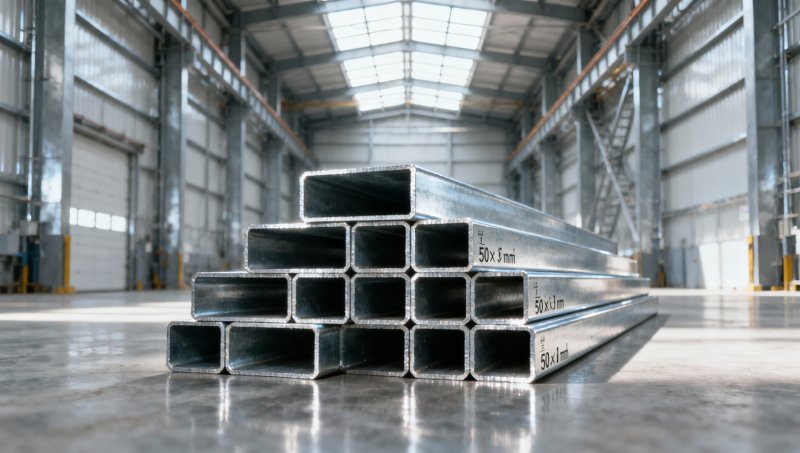
Outdoor steel angle faces aggressive exposure: UV radiation, rain, salt spray (coastal zones), freeze-thaw cycles, and airborne pollutants. Selecting the wrong grade or coating leads to premature rust, section loss, and structural compromise within 3–5 years — especially in high-humidity or industrial zones.
For standard atmospheric conditions, ASTM A36 or EN S235JR with hot-dip galvanizing (minimum 85 µm zinc coating per ISO 1461) delivers 15–20 years of service life. In marine or acidic environments, DX51D+Z275 (275 g/m² zinc-iron alloy) or pre-painted galvalume (PPGL) offers superior barrier protection. PPGL Steel Sheet — with its 55% aluminum, 43.4% zinc, and 1.6% silicon alloy layer — provides heat resistance above 300°C and a service life exceeding 25 years, making it ideal for cladding, roofing, and hybrid support structures where thermal stability and aesthetics matter.
Avoid bare carbon steel or electro-galvanized angles outdoors unless backed by rigorous maintenance schedules. Corrosion rates accelerate exponentially beyond 70% relative humidity — a condition common across Southeast Asia, the Gulf region, and coastal North America.
Key Coating Comparison for Long-Term Outdoor Use
The table below compares real-world performance metrics across three widely specified surface treatments:
Note: All values assume standard atmospheric exposure per ISO 9223 classification C3/C4. Actual lifespan depends on local microclimate, installation method, and maintenance frequency.
How Dimensional Tolerance & Bending Performance Impact Structural Integrity
Angle steel used in load-bearing outdoor frameworks — such as solar mounting systems, agricultural sheds, or façade bracing — must maintain dimensional accuracy under thermal expansion and mechanical stress. A ±0.5 mm tolerance in leg width or thickness may cause misalignment during welding or bolting, increasing joint fatigue risk by up to 40% over 10 years of cyclic loading.
Bending capability matters most when fabricating curved guardrails, arched canopies, or custom brackets. Cold-formed angles with yield strength ≤ 345 MPa (e.g., Q345B or S355JR) offer better cold-bend ductility than higher-strength grades. Always request mill test reports confirming tensile elongation ≥ 20% for bending applications — a non-negotiable parameter verified at Hongteng Fengda’s ISO 9001-certified QC lab before shipment.
Also confirm angularity: deviation from 90° must be ≤ ±1.0° per meter length (per EN 10056-1). Excessive angular distortion causes cumulative alignment errors across multi-bay structures — particularly problematic for prefabricated barns, greenhouses, and modular warehouses.
Which International Standards Apply — And Why Compliance Is Non-Negotiable
Global procurement teams face divergent regulatory expectations: North American projects require ASTM A6/A6M certification; EU tenders mandate CE marking per EN 10025-2; Middle East clients often demand third-party inspection per SAUDI ARAMCO SAES-W-011. Using non-compliant angle steel risks rejection at customs, insurance invalidation, or mandatory rework — adding 7–15 days delay and 12–18% cost escalation.
Hongteng Fengda supplies angle steel fully traceable to raw material heat numbers, with mill certificates covering chemical composition (C, Mn, Si, P, S), mechanical properties (yield/tensile strength, elongation), and dimensional verification. Every batch undergoes ultrasonic testing (UT) for internal defects and magnetic particle inspection (MPI) for surface cracks — meeting ASTM E1444 and EN ISO 9934 requirements.
For hybrid applications involving stainless components (e.g., 304L stainless steel pipe connectors), we provide galvanic compatibility reports to prevent accelerated bimetallic corrosion — a frequent oversight in mixed-material outdoor assemblies.
Why Global Buyers Choose Hongteng Fengda for Outdoor Angle Steel
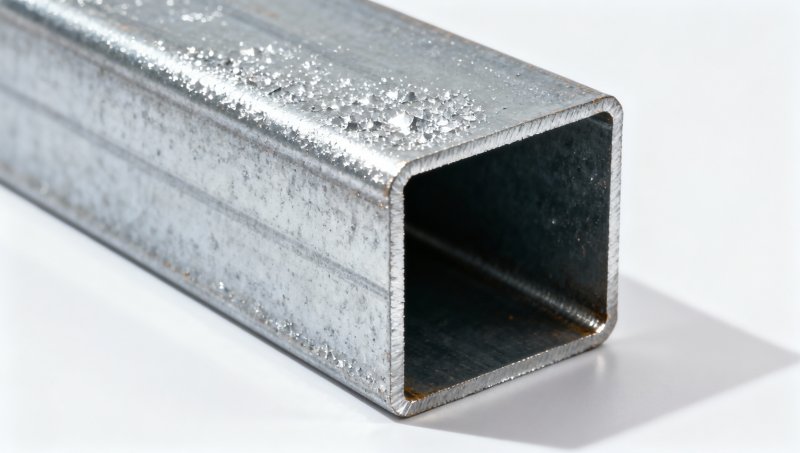
We eliminate sourcing friction for procurement managers, engineers, and project directors through four proven advantages:
- Guaranteed lead time control: Standard angle steel shipments delivered in 25–35 days from PO confirmation — backed by fixed-capacity rolling mills and buffer inventory of top 12 sizes (e.g., 50×50×5 mm, 75×75×6 mm).
- OEM-ready customization: From laser-cutting and CNC punching to precision bending and dual-coating (e.g., HDG + PPGL overlay), all performed in-house with full QA documentation.
- Risk-mitigated compliance: Pre-shipment inspections by SGS/BV/TÜV available at buyer’s request; EN/ASTM/JIS/GB certifications included without surcharge.
- End-to-end technical support: Our engineering team provides free structural validation for custom angle configurations — including wind-load calculations per ASCE 7-22 or Eurocode 1.
Whether you’re sourcing for a 200-unit poultry farm in Saudi Arabia, a solar farm in Texas, or a modular hospital in Vietnam — our integrated manufacturing, logistics, and compliance framework reduces your total landed cost by 8–13% versus fragmented regional suppliers.
Contact us today to request: (1) dimension-specific quotation with coating options, (2) ASTM/EN mill test report samples, (3) lead time confirmation for your target delivery window, or (4) technical review of your angle steel fabrication drawings.
Please give us a message


Please enter what you want to find