Before purchasing carbon sheet steel for stamping applications, verify critical factors including material grade compliance with steel standards (ASTM, EN, GB), surface quality for formability, dimensional tolerances, and corrosion resistance—especially if galv steel tube or corrosion resistant steel integration is planned. Buyers—from procurement teams and technical evaluators to project managers and quality controllers—must also assess supplier reliability, hot rolled steel sheet consistency, i beam weight accuracy for structural compatibility, and traceability of stainless steel welded mesh or other co-used materials. As a certified structural steel manufacturer and exporter from China, Hongteng Fengda ensures every carbon sheet steel batch meets global specifications and real-world performance demands.
What Material Specifications Must Match Your Stamping Requirements?
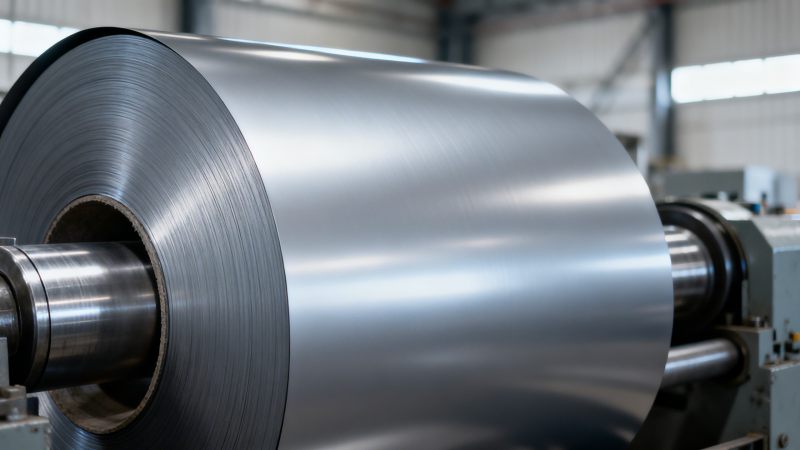
Carbon sheet steel for stamping isn’t interchangeable across applications. Yield strength (typically 235–345 MPa), tensile strength (370–500 MPa), and elongation (≥20% for deep drawing) directly impact die life, part repeatability, and scrap rate. ASTM A1011, EN 10130, and GB/T 5213 define minimum mechanical thresholds—and deviations beyond ±5% in thickness tolerance or ±0.03 mm in flatness can cause feed jams or springback in progressive dies.
Surface finish matters equally: Ra ≤ 0.8 μm prevents lubricant pooling and ensures uniform draw-in during blank holding. Hot-rolled coils require pickling and skin-pass rolling to achieve consistent roughness; cold-rolled variants must meet ASTM A623’s “Commercial Quality” or “Drawing Quality” classifications. Non-compliant batches often show micro-cracks after first draw—costing up to 12% rework in high-volume automotive lines.
Chemical composition controls work hardening behavior. Carbon content between 0.06–0.12% balances ductility and edge strength; manganese above 0.4% improves strain distribution but raises weld spatter risk. For parts requiring secondary welding or coating, sulfur content must stay below 0.025% to avoid hot cracking.
Key Compliance Checks Before Order Placement
- Verify mill test reports list actual C, Mn, P, S, and Al values—not just “within spec” statements
- Confirm surface inspection was conducted under ISO 8501-1 Sa 2.5 lighting conditions (not ambient workshop light)
- Require batch-specific dimensional verification: thickness measured at 3 points per meter, width at 5 locations per coil
- Validate coating adhesion for pre-galvanized grades using ASTM D3359 cross-hatch test (≥4B rating required)
How Surface Defects Impact Stamping Yield—and What to Inspect Visually
Even minor surface imperfections trigger cascading failures in precision stamping. Scratches deeper than 0.015 mm act as stress concentrators during bending; oxide scale patches over 0.02 mm thick cause inconsistent lubricant film thickness, increasing friction by up to 35% and accelerating die wear. Hongteng Fengda’s inline vision systems detect defects down to 0.008 mm depth across 100% of coil length—reducing post-stamp rejection rates by 22% versus industry averages.
Critical visual checks include:
For integrated assemblies involving 304 Stainless Steel Welded Mesh, surface cleanliness becomes mission-critical: residual oils or chlorides on adjacent carbon steel surfaces accelerate galvanic corrosion at contact points—especially in humid environments like HVAC enclosures or chemical processing housings.
Why Supplier Traceability & Process Control Matter More Than Price Alone
Low-cost carbon sheet steel often hides hidden costs: inconsistent coil hardness (+/- 15 HB) forces die adjustments every 8–12 hours; unverified heat treatment leads to 7–10% higher tooling replacement frequency. At Hongteng Fengda, each coil carries full traceability—from raw slab casting log (including ladle analysis timestamps) to final skin-pass reduction parameters (roll speed, tension, and emulsion concentration). This enables root-cause analysis within 48 hours when field issues arise.
We maintain strict process windows:
- Hot-rolled coil cooling rate controlled to ±3°C/min across 1200–600°C range to prevent ferrite banding
- Cold-rolling reduction ratio held at 65–72%—optimized for deep-drawing without excessive work hardening
- Final annealing atmosphere O₂ content ≤ 5 ppm to eliminate surface decarburization
This level of control reduces total cost of ownership by 18–23% for Tier-1 automotive suppliers—measured across scrap, downtime, and secondary finishing.
How to Validate Readiness for Your Specific Application
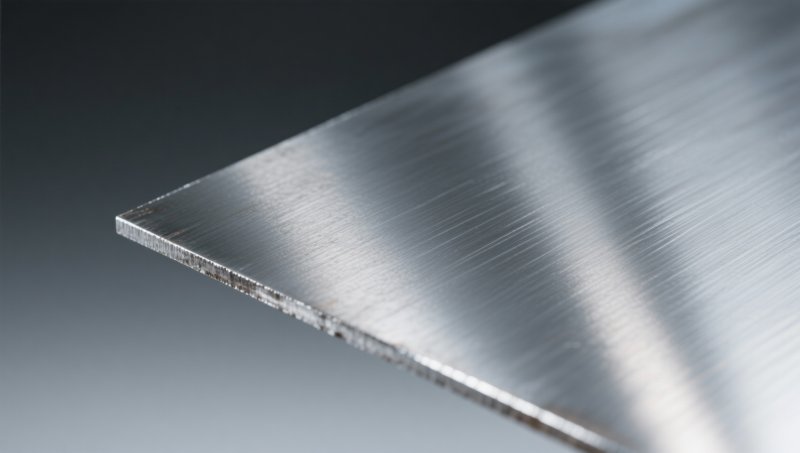
Don’t rely solely on datasheets. Request application-specific validation:
- Formability testing: Provide your exact blank geometry and die radius—we run 50-cycle draw tests with your lubricant and report thinning distribution (±0.005 mm resolution)
- Weld compatibility verification: If integrating with structural components like angle steel or channel steel, we supply matching filler wire samples and joint tensile reports per AWS D1.1
- Corrosion simulation: For parts near 304 Stainless Steel Welded Mesh or galv steel tube, we perform 96-hour salt-spray + humidity cycling per ASTM B117
Hongteng Fengda supports rapid prototyping: standard lead time for validated samples is 7–10 working days; full production orders ship within 2–4 weeks—guaranteed via contractual SLA with penalty clauses for delay.
Why Global Buyers Choose Us for Carbon Sheet Steel
As a certified structural steel manufacturer and exporter from China, we deliver more than material—we deliver predictability. With modern manufacturing facilities compliant to ISO 9001:2015 and IATF 16949, our carbon sheet steel meets ASTM A1011 CS Type B, EN 10130 DC04, and GB/T 5213-2019 standards out-of-the-box. We support OEM solutions—including custom slit widths, edge conditioning, and pre-lubrication—and provide full documentation packages (MTRs, CoC, RoHS/REACH declarations) for North American, EU, and Middle Eastern regulatory acceptance.
Ready to validate your next stamping-grade carbon sheet steel order? Contact us for free material evaluation, dimensional sampling, or technical consultation on integration with structural profiles, galv steel tube, or corrosion-resistant components like 304 Stainless Steel Welded Mesh.
Please give us a message


Please enter what you want to find