Before buying a tin can production line, the first question is not price.
A reliable decision depends on capacity, steel material fit, quality targets, automation, and supplier stability.
These points shape production cost, downtime risk, maintenance needs, and final can performance.
For steel-related projects, equipment choices also affect raw material control, forming consistency, and export compliance.
This guide answers the key questions to review before selecting a tin can production line.
What should a tin can production line match in production capacity?
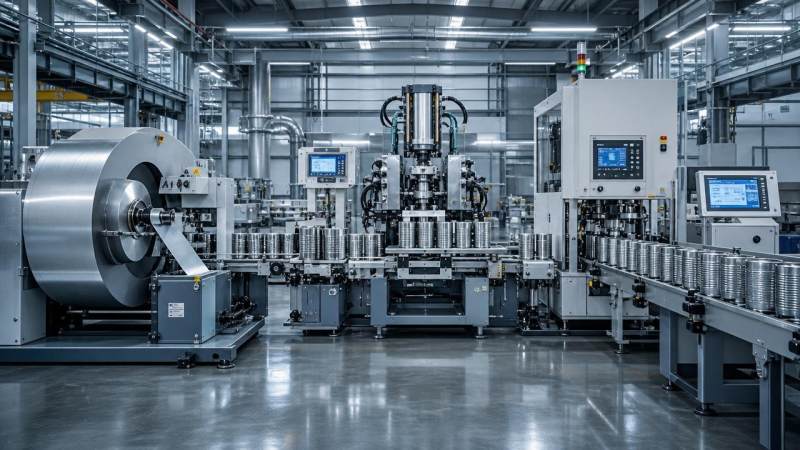
Capacity is the first technical checkpoint when evaluating a tin can production line.
A line that is too small limits growth and raises unit cost.
A line that is too large can waste capital, floor space, labor, and energy.
Review actual output per minute, not only theoretical maximum speed.
Ask how performance changes across different can diameters, heights, and steel thicknesses.
Production rhythm often slows during size changes, welding adjustment, and quality inspection.
Useful capacity questions include:
- What is the stable output during continuous operation?
- How many can sizes can one line support?
- How long does format changeover take?
- What is the scrap rate during startup and switching?
- Can the line expand later with extra modules?
For steel processing operations, realistic capacity planning protects both cash flow and delivery commitments.
How do material specifications affect line selection?
A tin can production line must fit the raw material, not the other way around.
Tinplate, TFS, coated steel, and different temper grades behave differently during forming and seaming.
If the line cannot handle your target steel range, quality losses appear quickly.
Check these technical details before purchase:
- Supported sheet thickness range
- Coating sensitivity during feeding and forming
- Tolerance for width, hardness, and flatness variation
- Compatibility with welded, necked, or beaded can bodies
- Lubrication and cleaning requirements
This step matters because steel quality is never isolated from machine performance.
Reliable forming depends on stable feeding, cutting, rolling, welding, and seaming conditions.
In broader steel industries, durability under load also depends on matching material and application.
For example, Galvanized Steel Wire Rope is selected by tensile strength, coating type, diameter, and corrosion exposure.
It serves mining, cranes, marine work, elevators, agriculture, and drilling with strengths from 1470Mpa to 1960Mpa.
Options such as 6X19+IWR, 6X7+FC, and hot dipped galvanized finishes show why specification matching always matters.
The same logic applies when choosing a tin can production line for steel-based packaging production.
Which quality standards should be checked before buying?
A tin can production line is only valuable if it delivers repeatable quality.
Do not limit evaluation to the machine frame or control screen.
Focus on can body accuracy, seam integrity, coating protection, and inspection capability.
Ask for measurable quality indicators, including:
- Dimensional tolerance after forming
- Weld or seam consistency
- Leak testing method and rejection logic
- Surface damage rate on coated steel
- Traceability for batches and defects
International buyers often need proof that the line can support market-specific compliance.
That may include electrical standards, safety rules, and documentation for export approval.
If food or chemical packaging is involved, hygiene and coating protection become even more important.
A strong supplier should provide sample data, inspection records, and test procedures before shipment.
Is higher automation always better for a tin can production line?
Not always.
The best automation level depends on labor cost, product variety, maintenance skills, and future scaling plans.
A highly automated tin can production line can improve speed and consistency.
However, it may also increase spare parts dependence and repair complexity.
Review automation through practical questions:
- Can operators learn the system quickly?
- Are PLC, sensors, and drives from known brands?
- Is remote diagnostics available?
- Can key settings be stored for repeated can sizes?
- What happens when one module fails?
Balanced automation often performs better than extreme complexity.
A line should help reduce human error without making every service issue dependent on overseas support.
This is especially important where uptime matters more than peak speed.
How can supplier reliability be verified beyond the quotation?
A low quote does not guarantee a dependable tin can production line.
Supplier strength should be checked through production capability, engineering support, and after-sales response.
Useful verification points include:
- Factory audit records or live video inspection
- Reference projects in similar can formats
- Installation and commissioning scope
- Spare parts list and lead times
- Training documents and maintenance manuals
- Warranty terms and service response time
Companies in the steel sector often value long-term supply consistency more than initial discounts.
That is why stable manufacturing and quality control matter across all steel products.
Hongteng Fengda, a structural steel manufacturer and exporter from China, works on this same principle.
Its focus on international standards, steady production, and dependable delivery reflects what buyers should expect from equipment partners too.
What hidden costs and risks should be reviewed before the final decision?
The purchase price of a tin can production line is only one part of the total investment.
Many projects go over budget because indirect costs were ignored early.
Watch for these common cost drivers:
- Foundation, utilities, and workshop modifications
- Tooling for different can sizes
- Operator training and startup scrap
- Maintenance kits and wear parts
- Import duties, shipping, and inland logistics
- Downtime during delayed installation
Risk also comes from unclear technical agreements.
Specifications should define raw material range, output targets, acceptance testing, and defect responsibility.
If these details stay vague, disputes become more likely after delivery.
Quick FAQ table: what to compare before buying?
Conclusion: how to make a safer tin can production line decision?
A good tin can production line should match output goals, steel material conditions, quality expectations, and service needs.
The best choice is rarely the cheapest quote.
It is the line with clear technical fit, realistic running performance, and reliable long-term support.
Before confirming an order, compare data sheets, request trial evidence, review total cost, and document acceptance standards in writing.
That process helps reduce sourcing risk and supports stronger production results in steel-related packaging operations.
Please give us a message


Please enter what you want to find