Before purchasing a106 grade b carbon steel pipe in stock, buyers should confirm more than price and availability.
Material traceability, dimensions, standards, testing records, and supplier execution all influence final project performance.
A careful review of a106 grade b carbon steel pipe in stock helps reduce rework, avoid installation delays, and control total sourcing cost.
In steel procurement, stock supply can be an advantage only when the pipe truly matches design, code, and service conditions.
Basic overview of A106 Grade B pipe in stock
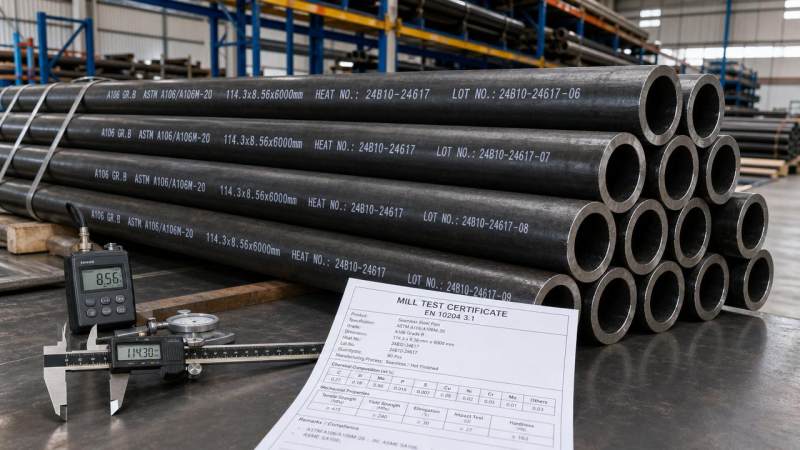
ASTM A106 Grade B is a seamless carbon steel pipe widely used for high-temperature and pressure service.
It appears in power plants, refineries, general process piping, structural support lines, and industrial utility systems.
When checking a106 grade b carbon steel pipe in stock, the main concern is not only whether it is available.
The real concern is whether stocked material still fits current project specifications, testing requirements, and fabrication methods.
Stock pipes may come from different heats, production dates, or mills, so documentation matters as much as physical inspection.
Core attributes to verify
- Seamless manufacturing method
- Correct grade marking and heat number
- Size, schedule, wall thickness, and length
- ASTM A106 compliance and related test reports
- Surface condition and end preparation
Current market focus when sourcing stock pipe
The market for a106 grade b carbon steel pipe in stock is shaped by delivery pressure, project timing, and quality consistency.
Many buyers choose stock material to shorten lead time, but quick supply should never replace proper technical review.
The table below highlights common market checkpoints before order confirmation.
Some steel buyers also compare adjacent materials for corrosion exposure and forming needs.
For example, projects using sheet or coil components may review DX53D Galvalume Steel Coil for non-pipe sections requiring coated durability.
That product is known for corrosion resistance, heat reflectivity, and formability in construction and appliance applications.
Material certification and compliance checks
The first document to request for a106 grade b carbon steel pipe in stock is the mill test certificate.
This certificate should match the pipe markings, heat number, quantity, size, and standard designation.
Review chemical composition and mechanical properties against ASTM requirements and any additional project specifications.
Important records to confirm
- Mill test certificate with heat traceability
- Hydrostatic or nondestructive examination records
- Dimensional inspection report when required
- Packing list and quantity verification
- Third-party inspection report for critical contracts
If the pipe will be used under code-controlled systems, confirm any supplementary requirements before shipment release.
A106 Grade B may meet general needs, but extra project clauses can require tighter tolerances or testing.
Never assume all a106 grade b carbon steel pipe in stock is interchangeable across every industrial system.
Dimensional accuracy and physical condition
Dimensional checks are practical and often reveal problems faster than paperwork alone.
Measure outside diameter, wall thickness, length, straightness, and end squareness on sampled pieces.
For a106 grade b carbon steel pipe in stock, old warehouse inventory may have mixed lengths or replaced identification tags.
Physical issues worth checking
- Rust scale beyond acceptable storage exposure
- End damage affecting beveling or threading
- Ovality, dents, or flattening from handling
- Oil, paint, or contamination on internal surfaces
- Missing stencils or unreadable heat markings
Stored pipe may still be usable after cleaning, but repair and sorting increase total landed cost.
That is why physical condition should be evaluated together with unit price, not after delivery.
Application value and business impact
Selecting the right a106 grade b carbon steel pipe in stock supports safe operation and smoother project execution.
Correctly verified stock material can shorten procurement cycles without weakening engineering control.
This matters in plant maintenance, shutdown planning, structural fabrication, and urgent line replacement.
A dependable steel supplier should also understand related product categories, standards, and fabrication compatibility.
For broader project sourcing, product lines may include beams, channels, cold formed sections, and coated materials such as DX53D Galvalume Steel Coil .
Typical scenarios and selection priorities
Different projects apply different screening priorities when evaluating a106 grade b carbon steel pipe in stock.
The material may be identical by grade, yet acceptance criteria can vary by service condition and fabrication route.
Common scenarios
- Shutdown maintenance: delivery speed and traceable inventory are critical.
- Export orders: packaging, marking, and document accuracy become more important.
- Fabrication shops: consistent length and wall thickness improve cutting efficiency.
- Structural support use: straightness and end condition affect fit-up quality.
- Process upgrades: standard compliance and testing history take priority.
Practical inspection and supplier review steps
A practical inspection plan makes buying a106 grade b carbon steel pipe in stock more predictable.
The goal is to verify suitability before payment, loading, or fabrication starts.
- Request MTCs, photos, quantity list, and current stock date.
- Match heat numbers between documents and pipe body markings.
- Measure key dimensions on random samples.
- Inspect ends, outer surface, and internal cleanliness.
- Confirm standard, schedule, packing method, and delivery lead time.
- Check whether replacement or claim terms are clearly written.
Supplier reliability should be judged by document consistency, communication speed, and real understanding of steel standards.
Stable exporters usually provide clearer specifications, better packing control, and more dependable shipment coordination.
Next-step guidance for confident purchasing
When reviewing a106 grade b carbon steel pipe in stock, build the decision around evidence rather than availability alone.
Check certification, dimensions, appearance, traceability, and supplier execution in one combined review process.
This approach lowers sourcing risk and improves material fit for industrial and structural steel applications.
For projects requiring reliable steel supply from China, it is useful to work with a source experienced in standards, export control, and customized steel solutions.
A disciplined review of a106 grade b carbon steel pipe in stock can protect schedule, quality, and budget at the same time.
Please give us a message


Please enter what you want to find