When sourcing structural steel for international projects, procurement professionals often face a critical bottleneck: inconsistent galvanizing quality from third-party hot dip galvanizing factories in China. You may receive angle beams with patchy zinc coverage, channel sections showing premature white rust after transit, or custom profiles failing salt-spray testing upon arrival in North America or the Middle East. These issues don’t just trigger rework—they delay site handover, inflate total landed cost, and erode trust across your supply chain. The root cause is rarely poor raw steel; it’s misalignment between your project’s performance requirements and the factory’s actual control over bath chemistry, immersion time, withdrawal speed, and post-treatment handling.
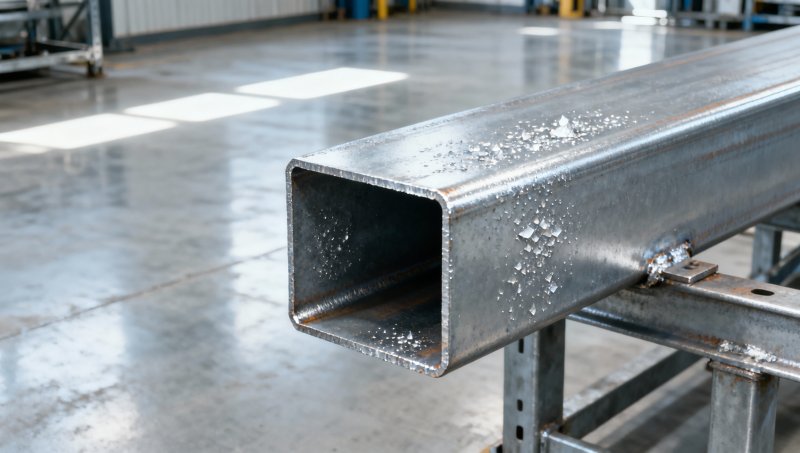
The solution isn’t “finding any certified galvanizing factory.” It’s verifying that the facility operates as an integrated extension of your structural steel supplier—not a standalone subcontractor. At Hongteng Fengda, hot dip galvanizing is performed in-house under the same quality management system governing our structural steel production. This means every Galv Steel Tube passes through coordinated pre-treatment, zinc bath control, and post-galvanizing inspection—no handoffs, no documentation gaps, no variance in traceability. We treat galvanizing not as a finishing step, but as a metallurgical process bound to dimensional tolerance, coating adhesion, and long-term corrosion resistance.
Three non-negotiable checkpoints—beyond the certificate
Certifications like ASTM A123, EN ISO 1461, or GB/T 13912 are necessary—but insufficient on their own. They confirm a factory *claims* compliance. What matters is how those standards translate into daily output. Focus verification on these three operational realities:
1. Pre-treatment consistency—not just surface cleanliness
Galvanizing failure starts before the steel hits the zinc bath. Inadequate acid pickling, inconsistent flux concentration, or uneven drying leads directly to bare spots, ash deposits, or poor coating adhesion. Ask for evidence—not just a checklist—of how they monitor and record each pre-treatment stage: acid bath temperature and specific gravity (measured hourly), flux pH and density (logged per batch), and surface moisture level before entry. Factories relying solely on visual inspection post-pickle often miss micro-scale contamination that causes localized coating loss. At Hongteng Fengda, all pre-treated components undergo automated surface resistivity scanning before galvanizing—a quantitative check for residual oxide or oil film that visual inspection misses.
2. Bath control discipline—not just zinc purity
Zinc bath composition determines coating thickness, uniformity, and spangle structure. Beyond 99.995% pure zinc, what matters is real-time control of aluminum (0.005–0.02%), lead (<0.005%), and iron content (<0.03%). Excess iron forms dross that embeds in the coating; low aluminum reduces fluidity, causing thin edges and bare corners. Verify whether the factory uses online spectroscopy or manual wet-chemistry sampling—and how frequently. Daily lab analysis isn’t enough if samples are taken only from the bath surface. Effective control requires subsurface sampling at multiple points and adjustment logs tied to actual production batches.
3. Post-galvanizing handling—not just cooling time
How steel is handled after withdrawal determines coating integrity. Rapid quenching in cold water can induce thermal shock cracks; stacking hot sections before full solidification traps zinc vapor, causing blistering. Confirm their cooling protocol: air-cooling duration (minimum 20 minutes for sections >10mm thick), stacking height limits (max 3 layers for beams >200mm depth), and handling temperature thresholds (<80°C before mechanical transport). Also check if they perform mandatory post-galvanizing inspection: coating thickness measurement (minimum 3 points per meter, using magnetic induction gauges calibrated to ASTM E376), visual assessment per ASTM A123 Section 7, and adhesion testing (cross-hatch + tape test) on random samples per lot.
Capacity isn’t just tonnage—it’s repeatability under load
A factory quoting 50,000 MT/year means little if throughput fluctuates with order size or material geometry. Structural steel buyers need predictable lead times—not theoretical maximums. Ask how they allocate capacity across product types: Can they maintain consistent coating thickness on 300mm-thick I-beams while simultaneously processing 2mm-thin cold-formed channels? What’s their minimum batch size for custom profiles—and does that trigger different bath parameters or inspection frequency? At Hongteng Fengda, capacity is segmented by section weight and geometry. Our dual-line galvanizing line separates heavy structural sections (beams, columns) from light profiles (angles, channels, Galv Steel Tube)—ensuring immersion time, withdrawal speed, and cooling protocols remain optimized for each category without cross-compromise.
Why certification alignment must be project-specific
ASTM A123 applies to steel products up to 1/4 inch thick. EN ISO 1461 covers coatings on fabricated items—but doesn’t define acceptable edge coverage for welded assemblies. GB/T 13912 specifies minimum average coating mass (610 g/m² for steel >6mm thick), yet doesn’t address coating continuity on complex weld seams common in custom structural frames. If your project requires ASTM A767 (for rebar) or JIS H 8641 (for precision tubes), generic “ISO-certified” claims offer zero assurance. Demand evidence that the factory has successfully produced and tested parts meeting *your exact standard*, including test reports with batch numbers, test dates, and accredited lab seals—not just certificates of conformity.
Practical verification steps before placing your first order
- Request batch-specific test reports—not generic certificates—for at least three recent shipments matching your profile type and thickness range.
- Inspect their zinc bath logbook—ask for dated entries showing aluminum, lead, and iron readings over a 30-day period, with corresponding adjustments noted.
- Verify pre-treatment records—request acid bath temperature logs and flux density readings for one completed production run of similar material.
- Confirm coating thickness methodology—do they use destructive (cross-section) or non-destructive (magnetic induction) testing? Is equipment calibrated to NIST or equivalent standards?
- Check traceability—can they link a specific galvanized beam back to its original steel heat number, galvanizing bath batch, and inspection report?
Procurement decisions shouldn’t hinge on marketing language or audit pass/fail outcomes. They depend on observable, repeatable process controls—especially when corrosion resistance impacts 20+ years of asset life. For structural steel buyers managing multi-year infrastructure programs across volatile logistics corridors, partnering with a manufacturer where galvanizing is engineered—not outsourced—isn’t an advantage. It’s the baseline requirement for risk mitigation, cost predictability, and on-site reliability.
Please give us a message


Please enter what you want to find