Before choosing an I beam supplier, the most important checks are simple but critical: confirm the beam meets the required standard and grade, verify the supplier can deliver consistent quality at scale, and make sure pricing reflects the full landed cost rather than just the ex-factory quote. For buyers comparing a Steel I Beam supplier in Malaysia or evaluating steel beam factory price offers from overseas manufacturers, the real risk is not only overpaying—it is receiving material that causes fabrication delays, inspection failures, or long-term performance issues.
That is why supplier selection should go beyond catalog size or low quotations. Whether you are sourcing Steel Beam, Steel Sheet Pile, Angle Steel, or galvanized structural products, a strong supplier should be able to prove compliance, maintain delivery reliability, support technical review, and respond quickly when project requirements change.
Start With the Three Checks That Matter Most
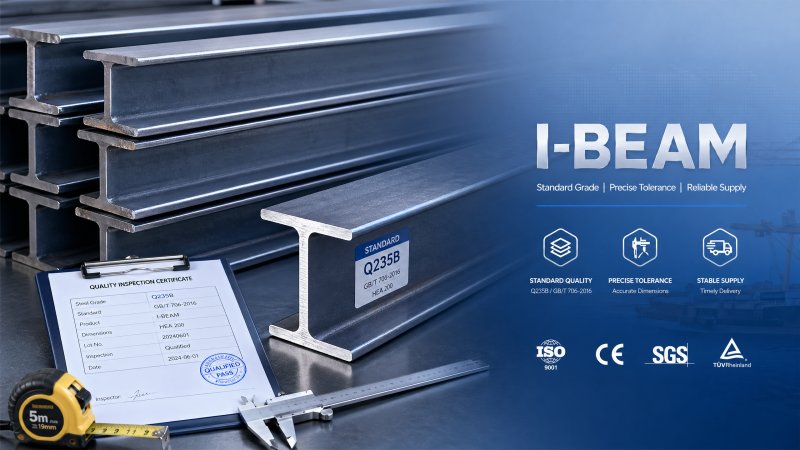
If you need a practical shortlist, begin with these three questions:
- Does the supplier provide the exact standard, grade, and dimensional tolerance your project requires?
- Can they demonstrate stable manufacturing and quality control, not just one-time samples?
- Can they deliver on schedule with documents, packaging, and export support that match your destination market?
These checks matter to almost every stakeholder involved in steel purchasing:
- Engineers and technical evaluators want compliance with ASTM, EN, JIS, or GB standards.
- Procurement teams want cost control, dependable lead times, and reduced claim risk.
- Project managers want fewer delays during fabrication and installation.
- Quality and safety teams want traceability, inspection records, and material consistency.
- Business and finance decision-makers want predictable supply, fewer disruptions, and lower total procurement risk.
Check Whether the I Beam Matches the Required Standard and Grade
The first mistake many buyers make is comparing prices before confirming technical equivalence. An I beam that looks similar on paper may differ in steel grade, section accuracy, mechanical performance, or coating condition. That difference can affect structural performance, welding behavior, machining efficiency, and acceptance during inspection.
Before approving a supplier, confirm:
- The applicable standard: ASTM, EN, JIS, GB, or project-specific requirements
- Material grade, such as S355JR or equivalent
- Section dimensions, web and flange thickness, and allowable tolerances
- Mechanical properties, including yield strength and tensile strength
- Surface condition, straightness, and edge quality
- Any galvanizing, painting, or anti-corrosion requirements
If a quotation only says “steel beam” without full grade and standard details, that is not enough for serious evaluation. Buyers should request mill test certificates, specification sheets, and tolerance confirmation before moving to commercial comparison.
Verify the Supplier’s Manufacturing Capability, Not Just Trading Ability
Some suppliers can offer attractive prices but have limited control over production. For structural steel procurement, that creates uncertainty in lead time, quality consistency, and problem resolution. A capable manufacturer should be able to explain how the product is made, inspected, packed, and shipped—not simply forward a product list.
When reviewing a supplier, ask for evidence of:
- Production facilities and equipment
- Monthly or annual capacity for structural steel products
- Experience in export markets such as North America, Europe, the Middle East, or Southeast Asia
- Quality control procedures from raw material to final inspection
- Third-party inspection support such as SGS or BV
- Ability to produce both standard and customized sections
This matters even more when your procurement includes multiple structural products in one shipment. For example, many projects source I beams together with channels, angle steel, or cold formed profiles. In these cases, a supplier with a broader structural steel portfolio can simplify purchasing and reduce coordination costs. For related applications such as brackets, wall beams, lightweight roof structures, and mechanical columns, some buyers also evaluate Channel In Steel products with grades like Q195, Q235, Q345B, or stainless options, depending on corrosion resistance and fabrication needs.
Look Beyond Steel Beam Factory Price to Total Procurement Cost
Low unit price does not always mean lower project cost. A cheaper beam can become more expensive if it leads to rework, cutting waste, coating issues, delayed customs clearance, or missed site schedules. Smart buyers compare the total procurement picture.
Key cost factors include:
- Material compliance: Non-compliant steel can trigger rejection or redesign.
- Tolerance accuracy: Poor dimensional control increases fabrication time.
- Packaging quality: Inadequate export packing can cause damage in transit.
- Lead time reliability: Delays can affect crane bookings, site installation, and contractor sequencing.
- Documentation: Missing MTCs, inspection reports, or certificates can delay payment and customs release.
- Supplier responsiveness: Slow communication creates decision bottlenecks when changes arise.
When comparing offers, request a side-by-side breakdown that includes product price, coating if needed, packaging, port terms, inspection, delivery schedule, and certificate availability. That gives procurement, finance, and project teams a more realistic basis for approval.
Assess Quality Control and Traceability Before You Place the Order
For quality managers and technical reviewers, supplier evaluation should include traceability and inspection discipline. A reliable structural steel supplier should have a clear process for controlling chemistry, dimensions, appearance, and batch identification.
Ask these practical questions:
- Are raw materials traceable by heat number or batch number?
- Are dimensional checks recorded during production?
- Can the supplier provide mill test certificates for each batch?
- Do they support third-party pre-shipment inspection?
- How do they handle non-conforming products?
- What certifications are available for specific product categories?
If your project involves harsh environments or long service life expectations, anti-corrosion performance becomes especially important. In those cases, galvanized or corrosion-resistant structural steel options should be reviewed carefully in terms of coating method, thickness consistency, and expected exposure conditions.
Confirm Delivery Reliability and Export Support
Even if the product is technically correct, late or disorganized delivery can damage the entire project plan. This is one of the most common hidden risks in international structural steel sourcing.
Before selecting a supplier, verify:
- Typical production lead time for standard and customized orders
- Stock availability for urgent demand
- Export packaging method for long-length structural products
- Experience with destination-country documentation requirements
- Loading capacity and container planning
- Communication speed during production and shipment stages
For distributors, contractors, and project owners, dependable delivery often has more value than a small unit-price difference. A supplier that can maintain stable schedules helps reduce idle labor, site disruption, and procurement escalation.
Use a Practical Supplier Evaluation Checklist
To make final comparison easier, use a structured checklist instead of relying on sales claims alone. A good supplier should score well across technical, commercial, and operational criteria.
Recommended checklist:
- Required I beam standard and steel grade confirmed
- Full section dimensions and tolerances verified
- Mill test certificates and sample documents available
- Manufacturing capacity and export experience demonstrated
- Quality control process clearly explained
- Third-party inspection support available
- Lead time realistic and documented
- Packaging and logistics plan confirmed
- Total landed cost compared, not just factory price
- After-sales communication and issue-handling capability evaluated
Suppliers that perform well in all ten areas are far more likely to support smooth project execution and lower sourcing risk over the long term.
Conclusion
Choosing an I beam supplier is not only a price decision. It is a risk-control decision that affects structural performance, fabrication efficiency, delivery timing, and total project cost. The best approach is to verify standards and grades first, then review manufacturing capability, quality control, export reliability, and total procurement value.
For buyers sourcing from China or comparing regional supply options, the strongest partners are those that combine stable production, international standard compliance, dependable lead times, and responsive service. When a supplier can prove those strengths with documents, process transparency, and consistent delivery, you are in a much better position to purchase with confidence.
Please give us a message


Please enter what you want to find