Choosing the right steel pipe supplier affects product quality, project safety, delivery reliability, and total procurement cost. Before making a decision, buyers should compare ss pipe specifications, verify compliance standards, assess production capacity, and review galvanized pipe for water supply options. Whether you are sourcing for construction, industrial use, or distribution, a qualified steel pipe supplier helps reduce risks and supports long-term project success.
In the steel industry, supplier selection is rarely just a price comparison. For procurement teams, engineers, project managers, distributors, and quality control personnel, the real question is whether a supplier can consistently deliver the right material, in the right standard, within the required timeline, and with documentation that supports inspection, compliance, and safe use.
This is especially important when pipe is used in structural, industrial, water conveyance, fabrication, or mechanical applications. A mismatch in grade, wall thickness, zinc coating, tolerance, or packaging can create downstream problems that cost far more than the original order value. Reliable sourcing reduces rework, site delays, and inventory risk.
For global buyers working with Chinese manufacturers, the evaluation should cover more than sample quality. It should include manufacturing capability, export experience, standard compliance, communication speed, lead time control, and the supplier’s ability to support both standard and customized steel solutions across multiple product categories.
Start with Product Scope, Material Accuracy, and Application Fit
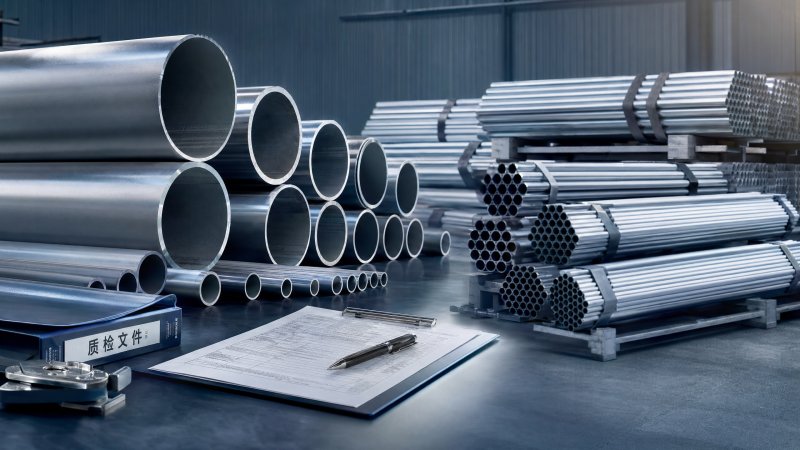
The first checkpoint is whether the steel pipe supplier actually understands your application. A supplier serving construction projects may not be equally strong in industrial tubing, water line pipe, or fabricated structural assemblies. Buyers should define at least 4 key inputs before asking for quotations: application, standard, size range, and processing requirement.
For example, an ss pipe used in mechanical fabrication may require tighter dimensional consistency than pipe used for general support structures. A galvanized pipe for water supply may need clear confirmation of coating type, corrosion resistance expectations, and the intended operating environment. Even within the same nominal diameter, thickness options and tolerances can affect weight, joining method, and installation speed.
Material grade matters as much as dimensions. Carbon steel pipe may be available in ASTM, EN, JIS, or GB equivalent grades, but equivalent does not mean interchangeable in every project. Technical reviewers should confirm yield strength, tensile range, weldability, and any project-specific restrictions. In practical sourcing, a 1–2 mm wall difference or an incorrect grade substitution can change both performance and cost.
Questions that clarify real supply capability
Before shortlisting a supplier, ask for a recent mill test certificate sample, a dimensional tolerance sheet, and a product list showing the available outer diameter or section range. A serious supplier should be able to answer within 24–72 hours and explain whether the material is produced in-house, sourced from partner mills, or further processed before export.
Core checks before RFQ approval
- Confirm steel grade, standard, and intended application in one document.
- Verify size range, thickness range, and length tolerance before price comparison.
- Ask whether cutting, punching, threading, beveling, or coating is available.
- Check if the supplier handles mixed containers or only full-size production lots.
The table below shows how buyers can align application needs with supplier evaluation criteria at the early selection stage.
A supplier that asks detailed technical questions early is often more dependable than one that gives an instant low quote with limited clarification. In steel procurement, clear scope definition at the beginning usually saves 2–3 rounds of corrections later.
Verify Standards, Inspection Documents, and Quality Control Discipline
The second major factor is compliance. A steel pipe supplier should clearly state which standards are available and how product conformity is controlled. In global trade, common references include ASTM, EN, JIS, and GB. However, buyers should not rely only on catalog claims. They should request document samples and confirm whether each batch can be matched to heat number, size, and inspection records.
Quality control should cover at least 3 stages: raw material verification, in-process dimensional inspection, and final pre-shipment review. For many pipe orders, practical checks include outside diameter, wall thickness, length, straightness, end finish, coating condition, bundle weight, and marking clarity. If the project requires third-party inspection, the supplier should be ready to coordinate this without disrupting lead time.
Tolerance discipline is especially important for repeat orders. In many structural and industrial steel products, acceptable variation may be within ±1% for certain dimensions, but this depends on the product type and standard. If the supplier cannot explain how tolerance is controlled, there is a higher chance of variation between batches, which affects both fabrication quality and installation consistency.
Documents that buyers should request
- Mill test certificate with grade and chemical or mechanical information.
- Inspection report covering key dimensions and quantity count.
- Packing list and marking format for warehouse traceability.
- Coating or surface treatment confirmation if galvanized or painted material is ordered.
The following table helps technical and commercial teams check whether a supplier’s document package is sufficient for project approval.
For distributors and contractors, strong documentation also shortens internal approval cycles. When purchasing, finance, and quality teams all review the same file set, the order can move faster from quotation to release, often reducing internal back-and-forth by several working days.
Assess Production Capacity, Processing Range, and Supply Chain Stability
A supplier may provide acceptable samples but still fail on delivery consistency. That is why production capacity and processing range are critical. Buyers should understand whether the company is a trader, a processor, a manufacturer, or a hybrid exporter with integrated factory support. This affects lead time control, pricing flexibility, and responsiveness during specification changes.
For projects involving pipe together with structural sections, it is often more efficient to work with a supplier that can coordinate multiple product categories. A company such as Hongteng Fengda, which serves global construction, industrial, and manufacturing projects with structural steel products and customized solutions, can be valuable when buyers want fewer vendors and more consistent technical communication across orders.
This integrated sourcing model matters when a project uses steel pipe alongside beams, channels, or fabricated components. In the middle of a procurement plan, some buyers also compare other structural items such as I-beam sections for industrial structure applications. Typical available grades may include Q195-Q235, Q345, SS355JR, SS400, A36, ST37-2, S235J0, S235J2, and St52, with thickness ranges from 4.5 mm to 15.8 mm, lengths of 6–12 m per piece, flange widths of 100–400 mm, and tolerance around ±1% depending on the requirement.
Why multi-product capability matters
If the supplier can also support bending, welding, decoiling, punching, and cutting for related structural steel products, procurement teams gain a practical advantage. It reduces the need to manage 2 or 3 different vendors for one project package. It also helps align shipment timing, packing methods, and export documentation.
Useful capacity and supply chain checks
- Ask for the standard lead time for regular sizes versus customized processing.
- Confirm whether monthly output is stable enough for repeat or phased deliveries.
- Check if mixed product consolidation is possible in one container.
- Review how the supplier handles raw material price fluctuation over 15–30 days.
For many export orders, normal lead time may range from 15–35 days depending on size complexity, coating, and packaging requirements. Urgent orders may be possible, but buyers should verify what part of the schedule is truly in the factory’s control and what part depends on outside processing or vessel booking.
A stable steel pipe supplier should also communicate clearly about MOQ, production batching, and replenishment options. This is important for distributors who need regular stock turnover and for project owners who want staggered deliveries to reduce site congestion and cash pressure.
Compare Cost Beyond Unit Price: Logistics, Packaging, and Commercial Terms
Low unit price does not always mean lower total procurement cost. Buyers should compare at least 5 commercial elements: base material price, processing cost, coating cost, packaging method, and freight impact. A cheaper quote can become more expensive if the actual weight is higher, the bundle condition causes handling loss, or the shipment schedule creates project delays.
For steel pipe exports, packaging details influence both damage risk and warehouse efficiency. Bundle tightness, end protection, steel strip fastening, waterproof covering, marking visibility, and container loading layout all matter. A poor packing plan can increase unloading time, produce bent ends, or make receiving inspection slower than necessary. These problems are operational, but they quickly become financial.
Payment terms also affect supplier choice. Some suppliers can support staged cooperation, such as a sample order, trial batch, and then regular monthly procurement. This reduces sourcing risk. Commercial teams should review quotation validity periods, currency options, tolerance for quantity deviation, and claim handling procedures before approving a supplier for larger contract volume.
A practical cost comparison framework
The table below shows how buyers can compare offers in a more complete way instead of focusing only on the lowest ton price.
For finance approvers, the best supplier is often the one with the most predictable landed cost, not the lowest opening quote. Cost visibility over a 30-day procurement window is usually more valuable than a small upfront discount that introduces delivery or quality uncertainty.
Review Communication, Export Experience, and After-Sales Response
The final checkpoint is operational reliability. Even when product quality is acceptable, weak communication can cause specification errors, missed shipping dates, and claims that are difficult to resolve. A dependable steel pipe supplier should provide clear quotation terms, organized technical confirmation, and timely updates at each stage from order entry to shipment release.
Export experience matters because international orders involve more than manufacturing. Buyers may need support with packing photos, document review, customs-oriented descriptions, container loading plans, or coordinated shipments across several steel items. A supplier serving North America, Europe, the Middle East, and Southeast Asia typically understands that different markets may prioritize different standards, marking requirements, or delivery documentation.
Signs of a supplier ready for long-term cooperation
- Replies to technical and commercial questions within 1–2 working days.
- Provides revised drawings, size confirmations, or packing details in written form.
- Can explain claim handling steps, replacement options, or credit procedures.
- Supports both standard orders and OEM or customized structural steel needs.
For project managers and distributors, after-sales responsiveness is not a secondary issue. If a shipment arrives with marking confusion, quantity discrepancy, or damaged bundles, the speed of corrective action can affect installation progress and customer relationships. A supplier that documents every order well is usually easier to work with if an issue appears later.
FAQ for first-time and repeat buyers
How many suppliers should I compare before placing an order?
For most projects, comparing 3 qualified suppliers is enough if the technical scope is clear. More than 5 quotations often creates noise unless specifications are tightly controlled.
What is a reasonable lead time for export steel pipe?
A common range is 15–35 days for production, depending on size, quantity, galvanizing, and processing. Complex mixed orders may require longer planning.
Should I approve by sample only?
No. A sample helps with surface and dimensional review, but buyers should also verify batch consistency, documentation, inspection method, and actual export packing practice.
What matters most for long-term sourcing?
Consistency across 4 areas: material accuracy, quality records, delivery stability, and communication efficiency. These factors usually determine whether repeat orders stay smooth over 6–12 months.
Choosing a steel pipe supplier should be treated as a risk-control decision, not just a buying task. The best evaluation process checks application fit, standards compliance, production capability, total cost structure, and export service discipline together. This approach helps procurement teams, engineers, and business decision-makers reduce uncertainty before order placement.
For buyers who also need structural steel sections, customized fabrication support, or multi-category export coordination, working with an experienced Chinese manufacturer and exporter can simplify project execution and improve supply continuity. Hongteng Fengda supports global customers with structural steel products, strict quality control, and dependable lead-time management across international standards.
If you are evaluating suppliers for your next steel procurement project, contact us to discuss specifications, delivery expectations, and custom steel solutions. You can also request product details, inspection information, or a tailored quotation based on your application and target market.
Please give us a message


Please enter what you want to find