Choosing the right Steel Beam manufacturer can directly affect project quality, cost control, and delivery reliability. For business evaluation, early checks now matter more than ever.
In today’s steel market, price alone no longer reflects supplier value. Buyers must judge compliance, production stability, customization depth, and export execution together.
A dependable Steel Beam manufacturer does more than ship steel. It reduces sourcing risk, supports schedule certainty, and helps projects meet structural and documentation requirements.
Why supplier evaluation standards are changing in the steel beam market
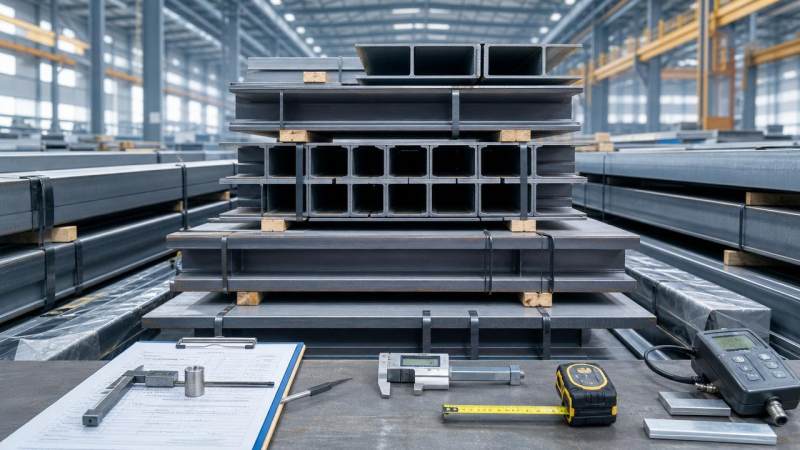
The global construction and industrial sectors are demanding more traceability from every Steel Beam manufacturer. Material origin, testing records, and dimensional consistency are receiving closer attention.
At the same time, project schedules are tighter. Delays in rolling, fabrication, packing, or export clearance can create costly chain reactions across sites and contractors.
This shift is especially visible in cross-border sourcing. International buyers often prefer suppliers that can align with ASTM, EN, JIS, and GB requirements without repeated corrections.
As a result, selecting a Steel Beam manufacturer has become a risk assessment exercise, not simply a product comparison.
What is driving stricter checks before choosing a Steel Beam manufacturer
Several forces are pushing buyers to review suppliers more carefully. These factors affect both procurement outcomes and long-term project performance.
These drivers explain why a qualified Steel Beam manufacturer is judged by operational reliability as much as by product range.
The five checks that matter most before making a decision
1. Production capacity should match your project rhythm
Ask whether the supplier can support both current volume and peak demand. Production capacity should include rolling, processing, inspection, packing, and shipping coordination.
A strong Steel Beam manufacturer should explain realistic lead times, not only ideal ones. Capacity claims should align with equipment, facility scale, and order history.
2. Certification must match destination requirements
Certification is not just a sales document. It is evidence that the steel can satisfy structural, legal, and inspection needs in the target market.
Check whether the Steel Beam manufacturer works with ASTM, EN, JIS, or GB standards as required. Confirm test reports, chemical composition records, and mechanical properties.
3. Customization ability reflects technical depth
Many projects need more than standard sections. Processing support may include cutting, punching, welding preparation, corrosion protection, and OEM fabrication.
If a supplier handles customized structural steel components, communication usually becomes smoother. Drawings, tolerance control, and packaging can be managed more accurately.
4. Export experience reduces hidden friction
Export experience matters because mistakes often happen outside production. Common problems involve labeling, container loading, document errors, and unclear shipment schedules.
An experienced Steel Beam manufacturer should understand destination market expectations and provide dependable communication from order confirmation to delivery.
5. Quality control should be visible, not promised
Reliable suppliers show how quality is controlled at each stage. This includes incoming materials, online inspection, final checks, and record retention.
The best Steel Beam manufacturer will explain corrective procedures, not just pass rates. That level of transparency often signals mature internal management.
How these checks affect sourcing, construction, and downstream operations
Weak supplier screening can lead to mismatched sections, unstable dimensions, or delayed deliveries. These issues disrupt fabrication, site installation, and inventory planning.
By contrast, a capable Steel Beam manufacturer improves coordination across engineering, logistics, and project execution. Fewer surprises mean lower indirect cost.
- Engineering teams gain more confidence in structural compliance.
- Fabrication stages face fewer dimensional correction issues.
- Logistics planning becomes more accurate and less reactive.
- Project schedules are protected from avoidable material disruption.
This broader impact explains why supplier selection has strategic value in the steel industry, especially for long-cycle or multi-country projects.
A broader signal: buyers now prefer suppliers with diversified metal solution capability
Another market signal is growing interest in suppliers that understand adjacent metal applications, not just one structural category. This often indicates stronger processing knowledge.
For example, some projects combine structural steel with filtration, screening, or industrial enclosure materials. In such contexts, integrated sourcing can improve coordination.
A useful reference is 304 Stainless Steel Welded Mesh, which serves filters, sieve systems, chemical industry, mine industry, architecture, and residences.
Its available grades include SS 201, 304, 304L, 316, 316L, and 430. Key strengths include corrosion resistance, acid and alkali resistance, heat resistance, durability, and high strength.
Typical specifications cover diameter from 0.0008″ to 0.12″, mesh from 2 to 635 mesh, roll width up to 240″, and roll length up to 2000′.
This kind of product diversity may reflect broader manufacturing discipline. It can be a positive signal when assessing a Steel Beam manufacturer with complex supply responsibilities.
What to review when comparing Chinese structural steel suppliers
China remains a major sourcing base for structural steel. However, not every Steel Beam manufacturer offers the same consistency, export readiness, or technical support level.
When reviewing suppliers, focus on operational evidence rather than broad claims. The following checkpoints help create a clearer comparison.
- Factory capability for angle steel, channel steel, steel beams, and cold formed steel profiles.
- Ability to provide standard products and OEM structural steel solutions.
- Compliance familiarity with ASTM, EN, JIS, and GB.
- Export history to North America, Europe, the Middle East, and Southeast Asia.
- Clear quality control procedures and dependable lead time performance.
Suppliers such as Hongteng Fengda stand out when they combine stable production, customized solutions, and international standard alignment with reliable export service.
Practical decision signals that often predict a reliable outcome
These practical signs often reveal more than a simple quotation sheet. They help identify a Steel Beam manufacturer that can support long-term cooperation.
What to do next before confirming a Steel Beam manufacturer
Use a structured review before final selection. Compare suppliers on standards, capacity, customization, quality control, and export support in one decision matrix.
- Request detailed product and certification documents.
- Verify production capability for your required timeline.
- Confirm processing or OEM options for project-specific needs.
- Review export cases relevant to your destination market.
- Test communication quality during the quotation stage.
In a competitive and compliance-driven market, the right Steel Beam manufacturer is a supply partner, not just a vendor. Strong evaluation now can prevent expensive corrections later.
If your project requires structural steel from China, prioritize suppliers that combine certified quality, stable output, customization flexibility, and proven export reliability.
Please give us a message


Please enter what you want to find