Choosing the right Steel Beam exporter to Europe can shape project quality, compliance, cost control, and delivery stability.
Before selecting a supplier, it is important to verify production strength, export records, quality systems, customization support, and schedule reliability.
A dependable Chinese structural steel partner helps reduce sourcing risk and supports smoother procurement for construction and industrial applications.
Core Factors Behind a Reliable Steel Beam Exporter to Europe
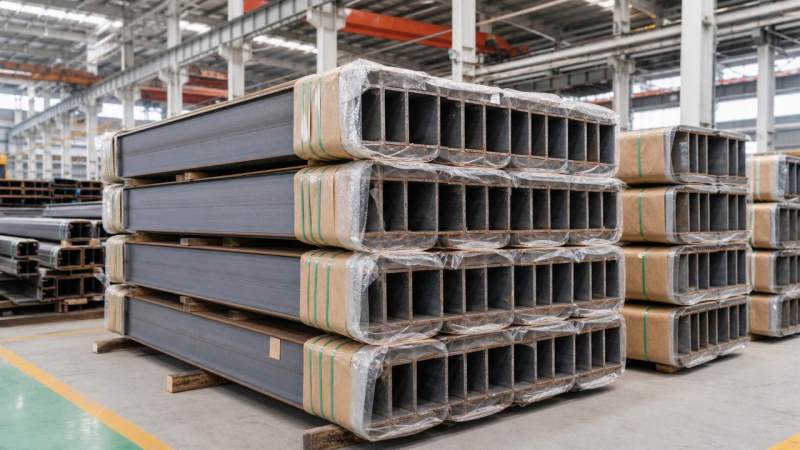
A qualified Steel Beam exporter to Europe must offer more than competitive pricing.
European projects often require strict dimensional tolerance, traceable materials, and consistent compliance with recognized standards.
That means supplier evaluation should begin with manufacturing fundamentals rather than sales promises.
Structural steel beams are critical load-bearing components.
Any weakness in chemistry control, rolling accuracy, coating condition, or packaging can cause serious downstream problems.
A reliable exporter should demonstrate stable mill operations, inspection discipline, and familiarity with European shipping documentation.
Hongteng Fengda, a structural steel manufacturer and exporter from China, focuses on angle steel, channel steel, steel beams, cold formed profiles, and customized components.
Its value lies in combining production capability with export execution for global industrial and construction needs.
Manufacturing Capacity and Technical Control
The first checkpoint is whether the supplier actually controls production.
A true Steel Beam exporter to Europe should show clear factory capability, not only trading activity.
Review these technical indicators before moving forward:
- Annual output and rolling capacity
- Available beam sizes and section types
- Tolerance control for length, web, flange, and straightness
- Heat number traceability and raw material source control
- Mechanical and chemical testing routines
- Surface treatment, blasting, galvanizing, or painting support
Factories with modern equipment usually provide better consistency across repeated orders.
This matters when one project requires multiple deliveries over several months.
Stable production also helps prevent substitution risks and unexpected quality variation between batches.
Standards, Certification, and Documentation Readiness
Compliance is one of the main reasons companies search for a trusted Steel Beam exporter to Europe.
The supplier should understand the destination market, required test reports, and acceptable standards before quotation.
Hongteng Fengda states compliance with major standards such as ASTM, EN, JIS, and GB.
That kind of range is useful when projects involve mixed engineering references or international contractors.
Documentation quality often reflects management quality.
If technical files are incomplete, later communication on claims, variation orders, or site acceptance may become difficult.
Export Experience and Supply Chain Stability
Not every steel supplier is prepared for European delivery requirements.
A proven Steel Beam exporter to Europe should already understand packaging, marking, port operations, and shipment planning.
Experience across North America, Europe, the Middle East, and Southeast Asia suggests broader international handling capability.
When checking export strength, focus on these signals:
- Lead time consistency across peak seasons
- Port loading coordination and container planning
- Protection against rust, deformation, and handling damage
- Ability to split orders by item, phase, or destination
- Fast response on technical clarifications and shipping updates
Reliable delivery is not only about shipping dates.
It also includes correct packing lists, accurate bundle identification, and proper protection during sea transport.
Customization Support and Related Steel Product Coordination
Many projects need more than standard beams.
A capable Steel Beam exporter to Europe should support processing, custom dimensions, and coordinated supply of related structural materials.
This can reduce procurement complexity and improve schedule control.
For projects involving roofing, cladding, framing, or corrosion-sensitive applications, related materials may also be required.
One example is Gi Coil, which supports corrosion resistance and helps extend steel service life.
Available in G40 galvanized steel, it covers thicknesses from 0.12mm to 3.5mm and widths from 600mm to 1500mm.
It supports common grades such as DX51D+Z, SGCC, and S350GD+Z, with standards including ASTM, DIN, JIS, GB, and EN.
This type of insert product matters because complete steel sourcing can lower coordination costs across different packages.
If one supplier can align beams, channels, profiles, and coated steel products, communication becomes easier and stock planning improves.
Typical Evaluation Scenarios for European Steel Purchasing
Evaluation standards may differ by project type, but several common patterns appear in the market.
This comparison helps narrow selection criteria based on actual use rather than broad supplier claims.
Practical Review Points Before Final Selection
A final review should combine technical, commercial, and operational checks.
For any Steel Beam exporter to Europe, the goal is long-term supply reliability, not only first-order performance.
- Ask for recent production photos and inspection records
- Request sample certificates matching the target standard
- Compare quoted lead time with actual production schedule
- Confirm claim handling process for quality or shortage issues
- Check whether technical communication is clear and timely
- Review packaging methods for sea freight protection
These checks are simple, but they reveal whether the supplier is organized, transparent, and ready for demanding export projects.
Strong partners usually provide stable output, dependable lead times, and professional support across the order cycle.
Next-Step Direction for Supplier Assessment
Selecting a Steel Beam exporter to Europe should be based on verifiable capability, not only price comparison.
Production control, standard compliance, export familiarity, customization support, and delivery consistency all deserve close review.
A structural steel partner with broad product coverage and disciplined quality management can reduce risk throughout procurement.
When comparing options, prepare a supplier checklist, verify documentation early, and confirm how each exporter handles technical and shipping details.
This approach creates a more secure basis for European steel sourcing and supports smoother project execution from order placement to site delivery.
Please give us a message


Please enter what you want to find