Choosing the right PPGI Coil Factory is about more than price—it affects coating performance, consistency, and long-term project costs. Before making a decision, buyers should compare raw material quality, coil coated steel standards, production capacity, and quality control systems. For sourcing teams evaluating Cold Rolled Steel Sheet in Coil or related steel products, a clear checklist can reduce risk and help secure reliable supply.
In steel procurement, a weak supplier evaluation process can lead to coating defects, color variation, delayed delivery, and avoidable downstream waste. This matters not only to purchasing teams, but also to project managers, quality inspectors, operators, finance approvers, distributors, and decision-makers who need stable supply and predictable performance.
For buyers sourcing from China or comparing multiple international mills, the right assessment method should cover 4 practical dimensions: product quality, manufacturing capability, documentation and standards, and service reliability. When these factors are verified early, sourcing risks can often be reduced before the first container is booked.
As a structural steel manufacturer and exporter from China, Hongteng Fengda understands that buyers often compare PPGI coil suppliers alongside broader steel product portfolios. A factory that manages quality well across coated steel, structural profiles, and customized steel components is often better positioned to support long-term industrial and construction procurement.
Check the Raw Material Base and Coating System First
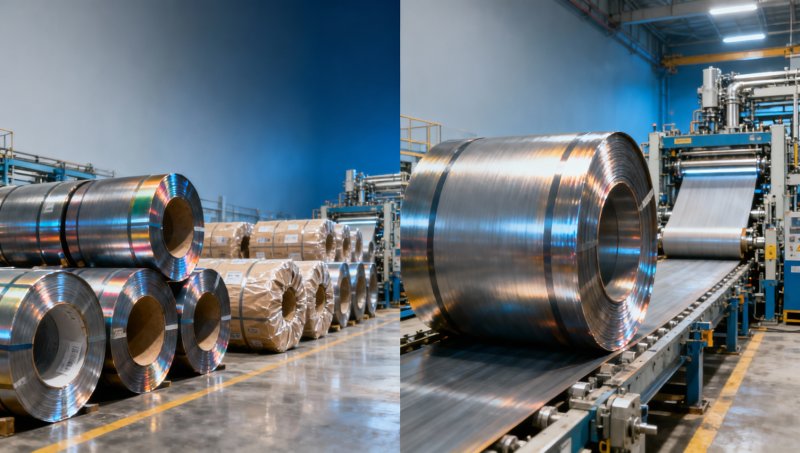
The first step in choosing a PPGI Coil Factory is verifying what goes into the coil before painting starts. PPGI is only as reliable as its substrate and coating system. Buyers should confirm whether the base material is cold rolled steel, galvanized steel, or galvalume steel, and whether the zinc coating and paint layers match the intended environment.
For common building and industrial use, buyers often compare zinc coating levels such as Z60, Z80, Z120, or higher, depending on corrosion exposure. Paint systems also vary. Polyester is common for general use, while SMP, HDP, or PVDF may be more suitable for UV-heavy, coastal, or chemically exposed environments. A lower initial price can become expensive if coating life is shortened by 3–5 years.
A capable factory should explain not only nominal thickness, but also total coated thickness, paint film thickness, gloss range, adhesion performance, and surface options such as regular, matte, embossed, or protective film finish. This information helps technical reviewers compare suppliers on measurable terms instead of relying on generic claims.
Ask for clear input specifications before discussing volume or delivery. If a factory cannot define substrate grade, coating mass, paint brand options, top coat and back coat ranges, or tolerance control, it may indicate weak process transparency. In B2B steel sourcing, incomplete technical communication is often an early warning sign.
Key substrate and coating points to verify
- Base steel type: cold rolled, GI, or GL, with clear grade declaration.
- Metal coating range: common options may run from about 60 g/m² to 275 g/m² depending on service conditions.
- Paint system: PE, SMP, HDP, or PVDF, with top and back coat thickness specified in microns.
- Nominal thickness tolerance and coil width tolerance suitable for roll forming or stamping operations.
- Protective packaging method for sea shipment, storage, and inland transport.
The table below shows how buyers can compare raw material and coating factors during an initial supplier review. This format is useful for procurement teams managing 2–5 shortlisted PPGI coil manufacturers.
A supplier that provides complete and consistent answers here is usually easier to evaluate technically. It also helps buyers compare total value rather than judging by price per ton alone.
Review Manufacturing Capability, Process Stability, and Capacity
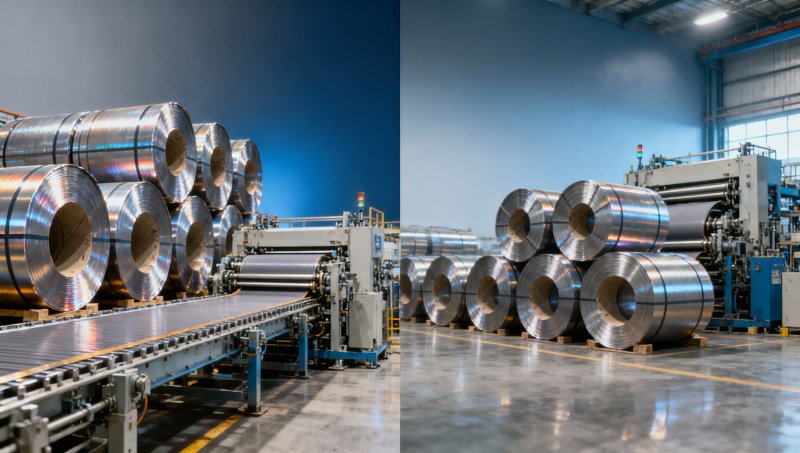
A PPGI Coil Factory may offer attractive quotations, but if its production line is unstable, the delivered coils may show uneven coating, edge damage, inconsistent color batches, or poor flatness. Capacity and process control matter especially when a project requires repeated orders over 3 months, 6 months, or a full annual supply cycle.
Buyers should review whether the factory has continuous coating lines, slitting support, recoiling capability, and packing systems suitable for export. If your application includes roofing sheets, sandwich panels, appliance panels, roll-formed sections, or industrial enclosures, coil consistency from batch to batch is often more important than a one-time sample result.
Lead time should also be discussed in practical terms. For example, standard colors and common specifications may ship in 15–30 days, while custom colors, special paint systems, or non-standard widths can take 30–45 days or longer. A reliable manufacturer should state capacity limits clearly, including monthly tonnage, minimum order quantity, and loading schedule flexibility.
Process stability is closely tied to maintenance, operator experience, and inspection frequency. Factories serving export markets generally perform in-line checks during pretreatment, painting, curing, rewinding, and final packing. If a supplier cannot describe its process checkpoints in 4–6 steps, its control system may be too informal for serious project procurement.
Operational questions buyers should ask
- What is the normal delivery cycle for standard and customized PPGI coil orders?
- How does the factory manage color consistency between production lots?
- Can it support small trial orders before container-scale purchasing?
- What packaging standards are used for sea freight, humidity protection, and edge protection?
- How does the factory respond if coil damage or coating claims are raised after arrival?
For buyers evaluating more than one supplier, a side-by-side manufacturing comparison can save time and improve decision quality. The table below summarizes the main capability indicators that affect supply continuity.
Factories with stable capacity and a transparent process are usually safer choices for distributors, project contractors, and OEM buyers. Reliability in delivery often protects margin as much as the coil price itself.
Verify Standards, Test Reports, and Quality Control Discipline
Even if a PPGI coil looks acceptable on the surface, documented quality control is what gives procurement teams confidence. Buyers should request mill test data, inspection procedures, and standard references such as ASTM, EN, JIS, or GB where relevant. The goal is not paperwork for its own sake, but traceability that supports acceptance, fabrication, and claims management.
Useful checks include thickness tolerance, coating thickness, color consistency, T-bend, adhesion, gloss, hardness, and salt spray performance when applicable. Not every project requires all tests, but the factory should be able to explain which items are routine and which are project-specific. For many buyers, 5–8 core checks are enough to filter out weak suppliers.
Quality systems become even more important when the coil will be cut, bent, roll formed, or exposed outdoors for years. If a supplier has weak coil identification, poor batch tracking, or inconsistent reports, technical disputes can become difficult to resolve after shipment. Good traceability should link order number, coil number, heat or batch information, and inspection outcome.
This is also the stage where cross-category steel sourcing can be valuable. Buyers working on towers, steel structures, transport infrastructure, or industrial fabrication often purchase more than coated coil. In such cases, a supplier with broader steel processing knowledge may better understand specification control across multiple product types.
Mid-project sourcing integration example
For projects that combine coated sheet procurement with structural or fabricated steel requirements, it can be efficient to work with a manufacturer familiar with both appearance-grade materials and engineering-grade products. For example, components such as DC01 Galvanized Round Steel may be specified alongside other steel items in power, communication, transport, and industrial applications.
This product is used in areas such as electric power towers, communication towers, railway, highway protection, street light poles, marine components, steel structure parts, and precision processing segments. Typical specifications include diameter 16–250 mm, customized lengths, and tensile strength in the 570–820 MPa range, with standards including ASTM, EN, JIS, GB, and others depending on project needs.
From a quality perspective, buyers should value details such as tolerance control, straightening, chamfering, surface inspection, ultrasonic control, marking, and packaging discipline. These process habits often reflect the manufacturer’s overall approach to consistency, whether the order is for coil coated steel or other galvanized steel products.
Quality documentation checklist
- Material grade confirmation and applicable standard reference.
- Measured thickness and coating data, not only nominal values.
- Batch traceability from production to packing and shipment.
- Inspection records for adhesion, bend behavior, and appearance checks.
- Clear non-conformance handling procedure and response time.
A factory that documents quality well is easier for finance, procurement, and project teams to approve internally. It reduces uncertainty before order placement and strengthens position if after-sales issues need to be handled professionally.
Assess Commercial Reliability, Communication, and Total Procurement Cost
The best PPGI Coil Factory is not always the one with the lowest unit price. Buyers should evaluate total procurement cost across at least 5 factors: base price, coating suitability, scrap risk, delivery reliability, and after-sales responsiveness. A slightly higher-priced coil with better consistency may lower waste, reduce installation delays, and avoid replacement costs later.
Commercial reliability includes quotation clarity, Incoterm understanding, payment terms, sample policy, claim handling, and export document accuracy. If a supplier cannot present a detailed quotation covering thickness, width, coating, color, packing, quantity tolerance, and delivery terms, cost comparison becomes unreliable. Missing details often create hidden expenses after contract confirmation.
Communication speed is also measurable. For example, technical questions should ideally receive a clear response within 24–48 hours, while sample confirmation and production updates should follow an agreed schedule. Delayed communication can affect project planning, especially when coils are linked to roll forming lines, roofing installation crews, or container booking windows.
For distributors and long-term buyers, supply continuity matters as much as the first order. A dependable partner should support repeated procurement, stable specification management, and practical coordination between sales, production, QC, and logistics. This is where experienced steel exporters often create more value than trading on price alone.
Commercial comparison table for supplier selection
The following table helps teams compare shortlisted factories beyond the quoted amount. It is especially useful when the final decision involves procurement, engineering, and finance together.
When buyers calculate total cost instead of ex-works price alone, the commercial picture becomes clearer. Better communication, lower claim risk, and stable delivery can protect both project schedules and financial outcomes.
Practical FAQ Before You Finalize a PPGI Coil Factory
Many sourcing teams already know the technical basics but still need a final decision framework. The questions below reflect common concerns from project buyers, distributors, quality teams, and corporate approvers handling steel imports or regular supply contracts.
How many suppliers should be compared before ordering?
For most B2B purchases, comparing 3 suppliers is a practical minimum. If the order is large, customized, or linked to a long-term contract, 4–5 qualified factories may provide a better benchmark. Compare them on the same specification sheet, not on loosely defined offers.
What sample checks are most useful before bulk production?
At minimum, review thickness, coating mass or paint thickness, color reference, surface appearance, bend performance, and packing method. If the material will be roll formed or stamped, a small fabrication trial is valuable. Spending a few extra days on pre-shipment validation can prevent weeks of rework later.
What are common mistakes when choosing a PPGI coil supplier?
The most common mistakes are buying by price only, accepting unclear specifications, ignoring batch consistency, and failing to confirm after-sales handling. Another frequent issue is assuming all PPGI coil factories offer the same corrosion performance, even when zinc coating and paint systems differ significantly.
When is a broader steel supplier more useful than a single-product source?
If your project includes coated coils plus structural steel, fabricated members, or galvanized components, working with a supplier experienced in multiple steel categories can simplify communication and specification management. This is often useful in infrastructure, industrial plants, towers, and mixed-material construction packages.
Final buyer checklist
- Confirm substrate, zinc coating, paint type, and tolerance in writing.
- Check production capability, lead time, and packing for export conditions.
- Review quality documents, traceability, and inspection scope.
- Compare total procurement cost, not only the unit price.
- Test communication quality before placing a larger order.
Choosing a PPGI Coil Factory is ultimately a risk-control decision as much as a purchasing decision. Buyers who verify material inputs, manufacturing stability, documented quality, and commercial reliability are more likely to secure consistent coil performance and dependable delivery.
For companies sourcing coated steel together with structural steel products, customized components, or export-ready steel solutions, an experienced manufacturing partner can improve coordination across the full supply chain. Hongteng Fengda supports global buyers with stable production, strict quality control, and practical project-oriented service.
If you are comparing steel suppliers for construction, industrial, or manufacturing projects, contact us to discuss specifications, evaluate suitable steel products, and get a tailored sourcing solution for your next order.
Please give us a message


Please enter what you want to find