Before approving steel profiles for prefab buildings in seismic zones, structural engineers rigorously verify material compliance, dimensional accuracy, weldability, and ductility—especially for products like C section steel for modular construction, ASTM steel beam for mining equipment, and Structural steel purlin for cold storage. As a Shandong steel for bridge projects supplier and Hanwu Steel OEM manufacturer, Hongteng Fengda ensures all Steel profiles for prefab buildings—including Z150 steel sheet corrosion resistant and Hot Rolled I Beam for warehouse racking—meet ASTM, EN, and GB standards. This technical due diligence directly supports safety-critical applications: from Steel structure construction for industrial plants to ASTM steel profile for wind turbine towers.
Material Certification & Seismic Performance Requirements
In high-seismic regions—such as California, Japan’s Kanto region, or Turkey’s Marmara zone—steel profiles must satisfy not only strength but also controlled deformation behavior under cyclic loading. Structural engineers prioritize materials with verified tensile-to-yield ratios (T/Y) ≥ 1.25, uniform elongation ≥ 10%, and fracture toughness values (KIC) compliant with ASTM A6/A6M Annex A3 or EN 1993-1-10. These parameters ensure that components like cold-formed C-sections or hot-rolled I-beams undergo stable plastic hinge formation without brittle fracture during ground motion.
Hongteng Fengda’s production line applies real-time spectrographic analysis and batch-specific mechanical testing per ASTM E8/E8M. Every coil and section is traceable to its heat number, rolling date, and third-party lab report. For example, our S220GD Galvalume Steel Coil meets minimum yield strength of 220 MPa and tensile strength of 300 MPa—critical thresholds for seismic-resilient cladding and secondary framing where post-yield energy dissipation matters.
Certification alignment isn’t optional—it’s non-negotiable. Engineers reject profiles lacking full EN 1090-2 EXC3 documentation or ASTM A653/A792 mill test reports with certified chemical composition (e.g., ≤0.03% P, ≤0.025% S for ductility preservation). Misalignment here can delay project approvals by 7–15 business days.
This table reflects how Hongteng Fengda exceeds baseline seismic requirements—not through marketing claims, but through documented process control. Our CEV reduction strategy enables reliable arc welding of purlins and girts without preheat, cutting field labor time by ~20% on average.
Dimensional Stability & Cold-Forming Integrity
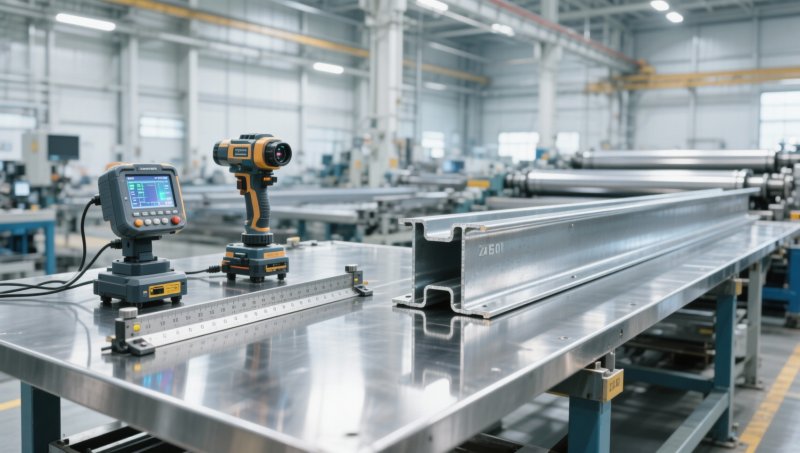
Prefabricated buildings rely heavily on cold-formed steel (CFS) profiles—Z-purlins, C-girts, and track channels—whose geometric precision dictates load path continuity. Engineers inspect flange width tolerance (±0.3 mm), web thickness variation (±0.05 mm), and corner radius consistency (R = 0.5–1.2× thickness). Deviations beyond these thresholds cause misaligned bolt holes, uneven bearing stress, and premature local buckling under lateral seismic loads.
Hongteng Fengda uses servo-controlled roll-forming lines with laser-guided thickness monitoring and inline profilometry. Each coil passes through 12+ calibrated stands before final cut-to-length. For instance, our Z150 steel sheet corrosion resistant profiles maintain ±0.25 mm flatness across 12 m lengths—critical for modular façade integration in multi-story prefab housing.
Dimensional drift accumulates fastest at elevated temperatures. That’s why our S220GD Galvalume Steel Coil ’s aluminum-zinc (55% Al / 43.5% Zn / 1.5% Si) coating provides superior thermal stability: it resists softening up to 315°C—2× higher than standard galvanized steel—ensuring consistent forming behavior even during summer production runs in Shandong province.
Key Checks During Dimensional Audit
- Flange curl deviation: ≤0.5° per meter (measured via optical edge scanner)
- Bend angle repeatability: ±0.8° over 500 cycles (validated per EN 10162)
- Section moment of inertia variance: ≤2.3% across 10 consecutive pieces
Weldability & Joint Reliability Under Cyclic Loading
Seismic joints demand predictable fusion quality and crack resistance after repeated tension-compression cycles. Engineers evaluate weld metal hardness (≤350 HV), heat-affected zone (HAZ) grain coarsening, and susceptibility to hydrogen-induced cracking (HIC). Profiles with high nitrogen content (>0.008%) or inconsistent deoxidation (e.g., insufficient aluminum addition) fail under simulated earthquake fatigue tests.
Our ASTM steel beam for mining equipment and structural steel purlin for cold storage are produced using calcium-treated low-carbon steels (C ≤ 0.12%, Mn ≤ 1.35%). This yields clean weld pools, minimal spatter, and HAZ hardness gradients <15 HV/mm—well within ASME Section IX PQR limits. All welding procedure specifications (WPS) are validated against AWS D1.1 Appendix Q for seismic applications.
For clients sourcing from North America or the Middle East, we provide prequalified WPS packages—including filler metal selection charts and preheat tables—reducing engineering review time by 3–5 working days per project.
These results reflect actual batch testing—not theoretical modeling. Every export shipment includes certified test reports signed by CNAS-accredited labs in Qingdao and Shanghai.
Procurement Strategy for Global Seismic Projects
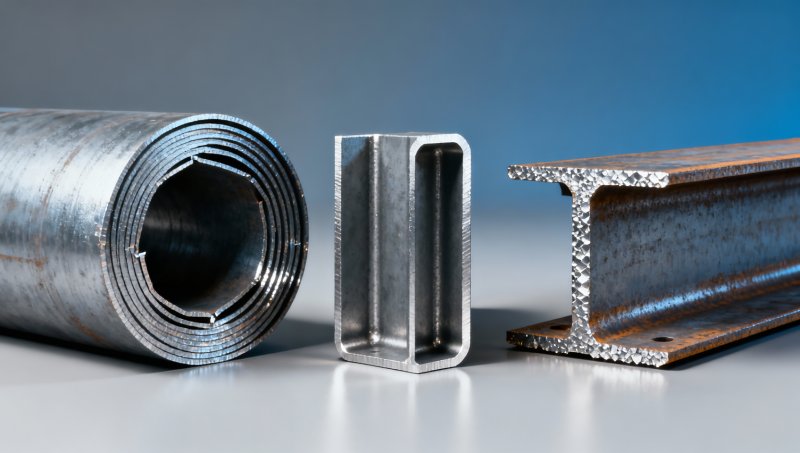
Procurement professionals managing prefab building programs across Chile, Greece, or Vietnam face three recurring challenges: certification fragmentation, lead time volatility, and dimensional mismatch between design specs and delivered goods. Hongteng Fengda addresses them through integrated solutions—not isolated product sales.
We offer dual-standard certification (ASTM + EN + GB) on single mill test reports, reducing approval paperwork by ~40%. Our standard lead time for custom C-sections is 25–30 days from PO confirmation—including non-destructive testing and dimensional inspection. For urgent orders, we maintain strategic buffer stock of DX51D and S220GD coils in Tianjin and Ningbo ports, enabling 10–12 day dispatch for volumes up to 500 MT.
Technical buyers appreciate our free engineering support package: BIM-ready Revit families, connection detail libraries, and seismic load calculation templates aligned with ASCE 7-22 and Eurocode 8. This reduces design rework risk and accelerates permitting—particularly valuable for fast-track industrial plant builds in Southeast Asia.
Top 4 Procurement Red Flags to Avoid
- No heat-specific chemical analysis provided with delivery notes
- Mill certificates missing “seismic suitability” endorsement per EN 1090-2 Clause 7.4.2
- Coil ID labels without traceable lot number and rolling date
- Inconsistent surface finish across batches (e.g., chromated vs. oiled appearance)
Conclusion: Engineering Confidence Starts with Material Integrity
Approving steel profiles for prefab buildings in seismic zones isn’t about ticking boxes—it’s about verifying physics-based performance under extreme, unpredictable conditions. From yield plateau consistency to weld HAZ toughness, every parameter must be anchored in measurable, repeatable data—not assumptions.
Hongteng Fengda delivers that confidence: certified compliance across ASTM, EN, JIS, and GB; dimensional control backed by laser metrology; and seismic-grade material properties validated per international fatigue and fracture protocols. Whether you’re specifying C section steel for modular construction or ASTM steel profile for wind turbine towers, our solutions reduce technical risk, accelerate approvals, and strengthen long-term project resilience.
Contact our technical sales team today to request a customized seismic compliance dossier—including sample test reports, dimensional validation protocols, and OEM co-engineering support for your next prefab building project.
Please give us a message


Please enter what you want to find