Before placing an order, steel tube coil buyers should inspect more than price and availability. Key factors such as material grade, dimensional accuracy, surface condition, coating quality, and compliance with ASTM, EN, or JIS standards can directly affect project safety and sourcing costs. For procurement teams, understanding these first-check points helps reduce risks, avoid delays, and secure consistent quality from reliable suppliers.
In steel sourcing, the first inspection stage often determines whether a project stays on schedule or absorbs avoidable losses. A steel tube coil that looks acceptable on paper may still create problems in slitting, forming, welding, coating, or downstream fabrication if the basic quality checks are missed.
For procurement professionals, a practical review should focus on measurable details: base steel grade, coil dimensions, tolerance control, surface defects, protective finish, packing condition, and standard compliance. These checkpoints are especially important when buying from overseas suppliers, where lead times may range from 3 to 8 weeks and replacement costs can be high.
The first inspection priorities for steel tube coil buyers
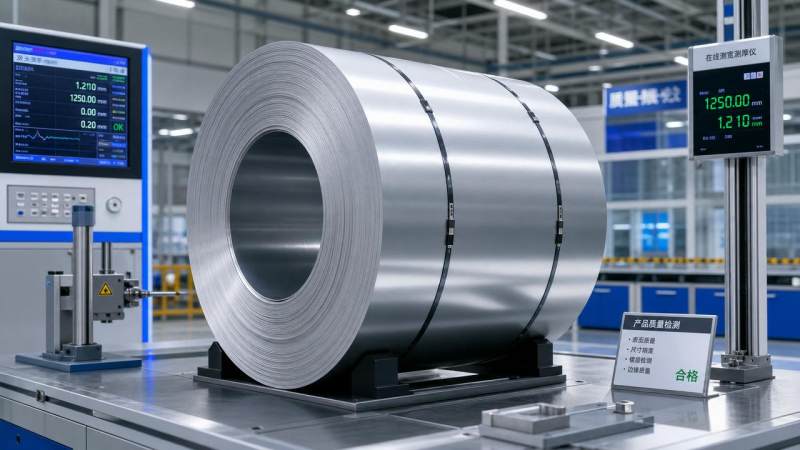
When buyers evaluate steel tube coil, the most effective approach is to inspect the items that directly affect forming quality and project acceptance. In most industrial and construction supply chains, 5 core checks should come before commercial negotiation: grade, dimensions, surface, coating, and standards.
Material grade and chemical consistency
The first thing to verify is whether the material grade matches the intended application. For example, tube production for structural use may require a different strength level than tubing for light fabrication. Buyers should confirm not only the nominal grade, but also the supporting mill test data for chemical composition and mechanical properties.
A small mismatch in carbon, manganese, or yield strength can affect bending performance, weldability, and final load-bearing capacity. In practice, procurement teams should ask for the grade designation, applicable standard, and test certificate before approving production. Common review points include yield strength, tensile strength, elongation, and heat number traceability.
Why this matters in procurement
If a steel tube coil is sourced for tube mills, even a 1-grade substitution without approval can create rejection at the next manufacturing stage. That risk is larger when the order is tied to ASTM, EN, JIS, or GB project requirements, because the end customer may inspect documents line by line.
Dimensional accuracy and tolerance control
Thickness, width, inner diameter, outer diameter, and coil weight all need confirmation. For steel tube coil buyers, thickness tolerance is especially critical because tube forming equipment is sensitive to variation. In many sourcing cases, even a deviation of ±0.10 mm to ±0.20 mm can affect roll forming stability, welding quality, and scrap rate.
Width accuracy also matters because it influences strip utilization and final tube size. If the ordered width does not align with the production setup, buyers may face additional trimming loss, lower yield, or machine adjustment downtime. It is good practice to request both nominal dimensions and permitted tolerance range in the quotation and contract.
The table below outlines the first inspection factors steel tube coil buyers should confirm before order release.
For most buyers, these 4 checks screen out the majority of quality risks before shipment. They also create a practical basis for supplier comparison, especially when price differences are only 2% to 5% but quality exposure is much larger.
Surface condition and edge quality
Surface quality affects both processing efficiency and final appearance. Buyers should inspect for rust spots, roll marks, pits, waviness, scratches, and oil contamination. For tube manufacturing, edge condition deserves separate attention because edge burrs, cracks, or deformation can reduce weld seam quality.
A visual inspection is useful, but it should be paired with photo evidence, sample review, and agreed acceptance criteria. If the coil will be used for exposed structural or industrial products, cosmetic defects may become a commercial issue even when mechanical performance is still acceptable.
Coating quality and corrosion protection
If the steel tube coil is galvanized or otherwise coated, buyers should review coating thickness, finish consistency, and protection during loading. Uneven coating can cause localized corrosion, while poor wrapping may lead to moisture damage during sea transport of 20 to 40 days.
For export orders, packaging quality is not a minor issue. Steel products moving to North America, Europe, the Middle East, or Southeast Asia often pass through multiple handling points. Proper waterproof paper, steel strapping, edge protection, and container loading methods can reduce damage claims and inventory loss.
How to verify compliance and reduce sourcing risk
After the first physical and technical checks, steel tube coil buyers should validate whether the material can pass contract, project, and destination-market requirements. This step usually involves documents, samples, inspection procedures, and shipment control. It is where many sourcing problems can still be prevented before payment and dispatch.
Check standards, certificates, and test records
Compliance should be confirmed against the required standard, such as ASTM, EN, JIS, or GB. Buyers should request mill test certificates, dimension reports, and if necessary, third-party inspection records. The document set should match the order exactly, including grade, size, heat number, quantity, and production batch.
A frequent mistake in steel purchasing is accepting generic paperwork that does not fully correspond to the shipped coil. Even when the base material is usable, incomplete records can create customs delays, project approval issues, or internal audit problems. A 3-step review process—pre-production confirmation, pre-shipment inspection, and document verification—works well for most international orders.
Recommended buyer document checklist
- Purchase specification with grade, dimensions, tolerance, and quantity
- Mill test certificate linked to heat number or batch number
- Packing list and coil identification details
- Surface or coating inspection records when applicable
- Agreed standard reference such as ASTM, EN, JIS, or GB
Evaluate supplier capability, not only product price
Experienced procurement teams usually compare suppliers across 4 dimensions: technical capability, quality control, lead time reliability, and communication speed. A lower offer may not be competitive if the supplier cannot maintain stable tolerance control or consistent batch quality across repeated orders.
For buyers sourcing from China, supplier strength is often visible in production scope and standard coverage. A manufacturer with modern facilities and the ability to supply ASTM, EN, JIS, and GB aligned products is generally better positioned to support projects with mixed market requirements.
Companies that also handle structural steel products often bring broader manufacturing insight. For example, in project-based supply, related sections such as H-beam may be sourced alongside coil, plate, or formed sections. That cross-category capability can simplify vendor coordination for steel structures, shipbuilding, bridging, and mechanical manufacturing.
In structural applications, profiles produced in grades such as Q235, Q345B, SS400, S275JR, S355JR, A572, or A992 often require the same discipline in standard control and dimensional verification. Typical section parameters may include flange thickness from 8 to 64 mm, web thickness from 5 to 36.5 mm, and lengths from 1 m to 12 m, showing why process control matters across the wider steel supply chain.
The table below shows a practical comparison model procurement teams can use when screening steel tube coil suppliers before final order confirmation.
This type of comparison helps buyers move beyond unit price. In many cases, stable lead times and predictable quality produce greater savings than a short-term price cut, especially when procurement supports construction, industrial, or manufacturing projects with strict deadlines.
Common mistakes steel tube coil buyers should avoid
One common mistake is approving material only from a quotation sheet without checking actual tolerances or sample photos. Another is focusing on FOB cost while overlooking rework, scrap, coating damage, or delayed replacement. These hidden costs can exceed the original price difference within 1 shipment.
A third mistake is failing to define acceptance standards in the purchase order. Buyers should state the required grade, dimensions, tolerance limits, surface condition, packing method, and certification documents clearly. Written alignment before production is usually more effective than dispute handling after cargo arrival.
A practical 5-step inspection workflow before payment
- Confirm steel grade, standard, and target application with the supplier.
- Review size range, thickness tolerance, coil weight, and packing details.
- Check photos, samples, or inspection reports for surface and edge condition.
- Verify mill test certificate, batch traceability, and compliance documents.
- Approve shipment only after pre-shipment review matches the purchase order.
This workflow is simple, but it works well for routine purchases and for repeat annual contracts. It gives procurement teams a documented control point at each stage and reduces the chance of accepting steel tube coil that does not fully match downstream production requirements.
What reliable steel sourcing looks like in practice
Reliable sourcing means more than receiving material on time. It means getting steel tube coil with stable grade control, usable dimensions, acceptable surface condition, and documents that support project compliance. For procurement teams, the right supplier should reduce uncertainty, not transfer quality risk to the buyer.
As a structural steel manufacturer and exporter from China, Hongteng Fengda supports global buyers with standard and customized steel solutions for construction, industrial, and manufacturing applications. With experience in angle steel, channel steel, steel beams, cold formed profiles, and customized structural components, the company understands how material consistency, lead time discipline, and export-ready quality control affect project performance.
For buyers reviewing steel tube coil or related structural products, the most effective first step is a clear technical checklist combined with supplier verification. If you need support on material selection, standard alignment, or integrated steel sourcing for global projects, contact us to get product details, discuss your specifications, and receive a tailored solution for your next order.
Please give us a message


Please enter what you want to find