For quality control and safety teams, choosing a reliable 316 stainless steel pipe manufacturer is not only about price—it is about verified material performance, traceable production, and consistent compliance with international standards. In demanding construction, industrial, and manufacturing environments, every pipe must prove its corrosion resistance, dimensional accuracy, and long-term reliability before entering service. This article explains the key indicators that demonstrate a manufacturer’s capability, helping buyers reduce sourcing risks, protect project safety, and make confident procurement decisions.
What proves a 316 stainless steel pipe manufacturer?
A proven 316 stainless steel pipe manufacturer is verified through documents, production control, inspection records, and stable supply performance.
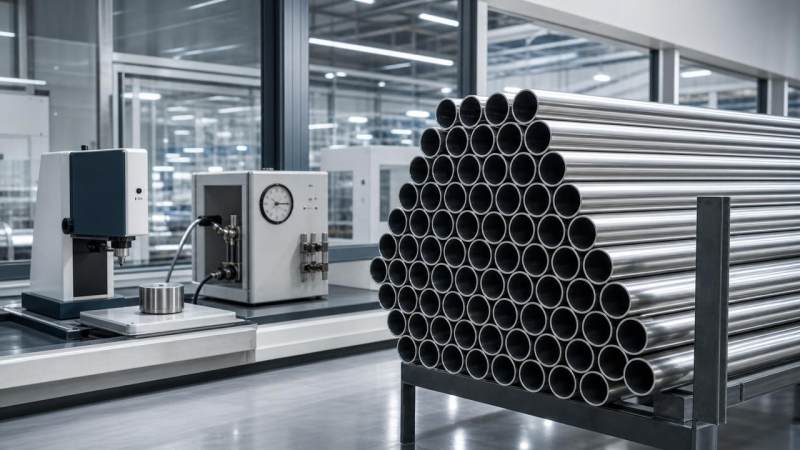
The first proof is material traceability. Each pipe should connect to a heat number, grade certificate, and chemical analysis report.
316 stainless steel contains molybdenum, which improves resistance to chloride corrosion compared with 304 stainless steel.
A qualified 316 stainless steel pipe manufacturer should clearly show chromium, nickel, molybdenum, carbon, and sulfur content.
The second proof is process consistency. Melting, forming, welding, heat treatment, pickling, and passivation must follow controlled procedures.
The third proof is repeatable inspection. Dimensional checks, mechanical tests, corrosion evaluation, and surface inspection should be documented.
How can material certificates verify a 316 stainless steel pipe manufacturer?
A material test certificate is not just a purchasing file. It is the technical identity of each pipe batch.
A credible 316 stainless steel pipe manufacturer provides MTC documents aligned with ASTM, EN, JIS, or GB requirements.
Certificates should match the actual marking on pipe bodies, bundles, labels, and packing lists.
If markings and documents cannot be matched, traceability is weak and project risk increases.
Important certificate data includes grade, heat number, pipe size, wall thickness, manufacturing method, and delivery condition.
- Chemical composition should confirm the 316 grade.
- Mechanical properties should meet the specified standard.
- Heat number should match pipe marking.
- Inspection date should match production timing.
- Third-party inspection should be available when required.
A strong 316 stainless steel pipe manufacturer will not hesitate to provide certificate samples before order confirmation.
Certificate transparency helps confirm whether the supplier understands project compliance, not only basic trading.
Which production controls show real manufacturing capability?
A real 316 stainless steel pipe manufacturer controls production from raw material entry to final packing.
For welded pipes, weld seam quality is critical. Welding parameters must be monitored during continuous production.
For seamless pipes, billet quality, piercing control, sizing accuracy, and heat treatment stability are key indicators.
Surface treatment also matters. Pickling and passivation help restore corrosion resistance after forming and welding.
A proven 316 stainless steel pipe manufacturer should manage surface scratches, dents, oxidation, and contamination.
Dimensional control is equally important. Outside diameter, wall thickness, ovality, length, and straightness affect installation accuracy.
In steel sourcing, production discipline often separates dependable mills from short-term resellers.
Hongteng Fengda supports global steel projects with structural steel products, customized processing, and quality control under international standards.
For related structural applications, buyers may also review Channel Steel Supplier options.
Available channel steel models include Q195, Q235B, Q345B, 304, and 316 for construction and industrial support needs.
Common specifications include 1.5mm-25mm thickness, 6-12m length, and 80-160mm height, with galvanizing options.
What tests should a 316 stainless steel pipe manufacturer provide?
Testing proves whether the pipe can perform in corrosive, pressurized, or load-related environments.
A responsible 316 stainless steel pipe manufacturer will define testing according to application, standard, and contract requirements.
Chemical analysis confirms grade identity. Mechanical testing confirms tensile strength, yield strength, and elongation.
Hydrostatic testing checks pressure resistance. Eddy current or ultrasonic testing helps detect hidden defects.
Intergranular corrosion testing may be required for chemical processing, marine, or high-risk environments.
Surface roughness inspection is important for food, pharmaceutical, and hygienic piping systems.
A professional 316 stainless steel pipe manufacturer should explain which tests are standard and which require additional cost.
How do standards and certifications reduce sourcing risk?
Standards make quality measurable. They define tolerances, testing methods, mechanical properties, and delivery conditions.
A reliable 316 stainless steel pipe manufacturer should understand ASTM A312, ASTM A269, EN 10216, or similar specifications.
The applicable standard depends on pressure service, process piping, structural support, or general fluid transportation.
Certifications such as ISO, CE, SGS, BV, or other audit records add confidence, but they are not enough alone.
The strongest evidence combines factory certification, order-specific testing, and traceable production records.
A 316 stainless steel pipe manufacturer with export experience also understands packing, labeling, customs documents, and destination requirements.
This matters for projects across North America, Europe, the Middle East, and Southeast Asia.
Incorrect standards can cause rejection, delayed installation, or expensive reinspection after arrival.
What mistakes should be avoided when comparing suppliers?
The most common mistake is judging only by unit price. Low prices may hide weak documentation or unstable material sources.
Another mistake is accepting vague grade descriptions. “Stainless pipe” is not enough for technical procurement.
A dependable 316 stainless steel pipe manufacturer should specify 316, 316L, size range, wall schedule, surface finish, and tolerance.
Some suppliers provide certificates after shipment only. That creates avoidable risk before final acceptance.
Request key documents before payment. Confirm whether third-party inspection is permitted before loading.
- Avoid unclear origin or mixed batches.
- Avoid missing heat numbers on labels.
- Avoid inconsistent tolerance promises.
- Avoid suppliers refusing inspection.
- Avoid quotations without standard references.
A transparent 316 stainless steel pipe manufacturer will welcome technical questions because strong systems are easy to verify.
How should cost and delivery be evaluated fairly?
Cost should include material grade, pipe type, size, testing level, surface finish, packing, freight, and delivery reliability.
A low quotation may become expensive if replacement, delay, or reinspection occurs.
A capable 316 stainless steel pipe manufacturer provides realistic lead times based on stock, production load, and inspection requirements.
For urgent projects, abundant inventory and stable production capacity can reduce schedule pressure.
For customized sizes, confirm drawing approval, sample review, production schedule, and final inspection timing.
Hongteng Fengda focuses on dependable steel supply, consistent quality, and customized solutions for global construction and manufacturing projects.
Conclusion: how to confirm the right supplier?
A qualified 316 stainless steel pipe manufacturer is proven by traceability, controlled production, valid standards, and measurable inspection results.
Before ordering, request MTC samples, standard references, dimensional tolerances, testing options, and previous export experience.
Compare suppliers through evidence, not claims. Reliable steel sourcing protects safety, schedule, and total project cost.
For a technical quotation, prepare grade, size, quantity, standard, testing requirements, and destination details.
The right 316 stainless steel pipe manufacturer will respond with clear specifications, realistic delivery, and verifiable quality documents.
Please give us a message


Please enter what you want to find