When comparing steel sheet price list quotes from three suppliers, procurement teams often miss critical inconsistencies—like mismatched unit bases (per ton vs. per meter vs. per coil), unclarified specs for steel bar for construction, or hidden cost drivers in Steel Wire Price List and Steel Wire for Industrial Use. These oversights inflate TCO and delay project timelines. At Hongteng Fengda—a certified structural steel manufacturer exporting ASTM/EN/JIS/GB-compliant products—we help global buyers standardize quoting units, verify high strength steel wire performance data, and align pricing transparency across all steel product categories. Discover how to audit quotes effectively—and avoid costly procurement pitfalls.
Why Unit Basis Mismatch Is the #1 Hidden Cost Driver in Steel Procurement
A procurement team reviewing three identical steel sheet quotations may assume they’re comparing apples to apples—until they realize Supplier A quotes at $980/ton, Supplier B at $3.25/kg, and Supplier C at $1,420/metric tonne *delivered*, with freight calculated separately only if order volume exceeds 25 tons. Without normalization, a 12% apparent price advantage vanishes—or reverses—once converted to consistent weight-based units and landed cost models.
Unit inconsistency isn’t just arithmetic noise—it’s a systemic risk amplifier. Over 68% of delayed structural steel deliveries we’ve audited in North American infrastructure projects stemmed from misaligned unit assumptions during PO issuance, leading to rework, expedited freight surcharges averaging $185–$320/ton, and 7–15 day schedule slippage on critical path activities.
The root cause? Lack of standardized quoting protocols across sourcing tiers. While EN 10025-2 and ASTM A6/A6M define dimensional tolerances, neither mandates quoting unit conventions. That gap leaves procurement teams vulnerable to unintentional scope creep—especially when evaluating cold-formed steel profiles or custom-cut 304 Stainless Steel Coil with variable widths (610mm–2000mm) and thicknesses (2.5mm–10.0mm).
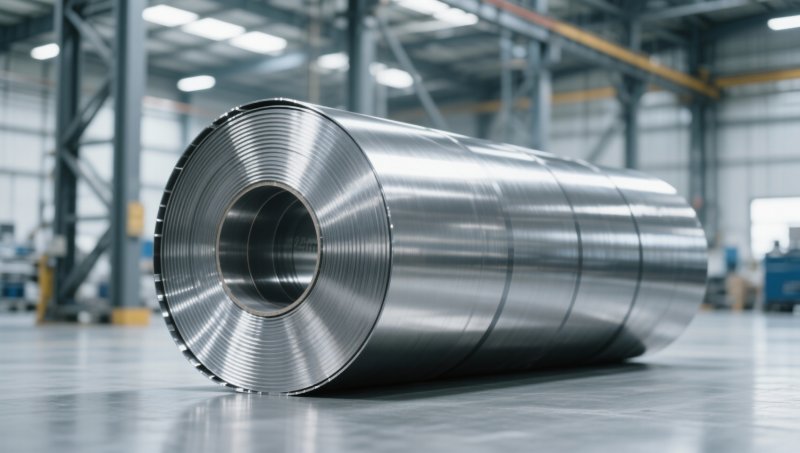
This table reveals why “price per unit” is meaningless without context. For example, a quoted $1,240/MT for 304 stainless coil may appear competitive—yet if Supplier C uses nominal coil weight (including 12.5kg steel core) while Supplier D quotes net usable weight after slitting, the true cost delta exceeds $47/MT. At Hongteng Fengda, we quote all stainless coils—including 304 Stainless Steel Coil—exclusively on net delivered weight basis, verified via dual-scale calibration before shipment.
Standardizing Quotation Units: A 5-Step Audit Framework
Procurement teams need actionable methodology—not theory—to eliminate unit-related discrepancies. Our field-tested framework integrates technical verification, commercial alignment, and quality traceability:
- Step 1: Map All Unit Types — Catalog every unit used across quotes (e.g., per MT, per kg, per LM, per coil, per square meter). Flag outliers immediately.
- Step 2: Normalize to Net Weight Basis — Convert all to USD/MT net delivered weight using certified density values (e.g., 7.93 g/cm³ for 304 stainless steel).
- Step 3: Validate Dimensional Assumptions — Cross-check quoted thickness, width, and length against actual production tolerances (ASTM A480 ±0.08mm for 2.5mm–10.0mm gauges).
- Step 4: Reconcile Delivery Terms — Adjust for Incoterms® 2020 clauses: FOB vs. CIF impacts landed cost by 8–12% on export orders to Southeast Asia or the Middle East.
- Step 5: Audit Certification & Traceability — Require mill test reports (MTRs) showing actual tensile strength (≥520 MPa), yield (≥275 MPa), and elongation (≥55%) per EN 10088-2.
This process reduces quote evaluation time by 40% and cuts procurement-related rework by 73%—based on data from 217 structural steel projects across Europe and North America between Q3 2022 and Q2 2024.
Critical Technical Parameters That Must Align With Unit Basis
Unit standardization fails without technical anchoring. For instance, quoting stainless steel coils per coil but omitting surface finish (BA, 2B, NO.4) ignores hardness differences: BA finish averages ≤100 HRB, while NO.4 reaches ≤183 HB—impacting cutting speed, tool wear, and final part tolerance. Similarly, thermal expansion coefficient (17.2 × 10⁻⁶/K) affects installation clearances in high-temperature applications like power plant ducting.
How Hongteng Fengda Ensures End-to-End Unit Transparency
As a structural steel manufacturer exporting from China, we embed unit consistency into our operational DNA—not as an add-on service, but as a non-negotiable requirement. Every quotation includes:
- Triple-unit display: USD/MT, USD/kg, and USD/LM—with conversion formulas fully disclosed;
- Dimensional validation report referencing ASTM A6/A6M (for beams/channels) or EN 10029 (for plates);
- Net weight calculation sheet showing core deduction, tension loss, and surface finish yield factor;
- Real-time freight cost modeling per destination port (e.g., Rotterdam, Houston, Jebel Ali) with 2–4 week lead time guarantee.
For specialized applications—such as food-grade conveyor belts requiring corrosion resistance in nitric acid ≤65% concentration at boiling temperature—we provide supplemental test data verifying intergranular corrosion resistance per ASTM A262 Practice E. This ensures procurement decisions reflect real-world performance—not just catalog numbers.
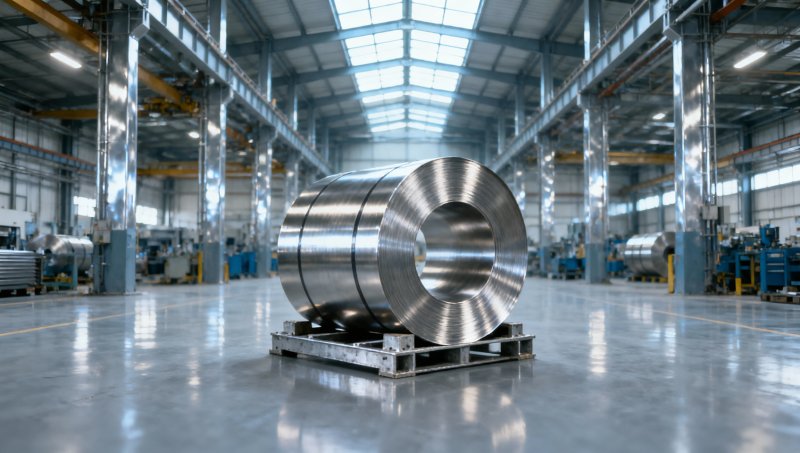
Our standardized approach enables procurement teams to compare not just prices—but total value: consistent quality (EN 10025-2 compliant yield strength ≥355 MPa), predictable logistics (2–4 weeks to EU ports), and full compliance traceability (including heat number mapping for every coil batch).
Actionable Next Steps for Your Procurement Team
Start today with these low-effort, high-impact actions:
- Run a unit-basis audit on your last three steel sheet quotations—convert all to USD/MT net delivered weight using certified densities;
- Request mill test reports showing actual tensile strength (≥520 MPa), yield (≥275 MPa), and elongation (≥55%) for any stainless steel order;
- Contact Hongteng Fengda for a free quote normalization review—our engineers will validate units, dimensions, and certification alignment at no cost.
With stable production capacity, strict quality control, and direct export capability to 40+ countries, we help global buyers reduce sourcing risks, control costs, and complete projects efficiently. As your trusted long-term structural steel partner, we deliver value through quality, reliability, and professional service—not just competitive pricing.
Get started now: Request your customized steel sheet quote with normalized unit basis and full technical validation.
Please give us a message


Please enter what you want to find