For procurement teams, success in galvanized pipe sourcing depends on more than price alone. When working with galvanized pipe manufacturers bulk order projects, key factors include coating quality, dimensional accuracy, production capacity, delivery reliability, and compliance with international standards. Choosing the right supplier helps reduce purchasing risk, control total cost, and ensure smooth project execution across construction and industrial applications.
Why a checklist matters in galvanized pipe bulk orders
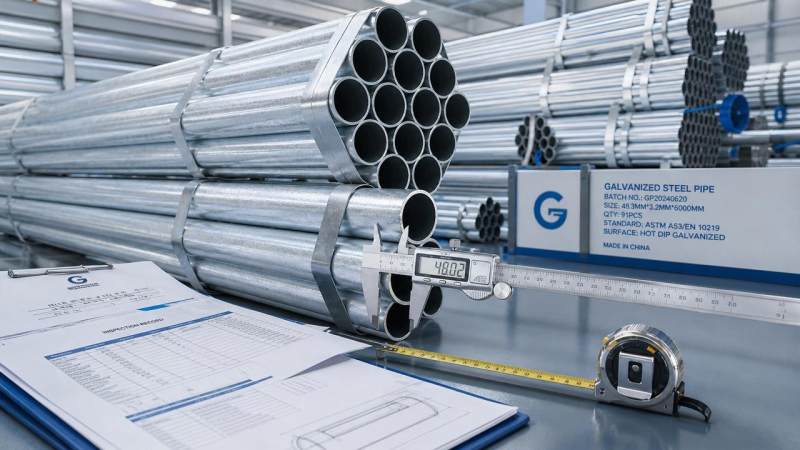
Large-volume steel purchasing often fails on details, not headline pricing. A clear checklist keeps galvanized pipe manufacturers bulk order decisions aligned with project quality, lead time, and total landed cost.
Galvanized pipe is widely used in construction, infrastructure, agricultural systems, mechanical fabrication, and industrial support structures. In each case, coating life, pipe tolerance, and supply continuity directly affect installation speed and service life.
Without a structured review process, orders may face uneven zinc coating, off-size dimensions, missing test certificates, delayed shipment, or packaging damage during export. These issues increase rework, claims, and hidden sourcing costs.
Core checklist for galvanized pipe manufacturers bulk order evaluation
- Confirm base steel grade, pipe standard, and intended use before quotation. Match ASTM, EN, JIS, or GB requirements to pressure needs, fabrication method, and corrosion exposure.
- Check galvanizing method carefully. Distinguish hot-dip galvanized pipe from pre-galvanized material, because coating thickness, adhesion, and outdoor durability can differ significantly in service.
- Request zinc coating data in measurable terms. Ask for coating weight or thickness, test method, and acceptance tolerance instead of general statements about anti-rust performance.
- Verify dimensional accuracy across outer diameter, wall thickness, length, straightness, and end finish. Stable tolerances reduce welding problems, threading issues, and site installation delays.
- Review mechanical properties and production consistency. Tensile strength, yield strength, flattening tests, and hydrostatic performance should match the specification and batch documents.
- Audit mill capability for bulk supply. Confirm monthly output, line capacity, tooling range, and experience with repeat export orders rather than relying on sample quality alone.
- Examine surface condition after galvanizing. Watch for bare spots, excessive ash, rough spangle, zinc drips, internal blockage, or poor passivation that can affect downstream use.
- Ask for full documentation before contract finalization. Mill test certificates, coating reports, inspection photos, packing lists, and origin records support customs clearance and claim control.
- Compare logistics plans, not only unit price. Bundling method, port schedule, container loading, and transit protection influence breakage risk and final delivered cost.
- Set quality claim terms in writing. Define third-party inspection, shortage tolerance, replacement responsibility, and lead-time penalties before placing galvanized pipe manufacturers bulk order contracts.
Specification details that should never be vague
A bulk order should include more than size and quantity. It should define steel grade, standard, zinc requirement, length tolerance, pipe ends, marking, packing, and inspection basis.
For export steel sourcing, detailed technical alignment reduces interpretation gaps between buyer, mill, warehouse, and freight forwarder. This is especially important when mixed sizes share one shipment.
Recommended specification points
- Pipe type: round, square, or rectangular galvanized steel pipe.
- Process: ERW, seamless, or formed section as required.
- Coating: hot-dip galvanizing standard and minimum zinc thickness.
- Dimensions: OD, wall thickness, length, and tolerance range.
- Ends: plain end, threaded, beveled, or socket-ready.
- Inspection: factory testing and third-party verification if needed.
Some projects also source stainless tube for adjacent systems. In such cases, comparing corrosion demands across product lines helps avoid over-specifying galvanized items for indoor or non-critical sections.
A practical reference is 201 Stainless steel pipe, available in 201 and 304 grades for food processing equipment, building materials, automobile parts, water treatment plants, oil and gas processing, construction, and pharmaceutical uses.
Its typical options include round tube from 4mm to 200mm, square tube from 10×10mm to 100×100mm, and rectangular tube from 10×20mm to 50×100mm. With tensile strength of at least 520MPa and broad ASTM, EN, JIS, GB, ISO, and SGS-related compliance support, it suits projects needing oxidation resistance, smooth surface quality, and economical stainless performance.
How order priorities change by application
Construction and structural support
Building frames, guardrails, scaffolding components, and support posts need consistent geometry first. Poor straightness or wall thickness variation quickly slows fabrication and weakens fit-up accuracy on site.
For these uses, galvanized pipe manufacturers bulk order reviews should prioritize dimensional control, weld seam quality, and surface uniformity. Coating should protect storage and service exposure without impairing assembly.
Water, agricultural, and utility systems
Irrigation lines, drainage supports, fencing, and non-critical utility routes place more value on corrosion protection and practical service life than cosmetic appearance alone.
Here, coating thickness, end protection, and bundling quality become central. If pipes arrive with wet storage stains or damaged thread caps, installation efficiency and field durability may drop quickly.
Industrial fabrication and export distribution
For resellers or integrated fabricators, the real challenge is repeatability across lots. One good shipment does not guarantee stable future performance under changing production schedules.
In this scenario, galvanized pipe manufacturers bulk order planning should focus on batch traceability, standard consistency, and the supplier’s ability to hold specification across repeat bookings.
Commonly overlooked risks in galvanized pipe bulk orders
One common mistake is approving a sample without confirming mass-production inspection points. Sample pieces may look clean, while full production shows coating variation or dimensional drift.
Another risk is unclear tolerance language. Terms such as “standard export quality” or “factory normal thickness” create room for dispute when results differ from project drawings.
Lead time claims also need verification. A supplier may quote a short production cycle but depend on outsourced galvanizing, which adds schedule uncertainty during peak steel demand.
Packaging is often underestimated. Steel pipes can suffer end deformation, strap damage, and coating abrasion during inland transport and container loading if support timber and bundle spacing are inadequate.
Documentation gaps create another hidden cost. Missing heat numbers, incomplete test reports, or inconsistent invoice descriptions can delay customs clearance and complicate quality claims.
Practical execution steps before placing the order
- Prepare a technical sheet covering standard, dimensions, coating, tolerance, ends, packing, and inspection method.
- Collect quotations from qualified mills with export records in structural steel and pipe supply.
- Compare offers on total cost, not just EXW or FOB price.
- Review production photos, certificates, and previous shipment evidence before confirmation.
- Arrange pre-shipment inspection for coating, dimensions, quantity, marking, and packing condition.
- Lock contract clauses for replacement, shortage handling, and delivery timing.
Working with an experienced structural steel manufacturer and exporter can simplify this process. Reliable mills with modern facilities, strict quality control, and familiarity with ASTM, EN, JIS, and GB standards help reduce sourcing risk and stabilize delivery outcomes.
Final takeaway for better sourcing decisions
The best galvanized pipe manufacturers bulk order result comes from disciplined specification control, measurable coating standards, verified production capacity, and contract-based quality protection.
A strong checklist turns steel purchasing into a controlled process instead of a price gamble. Define the technical details early, verify evidence before payment, and align logistics with installation timing.
For projects that require dependable structural steel supply from China, choose partners with stable output, international standard experience, and responsive export service. That approach lowers risk, protects schedule, and improves total procurement value.
Please give us a message


Please enter what you want to find