Judging the quality of steel wire mesh is rarely as simple as checking its appearance. For quality control and safety managers, hidden issues such as inconsistent wire diameter, weak weld points, poor coating adhesion, or non-compliance with project standards can create serious risks in construction and industrial applications. Understanding what makes evaluation difficult helps buyers avoid unsafe materials, reduce inspection failures, and select suppliers capable of delivering consistent, standards-compliant steel solutions.
Why steel wire mesh quality is difficult to judge on site
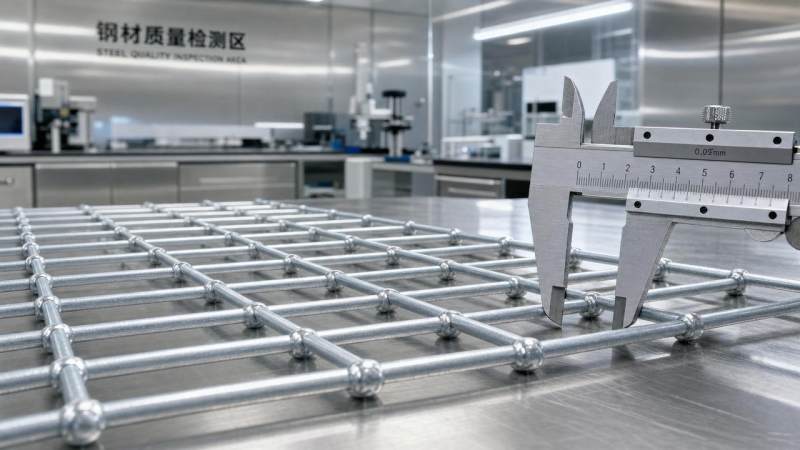
Steel wire mesh often looks acceptable at first glance because defects may hide inside welds, coating layers, dimensional tolerances, or material composition. A clean surface does not prove structural reliability.
For safety managers, the challenge is that mesh failure may occur after installation, loading, vibration, corrosion exposure, or concrete pouring. By then, replacement costs rise sharply.
For quality control teams, steel wire mesh inspection is difficult because several performance factors must align at the same time. Wire diameter, spacing, weld strength, surface protection, and standard compliance all matter.
Common hidden variables behind an acceptable appearance
- Wire diameter may fluctuate along the coil or panel, changing load capacity and creating inconsistent reinforcement performance.
- Weld points may look complete but fail under pull-out, bending, impact, or repeated handling during installation.
- Galvanized or coated surfaces may appear bright while adhesion, coating thickness, or edge protection remains insufficient.
- Mesh openings may drift beyond tolerance, affecting fit, reinforcement distribution, machine guarding, or screening efficiency.
This is why visual checking should only be the first step. Reliable steel wire mesh evaluation requires measurable criteria, documented traceability, and supplier process control.
Which defects create the highest safety and inspection risk?
Not every defect has the same consequence. Some affect appearance, while others directly influence load transfer, corrosion resistance, occupational safety, and project acceptance.
The table below helps quality control personnel connect common steel wire mesh defects with likely causes and inspection actions before shipment or installation.
A practical inspection plan should focus first on defects that affect structural function. Surface appearance matters, but measurable performance determines whether steel wire mesh is safe to use.
How material selection changes steel wire mesh evaluation
Material grade is one reason steel wire mesh quality is hard to compare. Carbon steel, galvanized steel, and stainless steel mesh can serve different environments, budgets, and durability requirements.
When stainless performance is required, buyers may also evaluate related flat products used for screens, kitchen supplies, conveyor belts, vehicles, bolts, nuts, springs, and industrial components.
For example, 430 Stainless Steel Coil is used in applications such as countertops, kitchenware, outdoor decoration, medical instruments, automotive parts, chemical equipment, food industry uses, agriculture, ship parts, trains, airplanes, conveyor belts, and screens.
Its available surfaces include BA, 2B, NO.1, NO.4, 4K, HL, and 8K, while common thickness and size ranges include 2.5mm-10.0mm thickness, 610mm-2000mm width, and lengths such as 2000mm, 2440mm, 3000mm, 5800mm, and 6000mm.
Material-related parameters that affect judgment
The following values are useful when comparing stainless steel supply options for mesh-related or screen-related projects. They should be verified against the final specification and applicable standard.
This comparison shows why procurement teams should not treat all mesh materials as interchangeable. The right choice depends on strength, corrosion exposure, forming needs, and inspection requirements.
What should buyers inspect before approving a shipment?
A strong inspection process reduces uncertainty before the steel wire mesh reaches the jobsite. It should combine document review, sampling, dimensional checks, and practical handling assessment.
A practical steel wire mesh inspection checklist
- Confirm the purchase specification, including wire diameter, mesh opening, panel size, roll size, coating type, grade, and tolerance range.
- Review mill certificates, heat numbers, inspection reports, and applicable references such as ASTM, EN, JIS, GB, DIN, or ISO requirements.
- Inspect packaging condition, rust protection, labeling, and traceability before unloading or approving warehouse receipt.
- Measure multiple samples rather than relying on one corner, one panel, or one roll from the shipment.
- Record deviations with photos, measurement values, batch information, and supplier communication history.
For safety-critical projects, buyers should define acceptance criteria before production. Vague requirements such as “standard mesh” or “good quality” leave too much room for interpretation.
How to compare suppliers beyond unit price
Low unit price can be attractive, especially when budgets are limited. However, poor steel wire mesh may lead to rework, installation delays, failed inspections, or safety exposure.
The following supplier comparison framework helps procurement, QC, and safety teams make decisions based on risk, not just initial purchasing cost.
A supplier that asks detailed technical questions may take longer at quotation stage, but that process often prevents expensive misunderstanding after production begins.
Where steel wire mesh is most sensitive to quality variation
Different applications place different demands on steel wire mesh. A panel used for fencing does not face the same risk profile as reinforcement mesh or industrial screening material.
Application-based risk priorities
- Concrete reinforcement requires stable wire diameter, spacing accuracy, and reliable weld strength for predictable load distribution.
- Machine guarding requires consistent openings, smooth edges, and sufficient rigidity to protect personnel around moving equipment.
- Outdoor fencing and barriers need coating integrity, corrosion resistance, packaging protection, and proper edge finishing.
- Screening and filtration applications require precise aperture control, clean surfaces, and material selection matched to wear or corrosion exposure.
Quality control should therefore begin with the final use. The same steel wire mesh may be acceptable for one project but unsuitable for another with tighter safety requirements.
How standards and certificates reduce uncertainty
Standards do not replace inspection, but they create a shared language between buyer, supplier, contractor, and auditor. This is critical for international steel procurement.
For steel wire mesh and related structural steel materials, references may include ASTM, EN, JIS, GB, DIN, ISO, AISI, SGS, or BV documentation depending on project requirements.
Documents worth requesting before shipment
- Material certificate showing grade, heat number, chemical composition, and mechanical performance where applicable.
- Dimensional inspection record covering wire diameter, mesh opening, panel dimensions, roll dimensions, and tolerance confirmation.
- Surface or coating report when galvanized, painted, or stainless surface performance is part of the specification.
- Packing list and labeling information that allow batch identification at receiving inspection and later project traceability.
Hongteng Fengda supplies structural steel products and customized solutions under commonly used international standards, supporting buyers who need clearer documentation and stable production control.
FAQ: practical questions from QC and safety managers
Can visual inspection alone confirm steel wire mesh quality?
No. Visual inspection can identify rust, obvious deformation, broken welds, and packaging damage, but it cannot reliably confirm wire diameter, weld strength, chemical grade, or coating adhesion.
What is the most important factor when buying steel wire mesh for safety-critical use?
The most important factor is alignment between application, specification, and verification method. Safety-critical use requires measurable tolerances, documented material grade, and clear acceptance criteria.
How can buyers reduce inspection failure before bulk delivery?
Buyers should confirm drawings, standards, sampling plans, packaging requirements, and certificates before production. For unfamiliar projects, pre-shipment inspection or sample approval can reduce risk.
Is stainless steel always better than galvanized steel wire mesh?
Not always. Stainless steel may be better for corrosion resistance or hygiene-sensitive uses, while galvanized mesh can be cost-effective for many outdoor and general industrial applications.
Why choose Hongteng Fengda for steel sourcing support?
Hongteng Fengda is a structural steel manufacturer and exporter from China, serving construction, industrial, and manufacturing projects with standard specifications and customized steel solutions.
Our product scope includes angle steel, channel steel, steel beams, cold formed steel profiles, customized structural components, and related steel materials for global buyers.
For steel wire mesh procurement, our team can help clarify material grade, wire diameter, mesh opening, surface treatment, standard requirements, packaging, inspection documents, and delivery planning.
If your project involves strict safety management, tight lead times, or multi-country compliance expectations, contact us to discuss parameter confirmation, product selection, OEM requirements, sample support, certification needs, delivery schedule, and quotation details.
A clearer specification today can prevent inspection disputes tomorrow. Hongteng Fengda supports buyers with stable production capacity, consistent quality control, and practical export service for long-term steel supply.
Please give us a message


Please enter what you want to find