Choosing a reliable stainless steel pipe exporter means looking beyond price to consistent quality, certification, and supply stability. Whether you source ASTM A106 Gr B pipe, compare ASTM A106 Gr.B specification details, or evaluate a trusted stainless steel pipe manufacturer and stainless steel pipe supplier, the right partner helps reduce risk, control costs, and keep industrial and construction projects on schedule.
What should buyers really check when evaluating a stainless steel pipe exporter?
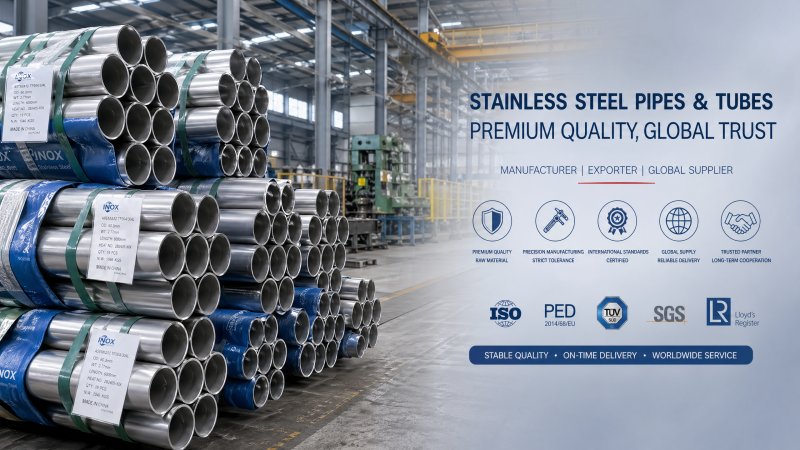
A reliable stainless steel pipe exporter is not defined by one factor. In steel sourcing, buyers usually need to verify 5 core dimensions: product consistency, standards compliance, delivery stability, communication efficiency, and after-sales accountability. For project managers, procurement teams, and technical reviewers, these points matter more than a low initial quotation because delays, rework, and non-conforming materials can create much higher total cost.
In practical B2B purchasing, a stainless steel pipe supplier must support more than basic supply. Buyers may request ASTM, EN, JIS, or GB references, mill inspection documents, heat number traceability, dimensional tolerance confirmation, and packing details for ocean shipment. If an exporter cannot respond clearly within 24–72 hours during the evaluation stage, that often signals future coordination risk during mass production and shipment.
For global projects, reliability also depends on whether the exporter understands end-use requirements. Industrial piping, structural support, fabrication, and boiler-related applications all have different expectations for chemistry, welding behavior, tolerance, and surface condition. A capable exporter helps the buyer align specification, quantity, and lead time before production starts, reducing change orders in the middle of the project cycle.
Hongteng Fengda brings value here because the company works as a structural steel manufacturer and exporter from China with modern production capability, strict quality control, and experience serving buyers across North America, Europe, the Middle East, and Southeast Asia. For many customers, this combination is important because a dependable exporter should not only sell steel, but also reduce sourcing uncertainty across 3 stages: pre-sales assessment, production execution, and shipment coordination.
- Check whether the exporter can explain standards, tolerances, and grade differences in plain technical language.
- Confirm document support, including inspection records, material certificates, and shipment packing lists.
- Ask about normal production windows such as 2–4 weeks for standard items and longer cycles for custom fabrication.
- Review whether the supplier has export experience for port handling, container loading, and anti-corrosion packing.
How do quality control and standards compliance reveal exporter reliability?
Quality control is often where weak exporters are exposed. A reliable stainless steel pipe exporter should be able to define incoming raw material checks, in-process inspection, and final verification before dispatch. In steel trade, this usually means reviewing chemistry, dimensional tolerance, surface condition, marking, and quantity accuracy. For critical orders, buyers may also ask for third-party inspection or witness checks before loading.
Standards compliance is equally important. Many buyers search for ASTM A106 Gr B pipe or compare ASTM A106 Gr.B specification details because they need compatibility with existing project documents, tender files, or engineering drawings. Even when the final product category differs, the exporter should understand how to discuss equivalent or related standards without causing confusion. That ability reflects technical maturity, not just sales capability.
For purchasing teams and quality managers, one practical method is to compare suppliers against the same review checklist. This helps prevent decisions based only on unit price. It also gives finance approvers a clearer picture of landed risk, especially when delivery deadlines are tight or when the project includes multiple steel components sourced from one vendor base.
The table below shows a useful evaluation framework for steel exporters in industrial and construction procurement.
This type of review is especially useful when comparing multiple quotes. A supplier with slightly higher pricing may still be the better option if documentation is complete, tolerances are stable, and communication is fast enough to support project execution. In steel procurement, reliability often protects budget more effectively than nominal savings on paper.
Why standards knowledge matters beyond paperwork
A skilled exporter does not treat standards as labels only. The team should understand how standard selection affects welding, forming, coating, structural integration, and downstream inspection. This is particularly important when a buyer purchases pipe together with structural sections, fabricated members, or related carbon steel components for one project package.
Hongteng Fengda’s experience with structural steel products such as angle steel, channel steel, steel beams, cold formed profiles, and customized components supports this broader coordination need. In many real procurement cases, buyers want fewer suppliers, not more. A manufacturer-exporter that understands cross-category steel requirements can simplify 4 common tasks: specification confirmation, production follow-up, packing control, and shipment planning.
Which supply and product capabilities make an exporter safer for long-term projects?
Supply reliability depends on whether the exporter can keep quality stable across repeated orders, not only the first sample or first shipment. For contractors, distributors, and OEM buyers, the real test usually appears in 3 situations: urgent replenishment, mixed-size orders, and custom processing requests. A reliable partner should explain what is standard stock, what requires new production, and what affects delivery time.
This is also where related steel products matter. Many projects require pipe together with plate, coil, or structural sections. Mid-project sourcing becomes more efficient when one exporter can coordinate compatible material documents, shipping plans, and packaging methods across product categories. For example, buyers working on boiler or fabrication applications may also evaluate Rolled Coil as part of a broader steel purchasing package.
In this category, common grades include Q235, Q235B, Q345, Q345B, Q195, St37, St42, St37-2, St35.4, St52.4, and St35. Typical carbon steel chemistry ranges may include carbon at 0.12% to 0.20% and manganese at 0.30% to 0.70%, with phosphorus and sulfur not exceeding 0.045%. For buyers comparing forming and fabrication behavior, these ranges help indicate weldability and cold working suitability.
The product can be supplied for boiler plate related applications, with dimensions such as width from 0.1mm to 300mm and customer-defined length requirements. Typical tolerance references such as ±1%, coated surface condition, and standards including GB/T 700-2006, AiSi, ASTM, DIN, and JIS provide a useful benchmark when a project needs complementary steel materials from the same export source.
How mixed-product sourcing reduces procurement friction
When one exporter can manage stainless steel pipe inquiries together with structural steel and supporting carbon steel products, buyers often gain better control over schedule and communication. Instead of coordinating 3–5 separate vendors, the purchaser can consolidate technical review, inspection timing, and shipment booking under a more efficient process.
That matters for engineering companies and distributors handling multiple end users. It also supports finance teams because fewer suppliers usually means simpler payment tracking, document matching, and inbound receiving control. The key is not to force single-source buying in every case, but to choose an exporter with enough breadth to support practical project needs.
Useful capability signals to confirm
- Can the exporter support both standard specification orders and OEM or customized requirements?
- Can the supplier coordinate mixed loading plans for pipe, profiles, beams, or coil-based materials?
- Does the team explain which items need 7–15 days and which require 3–6 weeks?
- Are packing, marking, and anti-rust precautions designed for export handling rather than local delivery only?
How can buyers compare exporters on cost, risk, and service response?
Comparing stainless steel pipe exporters only by unit price can be misleading. A lower offer may exclude testing, stronger packing, document support, or stable tolerance control. For procurement and commercial evaluation teams, it is better to review total delivered value across at least 4 dimensions: product conformity, logistics readiness, response speed, and problem-resolution process.
This approach is especially important when deadlines are fixed. If a project shutdown, site installation slot, or fabrication window is already scheduled, a delay of even 7–10 days can affect labor planning and downstream milestones. In such cases, a supplier with realistic lead time and clear communication is usually more valuable than one offering a lower but uncertain quotation.
The comparison table below can help technical, purchasing, and management teams align on a balanced decision.
A structured comparison often changes the buying decision. Many experienced importers accept a moderate price difference when the exporter can support full technical clarification, consistent quality records, and dependable shipment execution. That trade-off is often reasonable because hidden costs usually appear later in storage, fabrication, or claims handling rather than in the original quote.
A practical 4-step procurement review process
- Confirm technical scope: grade, standard, size range, tolerance, and application conditions.
- Review commercial scope: quantity, Incoterms, packing, lead time, and payment terms.
- Check execution support: inspection plan, document package, and communication response window.
- Compare landed risk: possible delay cost, rework exposure, and replacement difficulty.
This process helps different stakeholders speak the same language. Engineers focus on compliance, procurement focuses on terms, finance focuses on risk, and project leaders focus on schedule. A reliable exporter should be able to support all 4 views without creating confusion.
Common questions buyers ask before choosing a stainless steel pipe manufacturer
How do I know whether a stainless steel pipe supplier is suitable for my project?
Start with application fit. Ask the supplier to review your required standard, dimensions, quantity, and use condition. Then confirm whether the order is standard, customized, or part of a mixed steel package. A suitable exporter should respond with clear comments on manufacturability, typical lead time, and documentation scope, usually within 1–3 working days for an initial technical review.
If the supplier only sends price without discussing material details, tolerance, or shipment conditions, the evaluation is incomplete. Reliable suppliers usually ask follow-up questions because they want to reduce mismatch before order confirmation. That is often a positive sign, not a delay tactic.
What documents should I request from a stainless steel pipe exporter?
Common requests include material certificate, inspection report, packing list, invoice, and shipment-related records. Depending on project requirements, buyers may also request heat traceability, dimensional inspection sheets, or third-party inspection coordination. The exact package varies by contract, but a capable exporter should explain what is standard and what requires advance arrangement.
For regulated or large-value projects, document accuracy matters almost as much as the steel itself. Errors in marking, quantity, or specification references can slow customs clearance or internal receiving checks. This is why experienced buyers evaluate document discipline early in the sourcing process.
How long does delivery usually take?
For standard steel products, a common production range may be around 2–4 weeks, while customized sections, OEM structural components, or mixed-item orders may require 3–6 weeks depending on complexity and workload. Transit time depends on destination, shipping method, and port schedule, so it should be reviewed separately from production time.
A reliable exporter will separate these stages clearly: order confirmation, production, inspection, packing, and shipment booking. That level of detail helps project owners and purchasing teams build a realistic procurement schedule instead of relying on broad promises.
What mistakes do buyers commonly make?
The most common mistakes are choosing by lowest price only, ignoring tolerance details, failing to confirm packing method, and assuming standards are interchangeable without technical review. Another frequent issue is sending incomplete inquiry information, which leads to inaccurate quotations and delays in clarification.
To avoid this, prepare at least 6 key inputs: standard, grade, size, quantity, application, and required delivery window. If surface treatment, coating, or third-party inspection is needed, mention that at the quotation stage. Better input almost always leads to better sourcing outcomes.
Why work with Hongteng Fengda for steel sourcing and project support?
For buyers looking for a reliable stainless steel pipe exporter or a broader steel supply partner, Hongteng Fengda offers practical advantages rooted in manufacturing and export execution. The company focuses on structural steel production and export from China, supports both standard and customized solutions, and works with international standards including ASTM, EN, JIS, and GB. This makes coordination easier for projects that require technical alignment rather than price-only transactions.
The company’s product scope includes angle steel, channel steel, steel beams, cold formed steel profiles, and customized structural steel components, which is valuable for customers managing multi-category steel purchasing. With modern manufacturing facilities and strict quality control, Hongteng Fengda helps global buyers reduce sourcing risk, improve consistency, and manage delivery expectations more effectively across different project phases.
If you are comparing stainless steel pipe manufacturer options, reviewing ASTM A106 Gr B pipe related requirements, or planning a mixed steel procurement package, you can request support for 6 key topics: parameter confirmation, product selection, delivery schedule, customized processing, certification expectations, and quotation discussion. Early alignment on these points usually saves time later in production and project execution.
Contact Hongteng Fengda to discuss your steel sourcing plan in detail. You can send drawings, grade requirements, target standards, quantity ranges, and delivery deadlines for review. Whether your need is a standard export order, OEM structural steel solution, or a combined procurement package with pipe and related steel products, a clear technical and commercial discussion is the fastest way to reduce risk and move the project forward with confidence.
- Ask for specification matching if you need standard comparison or substitution review.
- Request lead time evaluation for standard items, custom fabrication, or mixed-container planning.
- Confirm inspection and document requirements before order placement.
- Discuss sample support, packaging method, and quotation details based on your project stage.
Please give us a message


Please enter what you want to find