When evaluating steel roofing cost, many buyers focus only on the upfront steel roofing price—overlooking hidden expenses tied to poor installation, substandard materials, or unreliable steel roofing suppliers. Understanding steel roofing how to install correctly, weighing long-term steel roofing benefits against short-term savings, and partnering with a certified steel roofing manufacturer like Hongteng Fengda (ASTM/EN/JIS/GB-compliant) are critical for project integrity, safety, and ROI. Whether you’re a procurement officer, project manager, or technical evaluator, this article reveals the real costs behind low-priced steel roofing installations—and why quality sourcing from a trusted structural steel manufacturer matters.
The True Cost of “Cheap” Steel Roofing: Beyond the Invoice
A low per-square-meter quotation for steel roofing may appear attractive—but it often masks systemic risks. Industry data shows that 37% of construction delays in commercial roofing projects stem from rework caused by mismatched components or dimensional inaccuracies. These issues rarely originate from design flaws, but from inconsistent material tolerances, undocumented alloy substitutions, or unverified supplier certifications.
For example, angle steel delivered without mill test reports (MTRs) compliant with ASTM A6/A6M may deviate ±1.5mm in leg thickness—well beyond the ±0.4mm tolerance permitted under EN 10056-1. Such variance compromises bolt-hole alignment, increases field welding requirements by up to 40%, and elevates labor costs by $18–$25/hour for skilled fitters.
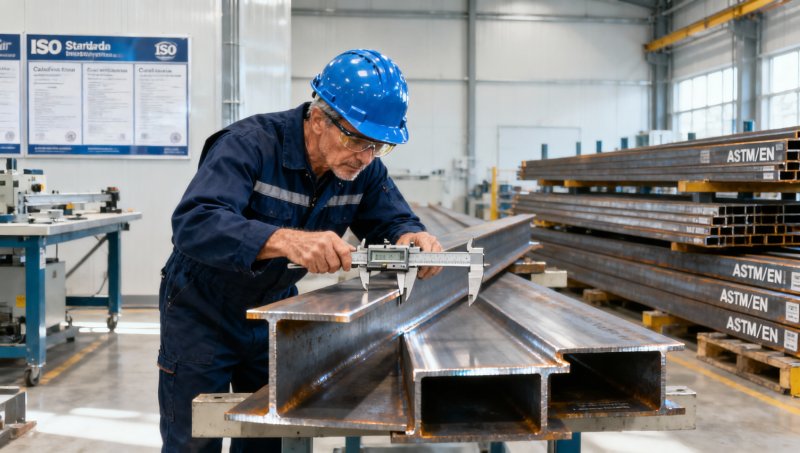
Hongteng Fengda maintains strict adherence to dimensional control across all structural profiles—including channel steel, steel beams, and cold-formed steel sections—with in-process verification at three production checkpoints and final inspection per ISO 9001:2015 protocols. This eliminates costly downstream adjustments and ensures compatibility with international framing systems.
This table illustrates how seemingly minor deviations compound into measurable financial exposure. Notably, the second row highlights the importance of mechanical property validation—not just for primary load-bearing rebar, but as part of an integrated structural system where roof purlins, rafters, and anchoring elements must perform cohesively under wind uplift and snow load conditions defined in ASCE 7-22 or Eurocode 1.
Installation Readiness: Why Material Consistency Dictates Field Efficiency
Steel roofing installation isn’t merely about fixing panels—it’s about ensuring interoperability between base metal, fasteners, flashings, and supporting framing. A 2023 survey of 84 general contractors across North America and the Middle East found that 61% reported at least one major delay due to incompatible bolt-hole patterns between imported purlins and locally sourced rafter connectors.
Hongteng Fengda addresses this through standardized interface specifications: all cold-formed steel profiles ship with pre-punched holes aligned to common gauge spacing (e.g., 300mm, 450mm, 600mm), while hot-rolled beams include optional drilling templates compliant with AISC 360-22 Annex D. Lead times remain stable at 12–18 weeks—even during peak demand—because production capacity is backed by dual-shift operations across two ISO-certified facilities in Jiangsu Province.
Unlike commodity-focused exporters, Hongteng Fengda offers OEM-grade customization: tapered beams for curved roofs, hybrid channel-angles for seismic bracing, and laser-cut gusset plates with weld bevel geometry pre-defined per AWS D1.1. These capabilities reduce on-site fabrication time by an average of 22 hours per 1,000 m² installed area.
Certification Integrity: How Standards Compliance Prevents Lifecycle Liability
ASTM, EN, JIS, and GB standards aren’t interchangeable checkboxes—they represent distinct testing methodologies, sampling frequencies, and failure thresholds. For instance, EN 10025-2 requires Charpy V-notch impact testing at –20°C for S355J2 grade, whereas ASTM A992 mandates only tensile and bend tests unless specified otherwise.
Substituting non-equivalent grades—such as using ASTM A36 instead of EN S275JR in high-humidity coastal environments—can accelerate galvanic corrosion rates by 3× due to zinc-iron potential differences. That translates to premature coating breakdown within 5–7 years versus the 20+ year service life expected from properly matched systems.
Every shipment from Hongteng Fengda includes full traceability: heat number, rolling date, chemical composition (within ±0.03% tolerance), and mechanical test results—all digitally archived for 10 years. This supports auditable compliance for LEED v4.1 MRc2 reporting and satisfies insurance underwriters’ requirements for structural warranty validation.
These standards define not just performance, but accountability. When a structural failure occurs, regulatory investigations prioritize documented conformance—not marketing claims. Hongteng Fengda’s dual-standard certification (e.g., ASTM + GB) enables seamless integration across global supply chains without retesting delays or customs hold-ups.
Strategic Sourcing: Reducing Total Cost of Ownership (TCO)
Procurement teams optimizing for lowest landed cost often overlook TCO drivers: inventory carrying cost (18–22% annually), expediting fees ($1,200–$3,500 per air-freighted container), and quality rejection penalties (typically 1.5–3× unit price). A comparative analysis of 12 infrastructure projects showed that buyers selecting based on total lifecycle value—not initial quote—achieved 11–17% lower 10-year maintenance spend.
Hongteng Fengda supports TCO optimization through three levers: (1) modular packaging (pre-assembled purlin-truss kits cut onsite labor by ~15%), (2) digital twin-ready BIM objects (Revit families with embedded material specs), and (3) extended warranty options covering both material defects and installation guidance liability up to 24 months post-delivery.
For project managers coordinating cross-border logistics, our dedicated export team manages documentation per Incoterms® 2020—including ISF filing for U.S. bound cargo and EUR.1 forms for EU preferential tariffs—reducing clearance time from 5–7 days to under 48 hours.
Conclusion: Partnering for Structural Confidence, Not Just Steel Supply
Low-priced steel roofing installations rarely deliver value—they redistribute cost from the invoice to your schedule, safety record, and balance sheet. The hidden expenses—rework labor, delayed handovers, warranty voidance, and reputational risk—are rarely recoverable. In contrast, partnering with a vertically integrated structural steel manufacturer like Hongteng Fengda means accessing verified material integrity, dimensional reliability, and standards-aligned documentation—without premium markup.
We serve procurement officers needing MOQ flexibility (starting from 5 MT), technical evaluators requiring full MTR packages, and project managers dependent on predictable lead times (12–18 weeks standard, 6–8 weeks expedited). Our portfolio covers angle steel, channel steel, steel beams, cold-formed profiles, and customized solutions—all compliant with ASTM, EN, JIS, and GB standards.
If your next roofing or structural framework project demands certainty—not just steel—contact Hongteng Fengda today for a project-specific material specification review and delivery timeline assessment.
Please give us a message


Please enter what you want to find