The cost of a 4x8 2B stainless sheet depends on several key factors, from raw material prices and grade selection to thickness, surface finish, and order volume. For buyers searching for 4x8 2B stainless steel sheet for sale, understanding these cost drivers is essential to compare suppliers, control budgets, and secure reliable quality for industrial and construction projects.
What really drives the price of a 4x8 2B stainless sheet?
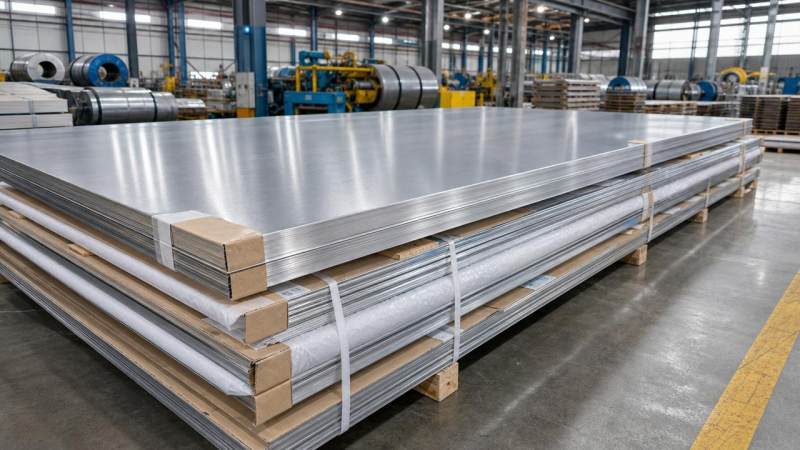
For procurement teams, price is never just a number on a quotation. In stainless steel purchasing, the final cost of a 4x8 sheet is shaped by material grade, nickel and molybdenum market movement, production route, sheet thickness, tolerance requirements, packaging method, and shipping terms.
When buyers compare offers for 4x8 2B stainless steel sheet for sale, they often discover that two sheets with similar dimensions can carry very different prices. The reason is that stainless sheet pricing includes both visible specifications and hidden supply chain variables.
A 2B finish itself also affects cost. This finish is cold rolled, heat treated, pickled, and skin passed, giving a smooth, practical industrial surface. It is widely selected because it balances appearance, formability, cleanability, and value.
The most common cost factors
- Grade selection, such as 304, 316, or 316L, directly changes alloy cost because nickel and molybdenum content varies.
- Thickness has a major effect because a 4x8 sheet with greater gauge uses more raw material and may require different rolling control.
- Mill source and standard compliance, including ASTM, EN, JIS, or GB, can influence documentation requirements and processing consistency.
- Order quantity affects unit cost because larger orders usually improve production efficiency, packaging utilization, and freight distribution.
- Cutting, edge treatment, PVC coating, inspection reports, and export packaging all add cost beyond the base sheet price.
How do stainless grade and alloy content change procurement cost?
Grade is usually the first pricing divider. Buyers searching for 4x8 2B stainless steel sheet for sale may start with size and finish, but alloy chemistry often matters more than dimensions. In corrosive or hygienic environments, grade selection determines both project life and replacement risk.
For example, 304 is widely used for general fabrication and interior applications. However, 316 and 316L are often selected for chemical, marine-adjacent, food processing, and demanding industrial conditions because molybdenum improves corrosion resistance.
Low-carbon 316L is especially useful where welding performance and resistance to sensitization are important. That is why many buyers evaluating lifecycle cost, not just purchase price, consider 316L Stainless Steel Plate for more aggressive service conditions.
The table below helps procurement teams compare how common stainless grades influence cost logic, practical usage, and buying decisions for sheet products.
This comparison shows why the lowest quote is not always the lowest project cost. A less suitable grade may lead to premature corrosion, rework, contamination concerns, or a shorter service life in demanding operations.
Why thickness, tolerance, and finish matter more than many buyers expect
A 4x8 2B stainless sheet is often treated as a standard commodity, but specification details can quickly shift pricing. Thickness is the most obvious factor because weight increases directly with gauge, and stainless pricing is strongly tied to tonnage.
Tolerance is another overlooked element. Tight thickness tolerance, flatness control, and surface consistency can improve fabrication yield, especially for laser cutting, bending, forming, and visible installations. These requirements may raise material price, but they can lower downstream scrap and labor cost.
The 2B finish is commonly chosen because it offers a practical industrial surface without the extra polishing cost of decorative finishes such as HL or 8K. Yet surface protection film, paper interleaving, and scratch-sensitive export packing can still affect the final quote.
Specification points buyers should confirm before comparing quotes
- Actual thickness and tolerance range, not only nominal thickness.
- Whether the 4x8 size means 1219 x 2438 mm finished size or cut-from-coil processing size.
- Surface finish requirement, including 2B uniformity, film coating, and acceptable scratch level.
- Edge condition such as mill edge or slit edge, depending on fabrication demand.
- Inspection certificates, heat number traceability, and destination standard requirements.
A practical cost comparison for buyers sourcing 4x8 2B stainless steel sheet for sale
Procurement decisions are easier when costs are broken into components. The next table outlines where price differences usually come from when sourcing 4x8 2B stainless steel sheet for sale from global suppliers.
This breakdown helps buyers negotiate more effectively. Instead of asking only for a lower price, it is better to ask which line items can be optimized without weakening corrosion resistance, dimensional accuracy, or delivery reliability.
Which applications justify paying more for a better stainless sheet?
Not every project needs the same stainless grade or specification. Skilled purchasing balances budget against operating environment. In light-duty interior fabrication, a lower-cost option may be enough. In chemical contact or marine-adjacent service, under-specifying can become expensive very quickly.
Applications that often justify higher stainless cost include medical equipment construction, chemical processing units, food industry equipment, food and beverage packaging lines, kitchen supplies, agricultural machinery parts, ship parts, conveyor belts, and transport equipment such as trains or vehicles.
Where elevated temperature performance or welded component stability matters, buyers may review materials with stronger high-temperature performance and low-carbon behavior. In these cases, technical properties become part of the total value equation, not just a datasheet detail.
Example technical reference for demanding environments
For projects requiring higher corrosion resistance and dependable fabrication performance, buyers often compare sheet options against plate-grade references. One relevant benchmark is 316L Stainless Steel Plate, which is used in chemical, food, transport, electrical, and equipment manufacturing fields.
- Tensile strength: at least 520 MPa.
- Yield strength: at least 275 MPa.
- Elongation: typically at least 55% to 60%, which supports forming and fabrication.
- Hardness: up to 183 HB or 100 HRB.
- Available finishes can include BA, 2B, NO.1, NO.4, 4K, HL, and 8K depending on application needs.
How should procurement teams evaluate suppliers beyond the quoted price?
For global sourcing, the safest supplier is not always the one with the cheapest number. Procurement teams should check whether the supplier can maintain quality consistency, standard compliance, and shipment reliability over repeated orders.
This is especially important in steel supply chains, where mismatched standards, incomplete inspection records, or unstable lead times can interrupt production schedules. A small saving on unit price can disappear through delays, claim handling, or unusable stock.
Supplier review checklist
- Can the supplier provide products aligned with ASTM, EN, JIS, or GB requirements when required by the destination market?
- Do they have modern production facilities and stable process control for dimensional consistency?
- Can they support OEM or customized processing when standard 4x8 supply is not enough?
- Do they have export experience for North America, Europe, the Middle East, or Southeast Asia?
- Can they coordinate packaging, loading, and lead times in a way that reduces sourcing risk?
Hongteng Fengda serves global buyers as a structural steel manufacturer and exporter from China. While many projects focus on structural products such as angle steel, channel steel, steel beams, cold formed steel profiles, and customized steel components, the same procurement principles apply to stainless sourcing: stable capacity, clear specifications, strict quality control, and dependable lead times reduce total project risk.
What mistakes often increase the real cost of 4x8 2B stainless steel sheet for sale?
Many buyers only compare ex-works or FOB numbers. That can be misleading. The real purchasing cost includes material usability, documentation completeness, lead time reliability, packaging adequacy, and destination compliance. If any of these fail, replacement or delay costs can exceed the original sheet value.
Another common mistake is using a general grade in a chloride-rich or chemical environment to save money upfront. The short-term saving may later turn into corrosion claims, maintenance shutdowns, or customer dissatisfaction.
Frequent procurement errors
- Comparing prices without confirming grade, thickness tolerance, finish, and protective film.
- Ignoring standard requirements until after order placement.
- Choosing based only on the lowest unit price instead of landed cost and usable yield.
- Overlooking export packaging for long-distance shipment, which can lead to surface damage.
- Not checking whether the supplier can support repeat orders with the same quality level.
FAQ for buyers evaluating stainless sheet cost and supply
Is 316L always more expensive than 304 for a 4x8 2B sheet?
In many market situations, yes, because 316L contains nickel and molybdenum that improve corrosion resistance. However, exact price gaps move with alloy markets, order volume, and mill availability. Buyers should compare not only sheet price but also the expected service environment and fabrication needs.
What should be included in a quotation request for 4x8 2B stainless steel sheet for sale?
A good RFQ should include grade, thickness, 4x8 dimension confirmation, finish, quantity, standard requirement, packaging request, destination port, inspection certificate needs, and any cutting or film protection requirement. A clear RFQ reduces quote gaps and speeds up supplier comparison.
Does a 2B finish work for food and equipment applications?
It often does, especially when a practical, smooth, easy-to-clean industrial finish is needed. However, final suitability depends on hygiene level, appearance expectations, and cleaning process. Some visible or specialized applications may require different finishes.
How can buyers reduce cost without increasing risk?
The best approach is specification optimization, not blind downgrading. Review whether the project truly needs a premium finish, whether mixed sizes can be consolidated, whether standard dimensions reduce waste, and whether order batching improves freight efficiency. Cost control works best when it is paired with technical clarity.
Why choose a supply partner with export experience and technical support?
For procurement professionals, the right partner helps control more than price. It helps control uncertainty. A supplier with manufacturing discipline, export knowledge, and customization ability can support specification confirmation, production planning, standard matching, and delivery coordination.
Hongteng Fengda supports global industrial and construction buyers with stable production capacity, strict quality control, and experience serving markets across North America, Europe, the Middle East, and Southeast Asia. This matters when project schedules are tight and sourcing errors are costly.
If you are evaluating 4x8 2B stainless steel sheet for sale, you can consult us on grade selection, thickness confirmation, standard requirements, delivery lead time, OEM processing, export packaging, sample support, and quotation details. A precise inquiry today can prevent cost overruns and supply issues later in the project cycle.
Please give us a message


Please enter what you want to find