For procurement teams, understanding what drives cold rolled steel coil price and quality is essential to making cost-effective and reliable sourcing decisions.
From raw material costs and rolling precision to surface finish and tolerance control, every variable shapes performance, yield, and final project risk.
The cold rolled steel coil market is also changing.
Higher quality expectations, tighter international standards, and unstable energy and logistics costs now influence both price levels and supplier selection.
A clear view of these shifts helps buyers compare offers correctly, avoid hidden quality losses, and secure more dependable supply.
Cold rolled steel coil pricing is becoming more sensitive to quality details
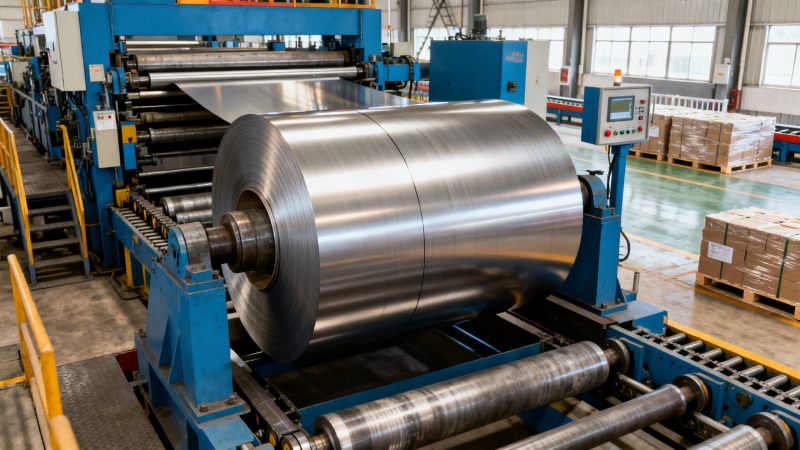
In the past, many quotations were judged mainly by tonnage price.
Today, cold rolled steel coil price often reflects much more than base steel cost.
Surface consistency, thickness accuracy, edge condition, and processing stability increasingly affect real purchasing value.
This shift matters because low-priced material may create downstream losses.
Scrap, coating failure, stamping defects, poor flatness, or delayed delivery can raise total cost far above the original quote.
As applications become more demanding, cold rolled steel coil quality is no longer a secondary issue.
It is now directly tied to budgeting accuracy, project reliability, and long-term supplier performance.
Several market signals explain why cold rolled steel coil prices keep moving
Recent market behavior shows that cold rolled steel coil supply is influenced by more complex conditions than general steel demand alone.
The following factors commonly push quotations up or down.
Production precision is a major dividing line
Not all cold rolled steel coil is manufactured to the same standard.
Uniform thickness, stable mechanical properties, and better flatness usually require modern rolling equipment and tighter process control.
That is why two offers with similar chemical grades can still differ noticeably in price.
Quality differences often appear in processing, not only in certificates
Certificates are important, but they do not tell the full story.
The real value of cold rolled steel coil is often revealed during cutting, forming, bending, welding, coating, or stamping.
Poor consistency between coils can interrupt production and increase rejects.
- Thickness deviation affects forming accuracy and final assembly fit.
- Surface defects can damage paint, plating, or decorative finishing performance.
- Low flatness may create feeding problems in automated lines.
- Unstable hardness can reduce stamping yield and tool life.
- Weak packaging can cause rust or edge damage during shipment.
These points explain why the lowest cold rolled steel coil price is not always the most economical option.
In many projects, stable quality lowers hidden costs better than headline discounts.
Related steel products show the same trend toward tighter tolerances and stronger durability
The same market trend appears across structural and processed steel categories.
Applications increasingly demand corrosion resistance, dimensional reliability, and traceable inspection standards.
A useful example is DC01 Galvanized Round Steel.
This product is used in towers, highways, railways, street light poles, marine parts, structural components, and precision industrial processing.
Its tensile strength range reaches 570–820 MPa.
It supports diameters from 16–250 mm or customized sizes, with customized length options.
Compliance can cover AiSi, ASTM, BS, GB, JIS, EN, and related standards.
Advanced finishing may include straightening, milling, chamfering, ultrasonic inspection, surface control, spectrotest verification, and multiple heat treatment routes.
Its anti-corrosion life and glossy galvanized surface reflect the same buyer preference seen in cold rolled steel coil sourcing.
The market increasingly rewards steel products that combine mechanical performance with dependable surface quality.
Supply chain reliability now affects cold rolled steel coil value as much as factory pricing
Delivered value depends on more than mill output.
It also depends on how consistently the supplier manages production planning, testing, packing, export documentation, and shipment schedules.
This is especially important for cross-border orders.
Small failures in lead time or corrosion protection can erase any initial cold rolled steel coil price advantage.
A reliable structural steel partner helps reduce sourcing risk through stable capacity and stricter quality control.
Hongteng Fengda, a structural steel manufacturer and exporter from China, supports global construction, industrial, and manufacturing projects with this approach.
Its product range includes angle steel, channel steel, steel beams, cold formed steel profiles, and customized structural steel components.
With modern facilities and compliance with ASTM, EN, JIS, and GB standards, supply stability becomes part of the value equation.
The most important points to watch before comparing cold rolled steel coil offers
When reviewing quotations, several checkpoints help separate a low quote from a strong offer.
- Confirm base grade, mechanical property range, and target application requirements.
- Check thickness tolerance, width tolerance, and coil weight consistency.
- Review surface grade, oiling condition, and rust prevention method.
- Ask about annealing, leveling, and inspection procedures.
- Verify compliance with ASTM, EN, JIS, or GB, depending on project needs.
- Compare delivery terms, packing method, and export handling details.
- Request records for previous shipment consistency, not only sample quality.
These factors create a more accurate understanding of actual cold rolled steel coil value.
A practical way to judge future purchasing decisions
The next stage of steel sourcing will likely reward balance rather than extreme cost cutting.
Cold rolled steel coil demand is moving toward tighter performance requirements and more transparent qualification standards.
That means evaluation methods should also become more complete.
A disciplined comparison model helps control risk when cold rolled steel coil price volatility increases.
It also improves long-term quality stability across repeated orders.
The next step is to align specification, quality expectations, and supplier capability
Cold rolled steel coil price and quality are shaped by the same reality.
Better control, better raw materials, and better logistics usually produce better results.
Instead of focusing on a single number, review the full sourcing picture.
Define the required standard, compare tolerance and surface commitments, and verify supply consistency before placing volume orders.
That approach makes cold rolled steel coil sourcing more predictable, more efficient, and more competitive over time.
Please give us a message


Please enter what you want to find