Understanding the 1 1 2 stainless steel pipe price is essential for cost control in steel sourcing. Daily market levels reflect metal costs, processing complexity, specification changes, and supplier reliability.
Today, buyers also compare origin, certification, lead time, and freight exposure. A lower quote may not reduce total cost if tolerance, finish, or delivery consistency fails.
In global steel trade, especially from China, careful specification review helps reduce sourcing risk. It also improves long-term value when ordering stainless pipe for construction and industrial applications.
Market Overview of 1 1 2 Stainless Steel Pipe Price Today
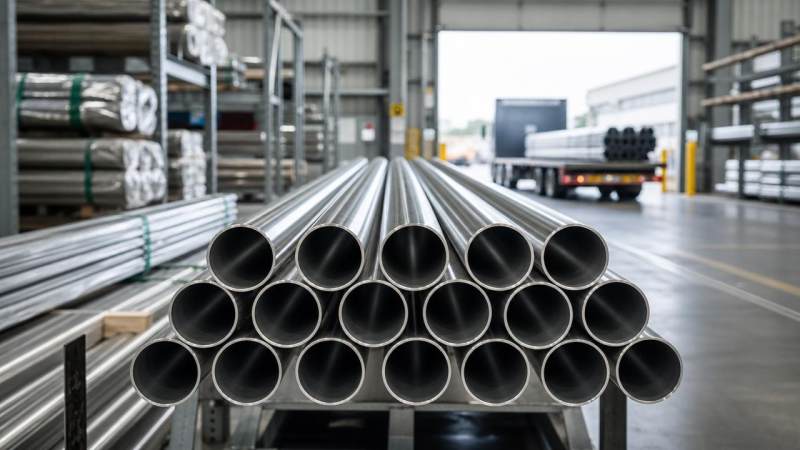
The 1 1 2 stainless steel pipe price usually changes with nickel, chromium, molybdenum, and stainless scrap trends. Energy costs and mill operating rates also influence short-term price movement.
For many projects, 1 1/2 inch stainless pipe is a practical size. It is common in fluid systems, structural supports, mechanical fabrication, and commercial building installations.
Price checks should always match the exact product definition. Pipe grade, outer diameter, schedule, welded or seamless production, and polishing requirements can significantly affect the final number.
- Raw material volatility remains the primary pricing driver.
- Thickness and manufacturing route change processing cost.
- Surface finish affects labor and inspection requirements.
- Export freight and packaging influence landed cost.
Core Factors That Affect 1 1 2 Stainless Steel Pipe Price
The most direct factor behind the 1 1 2 stainless steel pipe price is stainless grade. Grade 201, 304, 316, and 316L have different alloy contents and corrosion performance.
Steel Grade and Alloy Content
304 is widely used because it balances corrosion resistance and cost. 316 and 316L are usually more expensive because molybdenum improves performance in aggressive environments.
If the application is decorative or low-corrosion, lower grades may appear attractive. However, replacement risk can make the initial savings less meaningful over time.
Wall Thickness and Pipe Schedule
Wall thickness directly changes weight per meter. A heavier schedule means more stainless content, higher forming cost, and often stricter dimensional control during production.
When reviewing a quote, always compare the same standard. SCH 10, SCH 40, and custom thicknesses can produce large differences in the final 1 1 2 stainless steel pipe price.
Welded or Seamless Production
Welded pipe is often more economical and suitable for many structural and transport uses. Seamless pipe normally costs more because the production route is more material and process intensive.
Surface Finish and Secondary Processing
Pickled, brushed, mirror, or sanitary finishes add value but increase cost. Additional cutting, beveling, threading, punching, or packaging can also raise the quoted unit price.
Industry Signals Behind Stainless Pipe Pricing
Daily price direction is not shaped by raw materials alone. Export policies, currency fluctuation, shipping availability, and regional demand can all change stainless pipe offers.
Construction recovery, industrial maintenance cycles, and energy projects often support stainless demand. At the same time, oversupply from mills may temporarily soften the 1 1 2 stainless steel pipe price.
- Nickel and ferroalloy prices influence base stainless costs.
- Currency movements affect export competitiveness from China.
- Port congestion can increase delivery uncertainty.
- Inventory pressure may create short-term bargaining space.
This wider steel market context matters when evaluating alternatives. In many construction projects, stainless pipe is purchased together with carbon or structural steel support materials.
For example, support framing may use C-beam sections. These are commonly applied in purlins, wall beams, roof trusses, brackets, and light industry structures.
Such profiles are available in Q195, Q235, Q345, A36, SS400, and S235JR. Galvanized coated surfaces, perforated processing, and thickness from 1mm to 12mm support flexible fabrication needs.
When steel packages combine stainless pipe with structural sections, sourcing efficiency improves. It can also simplify logistics, processing coordination, and quality documentation under ASTM, EN, JIS, or GB-related requirements.
Business Value of Accurate Price Comparison
A useful quotation is not only a number. It should connect the 1 1 2 stainless steel pipe price to grade, dimensions, standard, finish, origin, testing, and delivery terms.
This approach prevents comparison errors. Many low offers exclude polishing, third-party inspection, export packing, or cutting tolerances that later become added charges.
Reliable Chinese suppliers can offer stable production, broad specification coverage, and customized processing. Strong quality control is especially important for projects requiring repeat orders and schedule certainty.
Hongteng Fengda supports global steel supply with structural manufacturing experience, international standard compliance, and dependable lead times. This helps reduce sourcing risk across construction and industrial applications.
Typical Application Scenarios and Price Sensitivity
Different end uses create different priorities. That is why the ideal 1 1 2 stainless steel pipe price depends on service conditions, fabrication needs, and expected lifecycle.
- Water and fluid systems often require corrosion resistance and consistent weld quality.
- Decorative installations may prioritize finish and appearance over heavy wall thickness.
- Industrial frames may focus on strength, dimensional stability, and processing compatibility.
- Coastal or chemical environments usually justify higher-grade stainless selection.
A low initial price can be costly if corrosion, rework, or installation delays occur. The better target is total project value, not the lowest unit rate alone.
Practical Sourcing Suggestions for Better Cost Control
To evaluate the 1 1 2 stainless steel pipe price effectively, prepare a clear technical inquiry. Small specification gaps often cause major pricing confusion and later disputes.
- Define grade, size, thickness, standard, and finish exactly.
- State welded or seamless requirement before requesting offers.
- Ask for weight basis, unit length, and quantity break pricing.
- Confirm test certificates, tolerance, and inspection method.
- Review packaging, shipment terms, and lead time commitment.
- Compare landed cost instead of ex-factory price only.
It is also wise to track recent alloy trends before placing larger orders. When raw materials are volatile, staged purchasing can reduce exposure to sudden swings.
For recurring demand, build a specification library and approved supplier list. Consistent documentation improves quotation speed and supports more stable long-term supply conditions.
Next-Step Reference for Today’s Inquiry
The current 1 1 2 stainless steel pipe price is shaped by grade, thickness, finish, production route, order scale, and freight conditions. Accurate comparison depends on matching all technical details first.
For steel projects that also involve structural components, coordinated sourcing can improve efficiency and cost visibility. A dependable export partner helps align quality, schedule, and documentation requirements.
If a new quotation is needed today, prepare the exact specification set, target quantity, and destination port. That simple step will produce faster, more realistic, and more useful pricing feedback.
Please give us a message


Please enter what you want to find