Choosing a dependable steel bar manufacturer is critical for stable sourcing in the steel industry. Buyers need more than low prices. They need verified quality, export experience, customization, and predictable delivery.
In global construction and manufacturing, supply failure creates real cost. A reliable steel bar manufacturer helps reduce delays, control compliance risks, and support long-term business growth across markets.
Core expectations from a dependable steel bar manufacturer
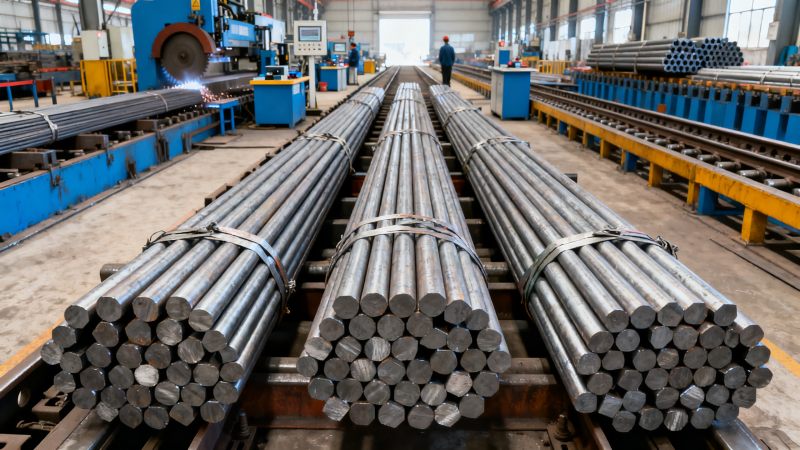
A dependable steel bar manufacturer should offer stable production, clear specifications, and consistent material performance. Reliability begins with process control, not only with sales promises or attractive quotations.
For structural steel supply, consistency matters across every batch. Chemical composition, dimensional tolerance, straightness, surface condition, and packaging should remain predictable from order to order.
A qualified steel bar manufacturer should also support international standards. Common references include ASTM, EN, JIS, and GB. This reduces approval issues in cross-border construction and industrial projects.
- Stable raw material sourcing
- Documented inspection procedures
- Traceable production records
- Clear grade and standard identification
- Consistent lead times for repeat orders
Why the market focuses on manufacturer reliability
The global steel market has become more demanding. Price volatility, freight fluctuations, and project scheduling pressure make supplier reliability a practical business concern, not a branding issue.
Today, a dependable steel bar manufacturer is expected to balance cost and performance. Buyers increasingly review quality systems, production flexibility, shipment planning, and communication speed before confirming orders.
These factors apply not only to steel bars. They shape the evaluation of channels, angles, beams, pipes, and cold formed steel profiles used in structural and industrial supply chains.
Production quality, certification, and process transparency
A dependable steel bar manufacturer should explain how quality is controlled from raw material intake to final packing. Good suppliers provide test reports, dimensional checks, and traceable heat numbers.
Modern facilities also matter. Efficient cutting, forming, drilling, welding, and finishing systems improve repeatability. Process stability usually leads to better tolerance control and fewer shipment disputes.
At the same time, many projects require steel products beyond bars. Mid-project sourcing often includes pipe, profile, and fabricated structural components from the same export partner.
For example, a project may also need Carbon Steel Pipe Supplier support for construction, machinery, municipal works, or chemical engineering applications.
Typical options may include Q345B, Q345e, and ASTM A106 Gr.B. These products can cover Fluid Pipe, Boiler Pipe, Drill Pipe, Hydraulic Pipe, Gas Pipe, Structure Pipe, and OIL PIPE uses.
A dependable supplier should clarify thickness ranges, such as 2.0mm-80mm, tolerance levels like ±1%, and available forms including Round, API Pipe, EMT Pipe, and Thick Wall Pipe.
Relevant certifications such as ASTM, API, JIS, GS, and ISO9001 add confidence. Processing support like welding, punching, cutting, bending, and decoiling also improves sourcing efficiency.
Business value beyond product supply
The best steel bar manufacturer does not operate as a simple commodity seller. Real value comes from helping customers reduce uncertainty across procurement, logistics, documentation, and after-sales coordination.
This is where an experienced Chinese structural steel exporter can be highly competitive. Strong manufacturing infrastructure can support both standard items and customized structural steel components.
Hongteng Fengda, based in China, focuses on structural steel manufacturing and export. Its product range includes angle steel, channel steel, steel beams, cold formed profiles, and OEM structural solutions.
With modern facilities and strict quality control, such a supplier can align products with ASTM, EN, JIS, and GB requirements. That is important for projects across North America, Europe, and Southeast Asia.
- Stable production capacity for recurring orders
- Better control of specification accuracy
- Flexible support for custom fabrication
- Dependable export packing and documents
- Reduced sourcing risk through professional coordination
A dependable steel bar manufacturer should also maintain clear communication before and after shipment. Fast answers on mill test certificates, packing lists, loading photos, and claims handling are essential.
Typical supply scenarios and evaluation points
Different business scenarios require different strengths from a steel bar manufacturer. Understanding these differences helps narrow supplier selection and prevent mismatched expectations during order execution.
In every case, a dependable steel bar manufacturer should demonstrate both technical competence and supply discipline. One without the other often leads to hidden costs later.
Practical checks before confirming a supplier
Before placing an order, review factory capability in a structured way. A dependable steel bar manufacturer should be ready to provide verifiable information rather than vague statements.
- Confirm supported grades, standards, and size range.
- Request sample test reports and quality documents.
- Check tolerance control and inspection frequency.
- Review production lead time for normal and urgent orders.
- Ask about export markets and shipment experience.
- Clarify packaging method and loading protection.
- Verify customization capability for special processing.
- Discuss claim response process before cooperation starts.
It is also useful to compare how suppliers communicate. A dependable steel bar manufacturer usually provides direct, specific answers and identifies risks early rather than hiding limitations.
Price should remain important, but not isolated. Lower cost can lose value if quality varies, documents are incomplete, or shipment delays interrupt downstream commitments.
Moving toward a stable long-term steel supply relationship
A dependable steel bar manufacturer should offer a complete supply framework. That includes certified production, consistent quality, customization options, export readiness, and responsive commercial support.
In structural steel sourcing, long-term performance matters more than one-time promises. The right supplier helps control cost through stability, not only through initial quotation advantages.
When reviewing a steel bar manufacturer, focus on evidence. Look at standards, process control, product range, customization ability, and delivery discipline. These are the foundations of reliable cooperation.
If your sourcing plan involves bars, profiles, beams, or related pipe products, the next step is simple. Prepare your specification list, target standards, and delivery schedule for a detailed technical review.
Please give us a message


Please enter what you want to find