Before buying industrial steel plate, the most important checks are simple but critical: confirm the exact material grade, verify thickness and dimensional tolerances, inspect surface condition, review test certificates, and assess whether the supplier can deliver consistent quality on time. For buyers comparing carbon steel, alloy steel, or stainless options, these checks directly affect fabrication performance, compliance, total cost, and project risk. A low unit price means little if the plate fails welding, arrives out of tolerance, or creates delays on site.
This guide explains what procurement teams, engineers, quality managers, and project decision-makers should verify before placing an order, so they can choose steel plate that matches the application, budget, and required standards.
Start With the Real Requirement, Not Just the Price
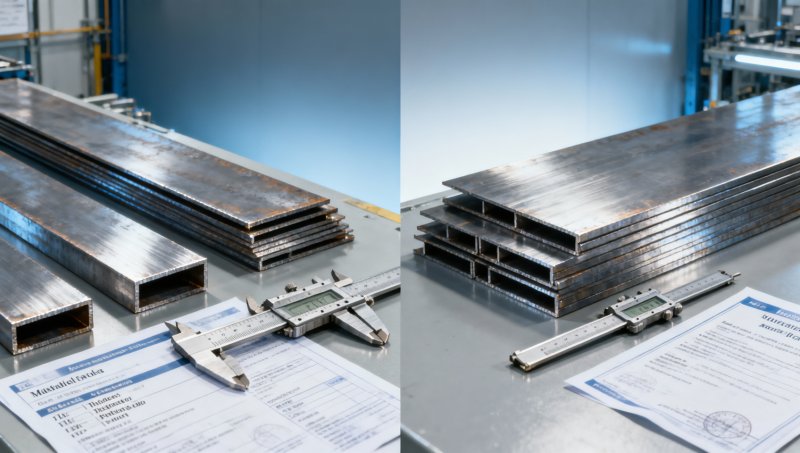
Many buying mistakes happen before supplier comparison even begins. The first step is to define what the steel plate actually needs to do in service. Industrial steel plate used in structural fabrication, machinery, construction, storage tanks, transportation equipment, or processing lines may face very different demands in strength, corrosion resistance, forming, welding, temperature, and appearance.
Before requesting a quotation, clarify these points:
- Application environment: indoor, outdoor, coastal, humid, chemical, or high-temperature service
- Load and strength requirements
- Whether the plate will be welded, bent, punched, deep-drawn, or machined
- Required surface finish and appearance quality
- Required standard: ASTM, EN, JIS, GB, or project-specific requirements
- Need for mill test certificates, third-party inspection, or traceability
- Cut-to-size, OEM fabrication, or special packaging requirements
When these details are unclear, buyers often compare offers that are not truly equivalent. That can lead to hidden downstream costs such as rework, scrap, coating failure, welding defects, or non-compliance during inspection.
Check Material Grade and Standard Compliance First
The steel plate grade is the foundation of performance. Similar-looking products may behave very differently in actual use. Buyers should never assume that one grade is interchangeable with another without technical review.
For example, if you are sourcing plate for fabrication, structural use, or exposed environments, you should confirm:
- Exact grade designation
- Chemical composition range
- Mechanical properties such as tensile strength and yield strength
- Applicable manufacturing standard
- Heat treatment or processing condition if relevant
This matters especially when projects involve cross-border sourcing. A plate described informally as “mild steel,” “structural plate,” or “stainless sheet” may not satisfy the project specification unless the standard and grade are clearly matched. For international procurement, it is also useful to confirm whether the supplier can provide products aligned with ASTM, EN, JIS, and GB requirements, since many engineering and construction projects depend on recognized standards.
For buyers evaluating stainless applications where appearance, formability, and cost balance are important, a product such as 201 Stainless Steel Plate may be considered for uses like architectural decoration, kitchen equipment, industrial hardware, vehicles, and urban infrastructure. In such cases, it is still essential to review the actual performance data rather than purchase only by name. Typical checks include tensile strength, yield strength, elongation, hardness, available thickness range, surface finish options such as 2B, BA, No.4, Hairline, or Mirror, and whether the material is supplied with standards and certifications such as ASTM, JIS, EN, ISO, SGS, or BV where required.
Verify Thickness Tolerance, Flatness, Width, and Length
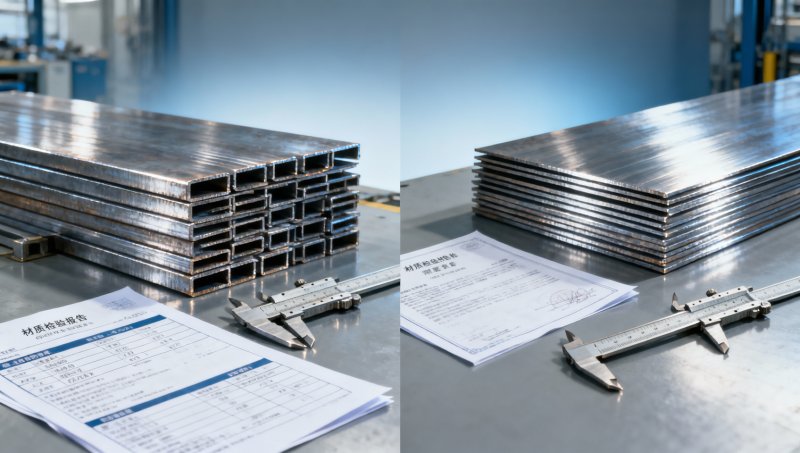
One of the most common causes of procurement disputes is dimensional inconsistency. Even if the material grade is correct, poor tolerance control can affect fabrication efficiency and final assembly.
Key dimensional checks include:
- Thickness tolerance
- Width and length tolerance
- Flatness
- Squareness and edge condition
- Weight per plate or per bundle
Thickness tolerance is especially important because it influences strength, weld preparation, forming behavior, and coating performance. A plate that is below nominal thickness may create structural or compliance issues. A plate above tolerance may increase weight, transport cost, and machining time.
For project buyers, the practical question is not only “What is the nominal size?” but “What tolerance can the supplier consistently hold?” Ask for inspection methods, previous supply records, and whether dimensional checks are made per heat, batch, or piece.
Inspect Surface Quality Based on End Use
Surface quality standards should match the intended application. For some industrial uses, minor visual imperfections may be acceptable. For exposed architectural or decorative applications, they may not be.
Before purchasing, confirm whether the surface must be:
- Free from rust, scale, cracks, lamination, pits, or scratches
- Suitable for painting, galvanizing, polishing, or direct exposure
- Uniform in color, texture, and finish
- Protected with film, paper, or export packaging if appearance matters
This is particularly relevant for stainless and finish-sensitive products. If a buyer needs a decorative or appliance-grade appearance, surface finish should be specified in writing rather than discussed loosely. Finishes such as BA, 2B, No.4, Hairline, and Mirror are not interchangeable in visual effect or downstream processing performance.
Review Mechanical Properties and Fabrication Suitability
Buyers often focus on grade and dimensions, but fabrication suitability is equally important. A steel plate can meet a general grade description and still perform poorly in bending, welding, stamping, or deep drawing if the material is not appropriate for the process.
Questions to ask include:
- Is the plate easy to weld with the intended process?
- Will it crack or deform during bending or forming?
- Does the hardness fit machining and fabrication needs?
- Does the elongation support deep drawing or shaping requirements?
- Will the product maintain performance under service temperature conditions?
For stainless applications, this is where detailed property review becomes useful. For example, if a buyer is assessing whether a certain stainless plate is suitable for formed parts or fabricated assemblies, mechanical indicators such as tensile strength, yield strength, elongation, and hardness provide a more reliable basis than product naming alone.
Ask for Mill Test Certificates, Traceability, and Inspection Records
If the project has compliance, safety, or quality risk, documentation is not optional. Reliable suppliers should be able to provide clear material records and support traceability.
Important documents may include:
- Mill Test Certificate (MTC)
- Chemical composition report
- Mechanical property test report
- Dimensional inspection report
- Third-party inspection report if required
- Country of origin and export documentation
- Quality management certifications
For industries with tighter approval procedures, such as construction, infrastructure, manufacturing, food-related equipment, or export projects, traceability reduces both technical and commercial risk. It also helps procurement teams answer internal questions from finance, QA, or project management before approval.
Evaluate Supplier Reliability, Not Just Product Data
A steel plate order is only as reliable as the supplier behind it. Even when specifications appear correct on paper, unstable production, poor communication, or weak quality systems can create major delays and claims.
When assessing a supplier, check:
- Manufacturing capability and product range
- Experience in export markets
- Familiarity with international standards
- Quality control process from raw material to shipment
- Ability to provide OEM or customized dimensions
- Lead time stability
- Packaging and logistics support
- Responsiveness to technical and commercial questions
For global buyers, supplier reliability often determines the true total cost more than unit price does. A dependable structural steel manufacturer and exporter with stable production capacity, strict quality control, and experience supplying North America, Europe, the Middle East, and Southeast Asia can help reduce sourcing uncertainty, especially for recurring or project-based orders.
Compare Total Procurement Cost Instead of Only the Quoted Price
The cheapest plate is not always the most economical purchase. Buyers should calculate total procurement cost, including hidden operational and project costs.
These may include:
- Yield loss from non-standard dimensions
- Extra labor from poor flatness or difficult fabrication
- Rework caused by surface defects
- Inspection failures or documentation delays
- Coating, polishing, or finishing issues
- Shipping damage due to weak packaging
- Production stoppage from late delivery
In some cases, a slightly higher-priced product with better tolerance control, stronger formability, better surface finish, and dependable documentation delivers better ROI. That is especially true for projects with fixed schedules, quality audits, or visible end-use requirements.
A Practical Pre-Purchase Checklist for Industrial Steel Plate
Before confirming any order, buyers can use this simple checklist:
- Confirm exact grade and standard
- Match material properties to the application
- Verify thickness, width, length, and tolerance requirements
- Define required surface finish and acceptable defect level
- Review weldability, formability, and fabrication needs
- Request MTC and relevant inspection documents
- Check supplier quality system and export experience
- Confirm lead time, packaging, and shipping method
- Compare total procurement cost, not just unit price
- Align technical approval, commercial terms, and project schedule internally
This process helps both technical reviewers and commercial decision-makers make better, lower-risk purchasing choices.
Conclusion
Before buying industrial steel plate, the smartest approach is to verify performance, tolerances, finish, documentation, and supplier capability together. Material grade alone is not enough, and price alone is never a safe decision basis. Buyers who check these factors early can avoid fabrication issues, delivery delays, quality claims, and unnecessary project cost.
Whether you are sourcing structural steel, stainless plate, or customized industrial material, a disciplined evaluation process leads to better product fit, stronger compliance, and more reliable project outcomes. In practical terms, the best steel plate is not simply the one that costs less upfront, but the one that performs correctly, arrives consistently, and supports the full needs of your project.
Please give us a message


Please enter what you want to find