Choosing the right steel rebar manufacturer for large-volume orders goes beyond comparing steel rebar cost alone. Global buyers need a dependable steel rebar supplier that can ensure consistent quality, stable lead times, and compliance for steel rebar for construction. This article explains what truly sets leading manufacturers apart and how to evaluate long-term supply value.
What should buyers check first in large steel rebar orders?
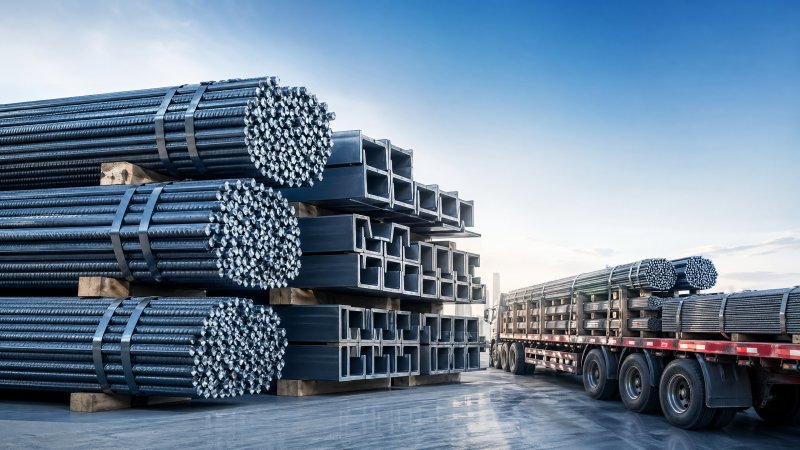
In large procurement, the first question is not simply price per ton. It is whether a steel rebar manufacturer can keep the same mechanical properties, dimensional tolerance, and surface condition from the first batch to the last. For project owners, contractors, distributors, and procurement teams, inconsistency across 2–4 shipment lots can create site delays, rework, and inspection disputes that cost far more than a small unit price difference.
A qualified steel rebar supplier should demonstrate stable production capacity, traceable raw material control, and familiarity with export documentation. In practice, buyers often compare 3 core indicators first: product consistency, delivery reliability, and standards compliance. If one of these three is weak, the total procurement risk rises quickly, especially in public infrastructure, industrial plants, and multi-phase construction projects.
For technical evaluators and quality managers, the review usually starts with grade confirmation, test certificate availability, and dimensional checks. For finance approvers and business decision makers, the focus shifts to supply continuity, cost predictability, and claim risk. This is why experienced buyers assess not only the quoted steel rebar cost, but also the manufacturer’s ability to perform over a supply cycle of 4–12 weeks or longer.
Chinese structural steel exporters with modern processing capability can offer an advantage when they combine production scale with disciplined quality systems. Hongteng Fengda supports global construction and industrial buyers with structural steel products, customized solutions, and export coordination, helping reduce sourcing risks across North America, Europe, the Middle East, and Southeast Asia.
A practical 5-point screening list
- Confirm whether the supplier can match the required standard system, such as ASTM, EN, JIS, or GB, without ambiguity in grade mapping.
- Check if production and shipment can be planned in 2–3 stages to fit site schedules and cash-flow control.
- Review mill test certificates, inspection records, and traceability procedures before signing the purchase order.
- Ask about tolerance control, packaging method, and loading experience for export shipments.
- Evaluate response speed for technical clarification, drawing review, and corrective action when issues arise.
What separates a reliable steel rebar manufacturer from a low-risk trader?
The difference often appears in control depth. A manufacturer manages production scheduling, process consistency, inspection coordination, and delivery timing directly. A trader may still add value in sourcing, but in large steel rebar orders the buyer usually needs better visibility into mill capability, rolling schedule, and quality accountability. This matters when a project requires repeated deliveries over several weeks or mixed product specifications in one supply plan.
For steel rebar for construction, dependable manufacturers normally provide clearer control over heat numbers, batch records, and inspection documentation. That becomes important when project consultants request pre-shipment verification or when local authorities require document consistency for customs clearance and site acceptance. In large orders, one missing document or one mismatched grade notation can delay unloading by several days.
Hongteng Fengda’s positioning as a structural steel manufacturer and exporter is relevant here because large buyers rarely purchase only one item forever. Many projects require beams, channels, angle steel, cold formed profiles, and custom components along with reinforcement-related products. A supplier with broader structural steel capability can simplify communication, reduce vendor fragmentation, and support OEM or standard specification needs within one procurement framework.
This broader capability also helps project managers and distributors compare alternatives when design, soil, or retaining requirements change. In some infrastructure and water-control applications, buyers may need to evaluate whether reinforcement supply should be combined with retaining solutions such as Hot Rolled Steel Sheet Pile. Inserted into early planning, this kind of coordination can reduce interface risk between foundation work and superstructure scheduling.
Manufacturer vs supply-source comparison
The table below highlights procurement differences that matter in large steel rebar orders, especially when buyers need 3 or more decision layers covering technical review, commercial approval, and site execution.
For buyers, the key lesson is simple: a lower initial steel rebar cost can become more expensive if production visibility is weak. The more complex the project, the more valuable manufacturing transparency becomes.
How do quality systems, standards, and customization affect order value?
In large-volume steel rebar procurement, standards compliance is not only a technical issue. It affects approval speed, insurer confidence, inspection workload, and contract risk. Buyers usually need matching evidence for 4 main areas: chemical composition, mechanical performance, dimensions, and documentation. Even when the project specification is straightforward, the supplier must still align the delivered product with the contract wording and the local review process.
A capable exporter understands that international buyers may work under ASTM, EN, JIS, or GB references, and that grade equivalence should never be assumed without confirmation. This is especially important when procurement teams compare multiple countries of origin. Technical teams often ask for pre-order clarification on tolerances, test frequency, and certificate format because these details influence inspection acceptance at the warehouse or jobsite.
Customization also matters more than many buyers expect. Not every large order is a pure commodity purchase. Some projects require mixed sections, cut lengths, or companion structural products. For example, retaining and waterfront projects may require sheet pile supply alongside other steel items. In such cases, buyers may consider the U Sheet Pile configuration of the linked solution for retaining wall or water retaining wall use, with grades such as S275, S355, S390, S430, SY295, SY390, and ASTM A690, produced to EN10248, EN10249, JIS5528, JIS5523, or ASTM standards.
That flexibility has practical project value. Sheet pile systems that can be freely combined to form a continuous and tight wall may simplify site coordination, and custom lengths up to over 80 m can reduce field joints in suitable designs. While steel rebar for construction serves reinforcement needs, broader structural steel support helps buyers cover adjacent requirements without restarting the sourcing process from zero.
Standards and compliance checkpoints buyers should verify
Before approval, quality teams often use a structured review grid. This helps avoid misunderstandings between technical staff, purchasers, and finance approvers.
This kind of compliance review is not bureaucratic. It protects schedule, payment approval, and project reputation. A supplier that answers these points clearly is easier to work with over repeated orders.
Three signs the supplier is ready for technical evaluation
- Specifications are confirmed in writing before production, including grade, standard, dimensions, packing, and document list.
- The supplier can explain how inspections are handled at 3 stages: before rolling or processing, before packing, and before shipment.
- Communication covers alternatives and limitations honestly, rather than promising every request without process review.
How can procurement teams compare cost, lead time, and supply risk?
The best procurement decision balances price, execution, and exposure. When comparing steel rebar manufacturers, buyers should separate visible cost from hidden cost. Visible cost includes unit price, freight, duties, and packaging. Hidden cost includes late delivery, failed inspection, non-compliant documents, excess site inventory, and internal time spent on claim handling. On large projects, hidden cost can influence budgets just as much as the steel rebar cost itself.
Lead time analysis is also more nuanced than a single promised date. Buyers should ask for 4 delivery details: production window, inspection window, packing completion, and shipping handover. A realistic supplier usually offers a timeline in stages rather than a vague commitment. For example, standard structural steel items may move through confirmation, production, and dispatch in phased steps over several weeks, depending on order mix, tonnage, and destination port conditions.
Risk should be scored in a way that different departments can understand. Site teams focus on continuity. Finance teams focus on payment security and claim probability. Senior management looks at supplier concentration and long-term stability. Distributors and agents, meanwhile, need reliable replenishment and consistent documentation because their own reputation depends on repeatability across customers and regions.
For this reason, it helps to use a weighted comparison model. Even a simple internal framework with 5 evaluation factors can prevent short-term decisions that create longer-term losses.
A simple evaluation model for large steel rebar orders
The table below can be used by purchasers, project managers, and technical reviewers during supplier comparison. It is especially useful when the shortlist has 2–3 qualified suppliers with close prices.
A structured comparison usually reveals that the cheapest quote is not always the safest choice. For large steel rebar orders, predictable delivery and document control often create stronger total value than a narrow price advantage.
Four procurement questions worth asking before approval
- Can the supplier commit to phased deliveries that match the project sequence instead of forcing all material into one shipment?
- Will the same standard and grade identification be maintained across every batch and all shipping documents?
- If specification changes occur, how quickly can revised drawings, substitute options, or OEM adjustments be reviewed?
- What is the communication path for non-conformance, from first notice to corrective action and replacement planning?
Which common mistakes lead to poor supplier selection?
One common mistake is evaluating a steel rebar manufacturer only through a commercial lens. If the procurement team does not involve technical reviewers, quality staff, and project execution personnel early enough, critical details may be missed. A quote can look competitive but still fail on shipment arrangement, standard interpretation, or inspection preparation. In cross-border supply, these small gaps often become major operational problems.
Another mistake is assuming all steel rebar for construction is interchangeable as long as the nominal grade seems similar. Grade mapping across standard systems should be reviewed carefully, and buyers should confirm whether any local code or owner specification adds extra requirements. This is particularly important for infrastructure, industrial, and public-sector projects where compliance checks are stricter and approval chains can involve 3–5 stakeholders.
A third mistake is underestimating packaging and export execution. Large steel orders require more than production. Marking, bundling, loading sequence, and paperwork all influence receiving efficiency. If the site handles multiple SKUs or split unloading, poor shipment organization can waste crane time, labor hours, and storage space. Even when material itself is acceptable, execution problems can disrupt the project rhythm.
The final mistake is treating the order as a one-time purchase when the project has future phases. A supplier that performs well on one shipment but cannot support monthly replenishment or engineering adjustments may not be the right long-term partner. Global buyers increasingly value manufacturers that can support ongoing structural steel demand with consistent service, not just one attractive quotation.
FAQ for large-order steel buyers
How should we evaluate steel rebar cost beyond the quoted price?
Review at least 5 cost elements: material price, freight terms, packing, inspection or testing requirements, and risk of delay or rejection. For larger orders shipped over 2–4 lots, consistency and schedule control often save more money than a lower unit rate.
What lead time questions are most important?
Ask for a staged timeline covering order confirmation, production, inspection, packing, and shipment release. A reliable steel rebar supplier should explain how delivery will work if the order is split by project phase, destination, or mixed specification group.
Why do standards and certificates matter so much?
Because site acceptance, customs clearance, and internal approval often depend on them. In large procurement, incomplete certificates or unclear grade references can delay unloading, payment processing, and installation planning even when the product is physically available.
When should buyers consider a broader structural steel supplier?
When the project includes multiple product categories, phased expansion, or OEM components. A supplier with capability in angle steel, channel steel, steel beams, cold formed profiles, and customized structural steel can simplify sourcing and reduce coordination across separate vendors.
Why work with a structural steel manufacturer and exporter from China?
For many global buyers, the right partner is one that combines manufacturing discipline with export experience. Hongteng Fengda provides structural steel products and customized solutions for construction, industrial, and manufacturing projects, with support for standard specifications and OEM requirements. This matters when procurement teams need both pricing efficiency and dependable execution.
The company’s product scope includes angle steel, channel steel, steel beams, cold formed steel profiles, and customized structural steel components. With modern manufacturing facilities and strict quality control, products are supplied in line with major international standards such as ASTM, EN, JIS, and GB. For buyers managing 3 priorities at once—quality, delivery, and cost control—this broader capability can reduce sourcing complexity.
Serving customers across North America, Europe, the Middle East, and Southeast Asia, Hongteng Fengda supports projects that require stable production capacity, consistent quality, and dependable lead times. This is especially relevant for contractors, distributors, project managers, and decision makers looking to reduce sourcing risk over repeated orders or multi-stage project schedules.
If you are comparing steel rebar manufacturers or evaluating a wider structural steel sourcing plan, the next step should be practical and specific. Share your required standard, grade, dimensions, estimated tonnage, delivery schedule, and destination market. You can also ask about product selection, OEM customization, document requirements, sample support, phased shipment planning, or whether a related solution such as retaining steel products fits your project. Clear early communication leads to faster quotations, more accurate lead times, and lower procurement risk.
What you can discuss before placing an order
- Parameter confirmation, including grade, standard, dimensions, and required tolerance range.
- Product selection for structural steel, reinforcement-related procurement, and retaining applications.
- Delivery cycle planning, including phased shipments over 2–4 stages for project execution.
- Customized solutions, OEM processing needs, and related export documentation requirements.
- Quotation alignment covering commercial terms, packaging, inspection scope, and shipment coordination.
Please give us a message


Please enter what you want to find