For long-term construction and industrial projects, choosing the right steel pipe supplier is more than a purchasing decision—it directly affects project quality, delivery stability, and overall cost control. A reliable partner should offer consistent product performance, international standards compliance, strong production capacity, and dependable lead times to reduce sourcing risks and support efficient execution. For business evaluators, the key is finding a supplier who can deliver both standard and customized steel solutions with long-term value.
What Reliability Means in a Steel Pipe Supplier
In steel procurement, reliability is not a vague promise. It is the ability to keep specifications stable, documentation complete, and shipments predictable across repeated orders. For long-term projects, that matters because even small variations in grade, coating, or delivery timing can create cost overruns and scheduling pressure.
A dependable steel pipe supplier should show strength in five areas: material consistency, production control, compliance, logistics planning, and after-sales coordination. If any one of these weakens, business evaluators face hidden risk, especially when project demand changes or multiple sites must be supplied at the same time.
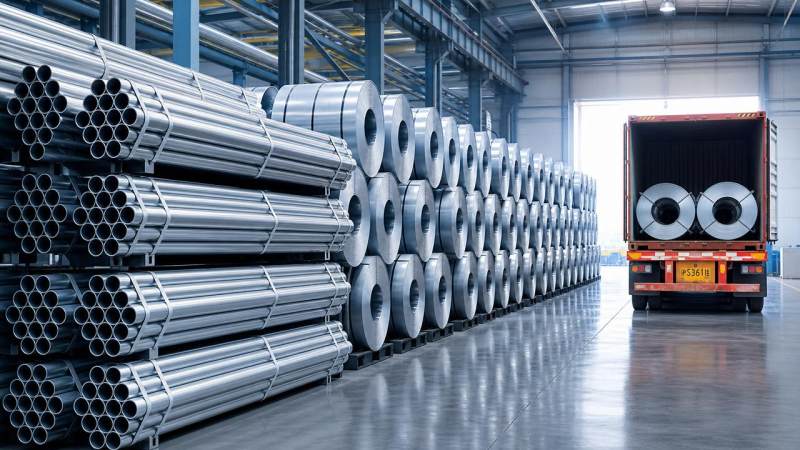
For buyers working across construction, infrastructure, manufacturing, and industrial maintenance, a reliable supplier also reduces internal workload. Fewer specification disputes, fewer re-inspection delays, and fewer emergency purchases all improve project execution and protect margins.
Which Supplier Capabilities Matter Most for Long-Term Projects?
Long-term projects usually require more than a one-time quotation. They need repeatable output, flexible order support, and the ability to manage changing schedules. The table below shows the main evaluation points that business evaluators should compare before awarding supply.
The practical takeaway is simple: the best steel pipe supplier is not always the cheapest one. It is the supplier that can keep quality stable while supporting your timeline, documentation, and future replenishment needs.
How Coated Coil Supply Connects to Structural Procurement
In many projects, pipe, profile, and coated steel products are sourced together because they share the same demand pattern: consistent quality, controlled corrosion resistance, and dependable supply. For example, a buyer evaluating protective steel materials may also consider Gi Coil for moisture resistance and service-life extension in related fabrication or support applications.
The relevance for procurement teams is not product crossover for its own sake, but the way a supplier organizes material availability, coating control, and customization. When a manufacturer can supply structural steel components and coated products under disciplined quality systems, it becomes easier to align different lots under one sourcing strategy.
For evaluators, this kind of product breadth signals a stronger manufacturing base. It suggests the supplier can support multiple material categories, maintain process discipline, and reduce the risk of fragmented sourcing from too many vendors.
What Technical Signals Should You Review Before Approval?
Technical review is where many purchasing decisions become clearer. A good steel pipe supplier should be able to explain grade selection, strength requirements, dimensional tolerance, and finish expectations in a way that matches your project environment.
- Confirm whether the pipe or related steel product matches the required standard, such as ASTM, EN, JIS, or GB.
- Check whether the supplier can provide stable material grades and repeatable batch performance for phased delivery.
- Review coating or surface protection details if the project is exposed to moisture, storage delays, or outdoor installation.
- Ask for documentation that supports incoming inspection, fabrication planning, and downstream traceability.
If the supplier can answer these points clearly, the buying team can reduce approval time and lower the chance of late-stage change orders. That is especially important when multiple departments, such as engineering, quality, and logistics, must align on the same order.
How Do Standards and Compliance Reduce Risk?
Compliance is one of the strongest indicators of supplier reliability. For international projects, steel products are often evaluated against AISI, ASTM, DIN, JIS, GB, and EN-related requirements. A supplier familiar with these standards is usually better prepared for cross-border documentation and technical review.
Hongteng Fengda’s manufacturing and export experience is relevant here because long-term buyers often need more than material supply. They need stable production capacity, consistent quality control, and dependable lead times that support construction schedules in North America, Europe, the Middle East, and Southeast Asia.
In practice, compliance should be checked in three layers: product specification, test documentation, and shipment paperwork. If any layer is incomplete, the project may face inspection delay, payment delay, or rework after delivery.
What Procurement Risks Should Business Evaluators Watch Closely?
A reliable steel pipe supplier helps reduce risk, but the buying team still needs a disciplined review process. The most common mistakes are not technical alone; they are often commercial and operational.
- Choosing by unit price only, without checking batch consistency, coating stability, or after-sales responsiveness.
- Ignoring delivery planning, which creates congestion when project milestones depend on phased arrivals.
- Accepting vague specifications, then discovering mismatches during fabrication or installation.
- Overlooking documentation needs, especially for export shipments and regulated construction projects.
The safest approach is to build a simple supplier scorecard. Include specification accuracy, response speed, certification support, production capacity, and historical delivery reliability. This makes the decision easier to defend internally and easier to repeat across future projects.
Why Hongteng Fengda Fits Long-Term Sourcing Needs
For buyers seeking a long-term structural steel partner, Hongteng Fengda offers a practical advantage: it combines manufacturing capability with export-oriented service. That matters when a project needs standard items, customized solutions, and steady communication across time zones and markets.
Its product scope includes angle steel, channel steel, steel beams, cold formed steel profiles, and customized structural steel components, which helps business evaluators consolidate sourcing instead of managing multiple suppliers for related needs. The same disciplined approach is valuable when evaluating galvanized materials such as Gi Coil for corrosion-sensitive applications.
For long-term cooperation, the real value is not only in shipping products. It is in reducing sourcing risk, supporting cost control, and keeping project execution on schedule with clear technical communication and dependable lead times.
FAQ: Common Questions from Procurement Teams
How do I choose a steel pipe supplier for multi-phase projects?
Focus on repeatability, not just first-order price. Ask for capacity details, lead time commitment, standard compliance, and the supplier’s ability to maintain the same specification across multiple shipments.
What documents should I request before placing an order?
At minimum, request product specification confirmation, inspection documents, packing details, and export paperwork support. For regulated projects, also confirm whether the supplier can provide standard-related test records or equivalent documentation.
Is customization important for long-term steel sourcing?
Yes. Custom sizes, coating needs, and OEM requirements are common in real projects. A supplier that can support customization reduces dependence on multiple vendors and improves coordination between design and procurement.
What is the main risk of choosing an unreliable supplier?
The biggest risk is not only poor quality. It is the combination of delayed delivery, unclear paperwork, inconsistent batches, and emergency re-purchasing, all of which can hurt project cost and schedule.
Why Choose Us and What to Discuss Next
If your project requires a dependable steel pipe supplier or related structural steel products, the next step is to compare actual sourcing details rather than broad claims. Hongteng Fengda can support parameter confirmation, product selection, customization review, certification alignment, sample discussion, and quotation planning for long-term projects.
For business evaluators, this makes the purchasing process more controllable. You can start with the target specification, delivery schedule, and application environment, then evaluate the best supply solution based on technical fit and commercial stability. Clear requirements lead to better sourcing outcomes, fewer surprises, and stronger project execution.
Please give us a message


Please enter what you want to find