Choosing the right steel sheet supplier is critical for quality, cost control, and project reliability. Whether you also source stainless steel square pipe, seamless steel tube, Q235 steel, or API pipe, a dependable partner should offer certified products, stable supply, and responsive service. This guide explains the key factors that define a good supplier and how global buyers can reduce sourcing risks while improving long-term value.
What buyers really need to know before choosing a steel sheet supplier
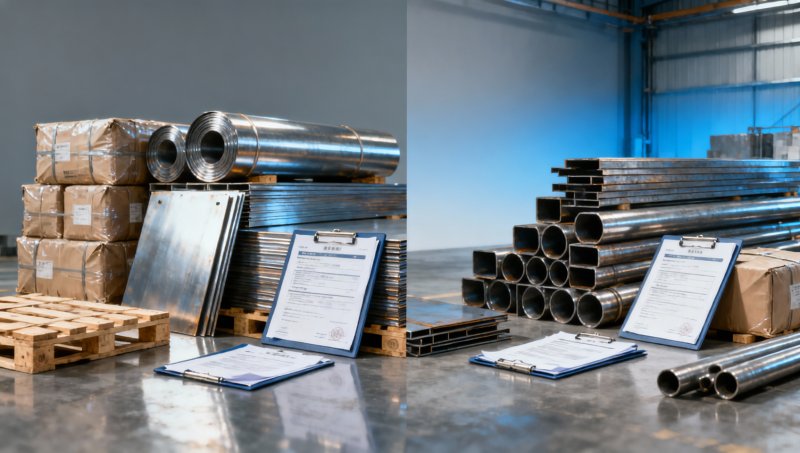
A good steel sheet supplier is not simply the company with the lowest price. For most buyers, the real question is this: can the supplier deliver the right material, with consistent quality, complete documentation, and predictable lead times, without creating hidden project risks?
That is the core search intent behind this topic. Procurement teams want to avoid delays and disputes. Engineers want materials that match specifications. Quality and safety teams need traceability and compliance. Project managers want dependable schedules. Business decision-makers want long-term value, not short-term savings that turn into claims, downtime, or rework.
In practice, a reliable supplier should perform well in five areas: product quality, standard compliance, production stability, communication efficiency, and after-sales accountability. If one of these is weak, the sourcing risk increases quickly.
How to judge product quality beyond a basic quotation
Many buyers compare suppliers by thickness range, price per ton, or finish options. Those details matter, but they are not enough. A good steel sheet supplier should also prove that its products are consistent from batch to batch.
Start with the basics:
- Material grade accuracy
- Mechanical property consistency
- Surface quality and flatness
- Dimensional tolerance control
- Heat number and batch traceability
Ask for mill test certificates, inspection reports, and clear production records. If your project serves construction, fabrication, industrial equipment, or export distribution, traceability is not optional. It is a practical safeguard against claims and replacement costs.
It is also useful to assess whether the supplier can support different specifications and applications. For example, some buyers sourcing structural steel may also need corrosion-resistant stainless materials for chemical, food processing, transport, or equipment fabrication. In such cases, a product like 316L Stainless Steel Plate may be relevant because it offers strong corrosion resistance, low-carbon performance for welded sections, and dependable mechanical properties such as tensile strength of at least 520MPa and yield strength of at least 275MPa. Available thickness can range from 0.3mm to 200mm with multiple width and length options, which helps buyers match material selection to specific production or project needs.
A supplier that understands these technical differences and recommends suitable materials instead of pushing only what is in stock is usually more valuable in the long run.
Which certifications and standards actually matter
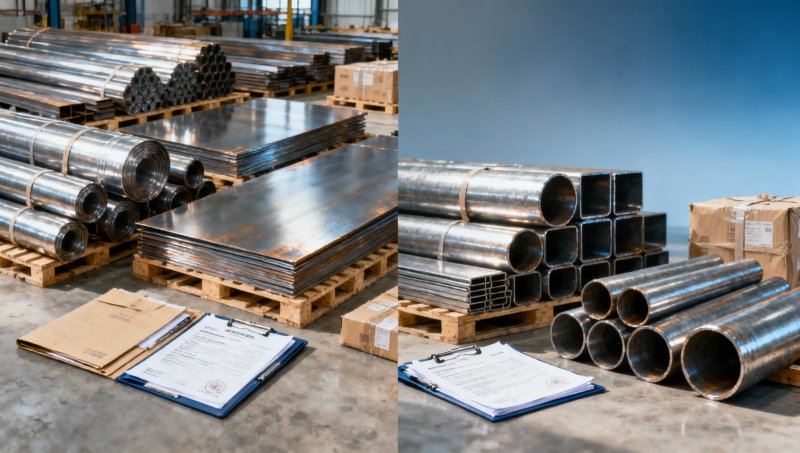
One of the clearest signs of a good steel sheet supplier is the ability to supply according to recognized international standards. For global buyers, this often includes ASTM, EN, JIS, and GB, depending on market and application requirements.
But standards alone are not enough. Buyers should confirm:
- Whether the supplier can produce to the exact requested standard
- Whether third-party inspection is available
- Whether certifications such as ISO, SGS, or BV can support quality verification
- Whether test documents match the actual shipped batch
This is especially important for importers, distributors, and contractors handling cross-border projects. A supplier may claim compliance, but without reliable documentation and inspection support, the buyer still carries the risk.
For technical evaluators and quality managers, it is smart to review not only certificates but also the supplier’s internal quality control process. How are raw materials checked? How are dimensions verified? What happens if a batch fails? A good supplier should answer these questions clearly and confidently.
Can the supplier support stable delivery and changing project needs?
Supply stability is often underestimated until delays begin affecting the project. A good steel sheet supplier should have enough manufacturing capacity, planning discipline, and export experience to support repeat orders and changing schedules.
Key questions to ask include:
- What is the normal lead time for standard and custom orders?
- Can the supplier handle urgent replenishment?
- Are OEM or custom processing services available?
- How does the supplier manage peak-season demand?
- What export markets has the supplier already served?
These points are highly relevant for project managers, distributors, and enterprise buyers. A supplier with stable production and proven export operations is usually better equipped to prevent late shipments, packaging errors, and customs-related documentation issues.
For example, manufacturers that serve North America, Europe, the Middle East, and Southeast Asia often develop stronger capabilities in packaging, standard adaptation, and lead-time coordination. This can reduce sourcing friction for international buyers.
How responsive service reduces total sourcing risk
Service quality is not just a “soft factor.” It directly affects efficiency, communication cost, and decision speed. A good steel sheet supplier should be able to communicate quickly and accurately before, during, and after the order.
That includes:
- Fast and complete quotation responses
- Clear explanation of grade, finish, and tolerance options
- Timely production updates
- Accurate shipping and packing documents
- Practical support when problems occur
When a supplier is slow, vague, or inconsistent, buyers spend more internal time on follow-up, correction, and escalation. That hidden cost is often greater than a small unit price difference.
For decision-makers and finance approvers, this is where total value becomes clear. A lower quote from an unreliable source can lead to missed milestones, quality disputes, and higher replacement or logistics costs. A slightly higher but dependable supplier often protects budget performance better over the full project cycle.
Red flags that suggest a supplier may not be reliable
Some warning signs appear early if buyers know what to look for. Be cautious if a supplier:
- Cannot provide clear test certificates or traceability
- Offers prices far below the normal market without explanation
- Gives vague answers about standards, tolerances, or coatings
- Changes delivery commitments frequently
- Has no clear process for complaints or quality claims
- Shows inconsistent communication between sales and production teams
These issues do not always mean the supplier will fail, but they do increase procurement uncertainty. For bulk orders or strategic cooperation, it is worth conducting a deeper qualification review, asking for sample orders, or requiring third-party inspection before scaling up.
What a strong long-term steel supply partner looks like
The best steel sheet supplier is one that helps buyers reduce risk over time. That means more than shipping steel. It means understanding application needs, meeting specification requirements, keeping quality stable, and supporting efficient procurement decisions.
For buyers working across structural steel and related metal products, the ideal partner should combine manufacturing capability, export experience, quality control, and flexibility. This is especially valuable when projects require mixed product sourcing, custom steel profiles, or repeated deliveries across multiple stages.
Companies such as Hongteng Fengda, a professional structural steel manufacturer and exporter from China, reflect this type of supply model by supporting global construction, industrial, and manufacturing customers with standard and custom steel solutions, international-standard compliance, stable production capacity, and dependable delivery coordination.
Conclusion
What makes a good steel sheet supplier is not one single factor, but a dependable combination of certified quality, consistent production, standard compliance, responsive service, and long-term accountability. Buyers who evaluate suppliers this way are more likely to control cost effectively, avoid avoidable sourcing problems, and build more reliable supply chains.
If you are comparing potential partners, focus less on the cheapest initial offer and more on whether the supplier can protect your project, your schedule, and your quality requirements. That is the difference between buying steel and building a reliable sourcing strategy.
Please give us a message


Please enter what you want to find