Stainless steel square tube prices today are not based on a single market number. In most cases, the final quote reflects a combination of stainless grade, tube dimensions, wall thickness, surface finish, production route, testing requirements, order quantity, and freight conditions. For buyers comparing ss square tube price levels across suppliers, the most important point is this: the cheapest offer is often not the lowest total procurement cost once quality consistency, standard compliance, and delivery reliability are considered.
For project owners, fabricators, distributors, and sourcing teams, understanding what is included in pricing helps avoid specification mistakes, hidden charges, and unsuitable material substitutions. Whether you are checking 304 pipe cost references, reviewing ASTM stainless steel compliance, or sourcing from a China Steel Supplier, this guide explains what really drives today's stainless steel square tube pricing and how to evaluate quotations more intelligently.
What does stainless steel square tube price usually include?
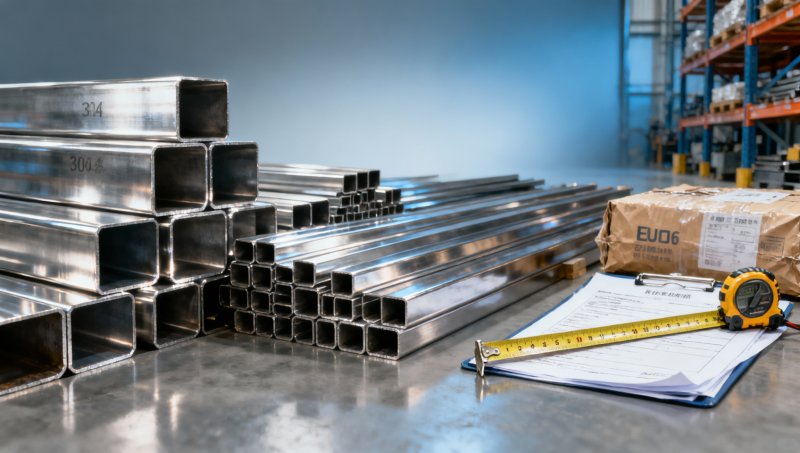
When buyers search for stainless steel square tube prices today, they usually want more than a rough market rate. They want to know what is actually covered in the quote and what may be charged separately. In practice, a supplier's quotation may include some or all of the following:
- Raw material cost based on stainless steel grade such as 201, 304, 316, or other specified alloys
- Tube forming and welding or seamless production cost
- Wall thickness and dimensional tolerance requirements
- Surface finish such as mill finish, polished, brushed, or pickled
- Standard compliance, including ASTM stainless steel specifications or other EN, JIS, and GB requirements
- Cutting to length, deburring, and customized fabrication
- Inspection, test reports, and third-party certification if requested
- Packing, marking, bundling, and export protection
- Inland transport, port handling, and ocean freight if the quote is CIF or CFR instead of EXW or FOB
That is why two prices for what seems to be the same square tube can differ significantly. One supplier may quote only the base tube cost, while another includes stricter tolerance control, better packaging, and compliance documents.
Which factors affect stainless steel square tube prices the most today?
The biggest pricing drivers are usually material grade, size, thickness, finish, and market conditions. Buyers should review these variables first before comparing offers.
1. Stainless steel grade
Grade is one of the strongest cost drivers. For example, 304 stainless steel square tube is often used as a benchmark because it provides a practical balance of corrosion resistance, workability, and cost. In contrast, 316 generally costs more due to molybdenum content and stronger corrosion performance, especially in marine or chemical environments. Lower-cost grades such as 201 may reduce initial spending, but may not deliver the same long-term durability in demanding applications.
2. Tube size and wall thickness
Larger sections and thicker walls require more raw material, so pricing rises accordingly. Even small increases in thickness can materially change the total cost per meter or per ton. This is especially important for structural or load-bearing use, where under-specification can create safety and compliance issues.
3. Surface finish
Mill finish tubes are generally cheaper than polished or decorative finishes. If the square tube will be visible in architectural or interior applications, the finish requirement may add meaningful processing cost.
4. Quantity and production efficiency
Bulk orders usually benefit from lower unit cost because of improved production planning, reduced setup waste, and more efficient packing and shipping. Small trial orders often carry higher per-unit pricing.
5. Market supply and alloy volatility
Nickel and chromium price movements directly affect stainless steel cost. Energy prices, freight rates, and regional inventory levels also influence today's stainless steel square tube prices. During periods of unstable raw material markets, quotation validity may be limited to only a few days.
How should buyers compare 304 pipe cost and square tube quotations?
Many buyers use 304 pipe cost as a general reference point, but pipe and square tube are not directly interchangeable in pricing. Their manufacturing methods, applications, and dimensional calculations differ. A better approach is to compare quotations based on the same conditions:
- Same grade, such as 304 to 304
- Same wall thickness and approximate weight
- Same standard and tolerance requirements
- Same finish level
- Same trade term, such as EXW, FOB, CFR, or CIF
- Same documentation scope, including MTC, PMI, or third-party inspection if needed
If one quote seems unusually low, buyers should confirm whether the actual grade, thickness tolerance, or finish quality has been reduced. In stainless sourcing, hidden downgrades can erase any apparent savings.
Why do standards and testing matter in the final price?
For technical evaluators, quality managers, and project engineers, ASTM stainless steel compliance is not just a paperwork issue. It affects product reliability, acceptance risk, and lifecycle performance. Tubes supplied to recognized standards generally involve tighter process control and clearer traceability.
Requirements that can increase price include:
- Mill test certificates
- Mechanical property verification
- Chemical composition reports
- Hydrostatic or non-destructive testing
- PMI for grade confirmation
- Third-party inspection before shipment
For buyers serving regulated projects, public infrastructure, industrial installations, or export markets, these items are often worth the added cost because they reduce rejection risk and downstream disputes.
What hidden cost items should procurement teams check before ordering?
One of the most common sourcing mistakes is focusing only on the quoted steel price. The real procurement cost may include several additional items that affect budget approval and supplier selection:
- Minimum order quantity surcharges
- Custom cutting or fabrication fees
- Special packaging for export or damage prevention
- Document legalization or certificate preparation
- Freight fluctuations and destination port charges
- Import duties, taxes, and customs clearance costs
- Replacement risk due to dimensional inconsistency or quality claims
For financial approvers and business evaluators, the right question is not only “What is the price today?” but also “What is the total delivered cost with acceptable quality risk?”
How can a reliable China Steel Supplier help control cost and risk?
For overseas buyers, working with a qualified China Steel Supplier can be an effective way to balance cost competitiveness with stable supply. However, supplier selection should be based on capability, not only price. A dependable manufacturer should be able to offer:
- Clear material traceability and quality control procedures
- Production capacity aligned with lead time commitments
- Support for ASTM, EN, JIS, and GB standards when required
- Consistent dimensions and finish quality across batches
- Responsive communication on technical and shipping details
- Export packing suitable for long-distance transport
Hongteng Fengda, as a structural steel manufacturer and exporter from China, supports global buyers with standard and customized steel solutions, stable production, and international standard compliance. For many procurement teams, this type of supply capability matters as much as the quoted ss square tube price, because project delays and quality problems usually cost more than modest price differences.
How do different application scenarios change what buyers should pay for?
The right price depends on the application. Not every project needs the highest specification, but every project needs the correct one.
- Architectural and decorative use: surface finish, appearance consistency, and weld quality are often more important than extreme wall thickness.
- Structural or fabrication use: dimensional accuracy, straightness, thickness tolerance, and mechanical properties are more critical.
- Outdoor or corrosive environments: higher-grade stainless such as 316 may provide better long-term value despite a higher upfront cost.
- Distributor stock purchases: standard sizes, fast turnover, and consistent replenishment matter more than one-time ultra-low pricing.
In practical steel procurement, buyers often compare stainless square tubes with other steel products used in infrastructure and industrial systems. For example, projects that involve transport, support, or safety structures may also source products such as Rail depending on the application. In those cases, the same procurement logic applies: evaluate standard compliance, dimensional consistency, coating or surface condition, delivery timing, and whether the supplier can support both standard specifications and customized requirements.
What is the best way to request and evaluate a quotation today?
If you want an accurate stainless steel square tube price today, send a clear RFQ with the following details:
- Grade: 201, 304, 316, or other specified alloy
- Outside dimension: for example 25x25 mm, 50x50 mm, or custom size
- Wall thickness
- Length requirement
- Surface finish
- Applicable standard
- Required quantity
- End use or project environment
- Inspection and documentation requirements
- Delivery destination and trade term
Then compare quotations using a checklist rather than headline price alone. This helps procurement teams, engineers, and decision-makers align cost with actual project needs.
Final takeaway on stainless steel square tube prices today
Stainless steel square tube prices today include far more than raw metal value. The final number is shaped by grade, dimensions, finish, standards, testing, order volume, and logistics. For most buyers, especially those reviewing 304 pipe cost references or seeking a dependable China Steel Supplier, the smartest approach is to compare total value instead of chasing the lowest visible quote.
A good purchase decision should answer three questions clearly: Is the material suitable for the application? Does it meet the required standards and quality level? And does the supplier reduce operational and delivery risk? When those points are addressed, buyers can control budget more effectively and avoid costly surprises after the order is placed.
Please give us a message


Please enter what you want to find