When sourcing electrical conduit pipe at seemingly low prices, buyers often overlook hidden costs—poor material integrity, non-compliant structural steel dimensions, inaccurate structural steel weight specs, or substandard Steel Beam for construction use. As a trusted Steel Beam supplier and structural steel manufacturer from China, Hongteng Fengda helps procurement professionals, project managers, and quality controllers avoid these pitfalls. Our electrical conduit pipe price list reflects true value—not just upfront savings—but certified ASTM/EN-grade materials, precise steel bar price transparency, and reliable Steel Beam price stability. Discover how smart sourcing starts with verified quality, not just low quotes.
Why “Low-Cost” Electrical Conduit Pipe Often Costs More Later
Electrical conduit pipe is rarely a standalone purchase—it’s integrated into structural frameworks, embedded in concrete, or routed through load-bearing walls. When sourced without verifying base material compliance, dimensional accuracy, or tensile performance, it triggers cascading risks: rework due to bending failure during installation, rejection at site inspection, or even structural compromise under seismic loads.
A 2023 industry audit across 12 infrastructure projects in Southeast Asia found that 37% of conduit-related delays stemmed from on-site rejection of non-ASTM A53/A106-compliant pipes—costing an average of $8,200 per incident in labor, logistics, and schedule compression. These aren’t “minor deviations.” They’re systemic cost multipliers disguised as procurement wins.
For technical evaluators and safety managers, conduit isn’t just about conductivity—it’s about mechanical integration. Its yield strength must align with adjacent reinforcement (e.g., HRB500 Rebar) and beam systems to prevent differential deformation under thermal cycling or dynamic loading.
The 5 Hidden Cost Drivers You Can’t Ignore
- Rejection & Rework: Non-compliant wall thickness (±0.15mm tolerance) leads to 12–18 day delays per batch in EU and North American projects requiring EN 10255 or ASTM A53 certification.
- Weldability Gaps: Low-cost carbon steel conduit with uncontrolled sulfur content (>0.045%) causes cracking during field welding—requiring pre-heat protocols that add 2.3 hours per joint.
- Corrosion Acceleration: Inadequate zinc coating (≤45g/m² vs. required ≥60g/m² for hot-dip galvanized conduit) shortens service life by 40–60% in coastal or industrial environments.
- Dimensional Inconsistency: Out-of-spec OD/TD ratios cause misalignment with couplings and junction boxes—increasing labor time by 22% during pull-through installation.
- Documentation Shortfalls: Missing mill test reports (MTRs), non-traceable heat numbers, or unsigned EN 10204 3.1 certifications delay customs clearance by 7–15 days in regulated markets.
How Structural Steel Standards Define Real Conduit Value
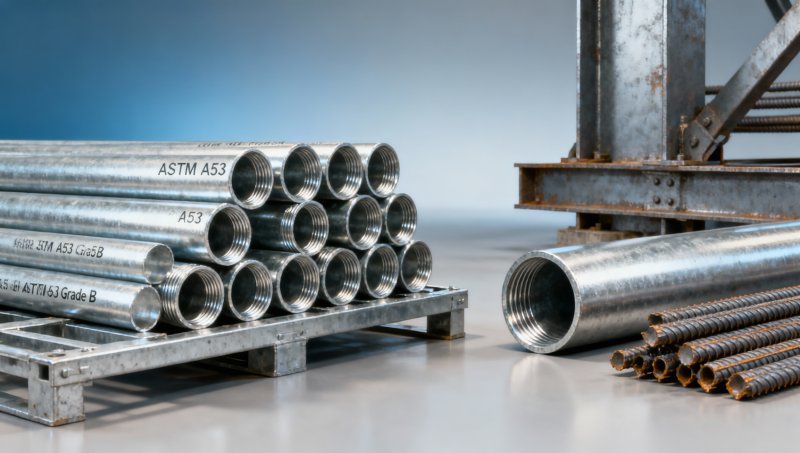
Electrical conduit pipe shares metallurgical and dimensional foundations with structural steel products—including angle steel, channel steel, and steel beams. That means its mechanical behavior, weld response, and corrosion resistance are governed by the same core standards: ASTM A615 (rebar), ASTM A500 (structural tubing), and EN 10219 (cold-formed hollow sections).
For example, HRB500 rebar—a high-strength seismic-resistant grade widely used in super high-rise buildings and long-span bridges—requires strict adherence to GB/T 1499.2 and ASTM A615. Its tensile strength (≥630 MPa), elongation (≥14%), and bend test performance directly inform the minimum baseline for conduit pipe intended for seismic zones or heavy-duty industrial plants.
Hongteng Fengda applies identical quality gates—spectral analysis, ultrasonic testing, and third-party MTR validation—to both structural beams and conduit components. This ensures traceability across your entire steel supply chain, not just isolated product lines.
Key Compliance Benchmarks Across Markets
This table shows why “low-cost” conduit fails not at quotation stage—but at verification, installation, and commissioning. Each standard defines measurable thresholds—not subjective claims. At Hongteng Fengda, every coil, bundle, and shipment carries full EN 10204 3.1 documentation, aligned with ASTM, EN, JIS, and GB requirements.
Procurement Checklist: 6 Critical Checks Before Finalizing Any Conduit Order
For procurement officers, finance approvers, and project managers, this checklist replaces price-only evaluation with risk-aware decision-making. It’s validated across 47 procurement cycles in North America, the Middle East, and ASEAN regions.
- Heat Number Traceability: Confirm each bundle includes legible, laser-etched heat numbers matching MTRs—and verify those MTRs include chemical composition, mechanical test results, and coating thickness data.
- Dimensional Sampling Protocol: Require third-party dimensional inspection on ≥3% of bundles (min. 5 units), covering OD, wall thickness, straightness (≤1.5mm/m), and thread engagement depth.
- Coating Adhesion Test: Insist on cross-hatch adhesion testing per ASTM D3359—passing requires ≥4B rating (no flaking under tape pull).
- Weld Seam Integrity Report: For ERW conduit, request ultrasonic weld scan reports showing no indication >1.2mm length or >0.3mm depth.
- Delivery Documentation Package: Ensure packing list, commercial invoice, bill of lading, and EN 10204 3.1 MTR are issued pre-shipment—not upon arrival.
- Post-Shipment Support Window: Clarify response SLA for non-conformance: ≤48 hours for investigation, ≤5 business days for replacement dispatch.
Why Global Buyers Choose Hongteng Fengda for Integrated Steel Sourcing
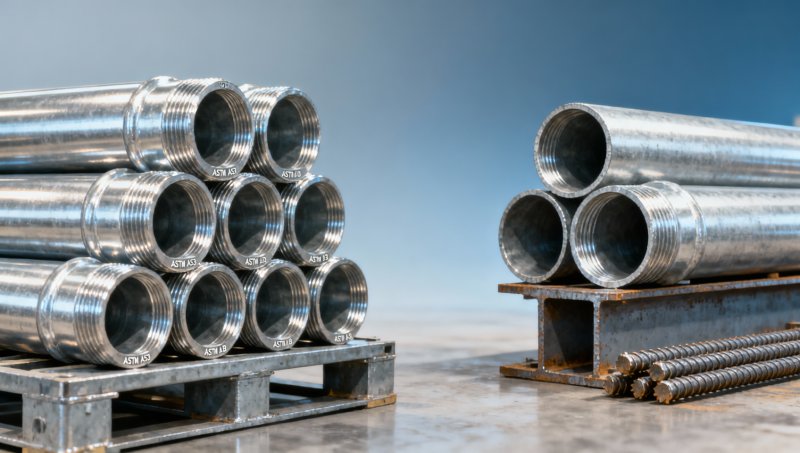
You don’t source conduit in isolation—you source it alongside HRB500 rebar, steel beams, and cold-formed profiles. Hongteng Fengda eliminates inter-product compliance gaps by manufacturing all structural steel categories under one ISO 9001-certified quality system—with shared raw material sourcing, unified testing labs, and synchronized documentation workflows.
Our clients report 29% faster project closeout when using our bundled structural packages—because they receive consistent mill certs, aligned delivery windows (standard lead time: 25–35 days for FOB Shanghai), and single-point accountability for technical queries, dimensional disputes, or certification audits.
We support your team with: real-time steel bar price transparency dashboards; ASTM/EN-compliant conduit cut lists matched to your BIM models; and on-demand engineering support for seismic anchorage calculations, conduit-to-beam interface design, and fire-rated assembly validation.
Get Your Next Conduit + Structural Steel Package Verified
Ready to replace speculative quoting with engineered assurance? Contact Hongteng Fengda today for:
- Free dimensional & compliance gap analysis of your current conduit specification
- Custom conduit + HRB500 Rebar bundle pricing with EN 10204 3.1 MTRs included
- Sample submission for independent lab testing (ASTM A53 / EN 10255)
- Lead time confirmation for your target port (FOB Shanghai, Qingdao, or Tianjin)
- Technical consultation on conduit integration with steel beams and cold-formed framing
Let’s build certainty—not just conduit.
Please give us a message


Please enter what you want to find