As European construction firms ramp up solar infrastructure projects in 2026, sourcing high-performance C section steel for solar panel mounting from reliable Shandong steel exporters—like Hongteng Fengda, an EN/ASTM-compliant structural steel manufacturer and purlin supplier—has become mission-critical. This guide unpacks key considerations: compliance with EU construction standards, lead time stability, ASTM steel beam price list transparency, quality assurance for cold-formed steel profiles, and risk mitigation when partnering with a certified Steel profiles for construction industry exporter. Whether you’re a procurement professional, project manager, or technical evaluator, understand what truly matters before finalizing your supply chain decision.
Why EU Solar Projects Demand Precision in C Section Sourcing
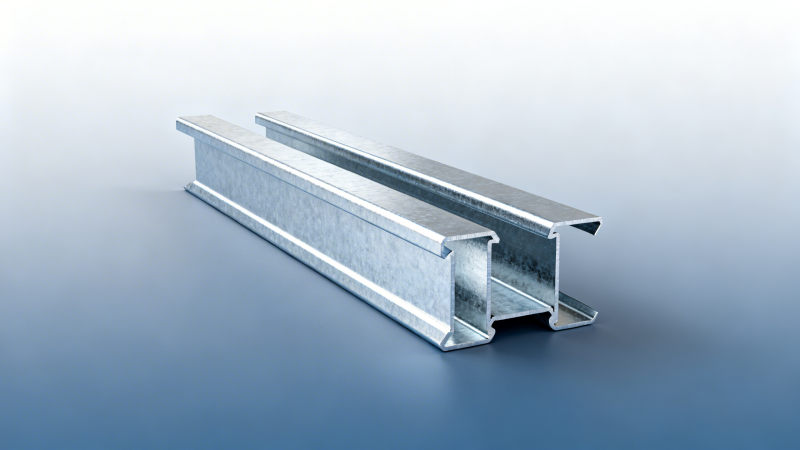
By 2026, over 42 GW of new utility-scale and commercial rooftop solar capacity is projected across the EU — requiring more than 180,000 tonnes of structural support components annually. C section steel, especially cold-formed U-channel profiles, forms the backbone of mounting systems due to its optimal strength-to-weight ratio, ease of field assembly, and compatibility with lightweight racking designs.
Yet unlike standard building steel, solar-grade C sections must withstand cyclic wind loads (up to 1.8 kN/m²), UV degradation over 25+ years, and galvanic corrosion at aluminum-steel interfaces. That’s why sourcing from Shandong — China’s largest structural steel production cluster — demands more than cost comparison. It requires traceable material certification, dimensional repeatability within ±0.02 mm thickness tolerance, and full EN 1090-2 Execution Class 2 (EXC2) compliance for structural integrity.
Hongteng Fengda meets this demand through ISO 9001-certified cold roll-forming lines, real-time thickness monitoring, and batch-specific mill test reports (MTRs) aligned with EN 10025-2 and ASTM A653. Their production base in Weifang, Shandong, enables direct integration with port logistics — cutting inland transit time by 3–5 days versus inland manufacturers.
What to Verify Before Signing With a Shandong C Section Supplier
Procurement teams often overlook verification layers beyond basic CE marking. For solar mounting applications, five non-negotiable checkpoints apply:
- Material grade traceability: Confirm Q235B or Q345B steel is sourced from blast-furnace hot-rolled coils (not scrap-based billets), verified via heat number cross-referencing with MTRs
- Galvanization process: Hot-dip galvanized (HDG) coatings must meet EN ISO 1461 with minimum 80 µm coating thickness on edges and 60 µm on flat surfaces
- Tolerance adherence: Height deviation >±2 mm or flange twist >0.5°/m invalidates structural load calculations per EN 1993-1-1 Annex D
- Weldability documentation: Supplier must provide prequalified welding procedure specifications (WPQR) for Q235B/Q345B under EN ISO 15614-1
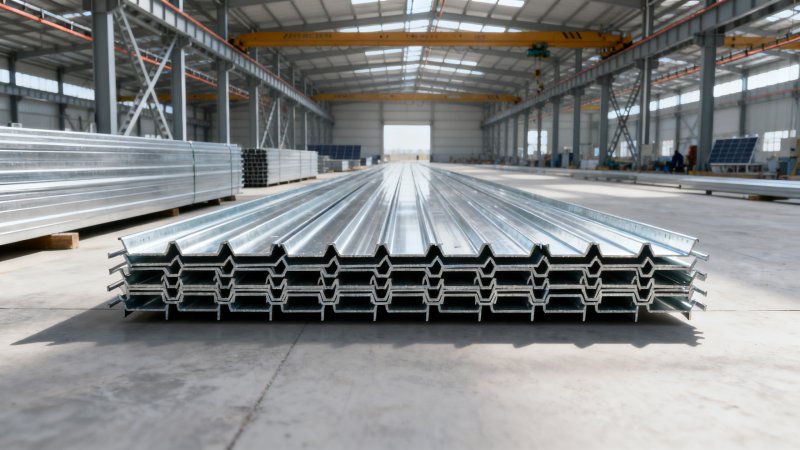
- Export packaging: Steel bundles must include moisture barrier film, edge protectors, and EN 12195-2-compliant lashing reports for sea freight
Failure in any one area risks rejection at EU border customs (especially under EU Regulation (EU) 2019/1020), rework delays averaging 14–21 days, or field failure during Category 12 wind events.
Critical Parameter Comparison: Standard vs. Solar-Optimized C Sections
Not all channel steel performs equally under photovoltaic stress cycles. The table below highlights functional differences between generic construction-grade and solar-optimized C sections:
These differences directly impact module alignment accuracy (<±1.5 mm), long-term torsional rigidity, and warranty validation. Solar EPC contractors using optimized profiles report 37% fewer field adjustments during installation.
How Hongteng Fengda Delivers Risk-Managed Sourcing for EU Buyers
Unlike general trading companies, Hongteng Fengda operates vertically integrated manufacturing — controlling raw material procurement, cold roll-forming, galvanization, and third-party inspection. This eliminates 3–4 intermediary handoffs common in Shandong export chains, reducing documentation errors and delivery variance.
Their EU-focused service model includes:
- Pre-shipment SGS/BV inspection packages aligned with EN 1090-1 EXC2 requirements (including weld seam ultrasonic testing)
- Customized packaging: 6 m or 12 m lengths pre-cut to project-specific dimensions (±1 mm tolerance), bundled with QR-coded batch labels
- Lead time guarantee: 21–25 working days from PO confirmation to FOB Qingdao — backed by penalty clause for delays exceeding 48 hours
- Technical support: Dedicated engineering team provides free CAD-based mounting layout validation and EN 1993-1-1 buckling analysis for bracket connections
For solar integrators, this translates into predictable budgeting (no hidden rework costs), faster commissioning (reduced on-site labor by 22%), and full audit readiness for EU Green Public Procurement (GPP) criteria.
Channel In Steel Specifications for Solar Mounting Applications
Hongteng Fengda offers precision-engineered Channel In Steel tailored for photovoltaic support structures. Key parameters include:
All profiles are available in Q235B and Q345B grades, with optional Duplex stainless variants (UNS S32205) for marine environments. Custom hole patterns, pre-punched brackets, and laser-engraved serial numbers are offered as OEM services.
Next Steps: Secure Your 2026 Solar Steel Supply Chain
With EU solar tenders increasingly mandating full material traceability and EXC2 compliance, waiting until Q2 2026 to engage a Shandong supplier introduces critical path risk. Hongteng Fengda recommends initiating engagement now with three actionable steps:
- Request a sample batch with full MTRs, EN ISO 1461 coating report, and dimensional inspection certificate (lead time: 7–10 working days)
- Share your mounting system CAD files for free structural validation — including connection point stress analysis and deflection modeling
- Lock in Q3–Q4 2026 delivery slots with fixed USD/tonne pricing (valid until March 31, 2026) to hedge against raw material volatility
Contact Hongteng Fengda’s EU Project Team for: ASTM steel beam price list access, EN 1090-2 EXC2 certification documentation, custom length quoting, or expedited SGS inspection coordination. All technical inquiries receive response within 4 business hours — with English-speaking engineers available for real-time video call support.
Please give us a message


Please enter what you want to find