Understanding what drives the cost of steel construction materials is essential for business evaluators comparing suppliers, budgets, and long-term project risks. Prices are influenced by raw material markets, production standards, fabrication requirements, logistics, and supplier reliability. For global buyers, choosing a capable structural steel manufacturer can make a measurable difference in cost control, delivery stability, and overall project efficiency. This article explains the key factors behind pricing and how to assess value beyond the initial quotation.
Raw Material Markets and Steel Grade Selection
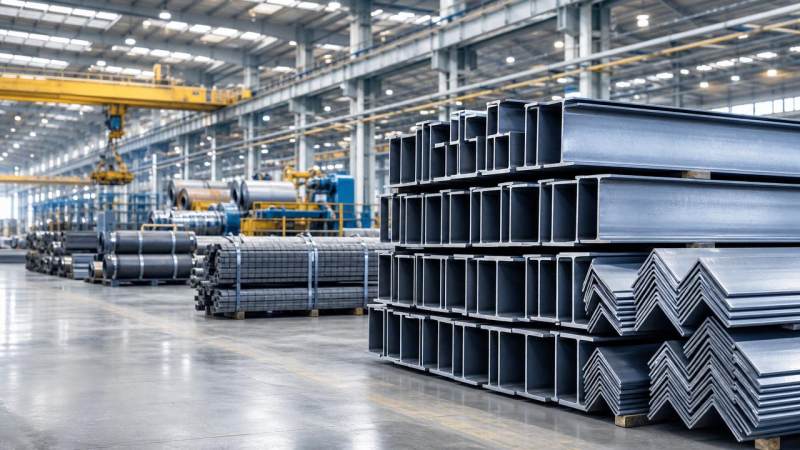
The first cost driver for steel construction materials is the upstream material market. Iron ore, coking coal, scrap steel, ferroalloys, and energy prices can change within weeks, and these movements directly affect mill quotations.
For business evaluators, the issue is not only today’s unit price. It is whether the supplier can maintain pricing discipline, explain cost changes, and support purchase planning over a 2–6 month project cycle.
Why raw material volatility matters
Structural steel is often purchased in large quantities, from several tons to hundreds of tons per shipment. A small price movement per ton can create a visible budget difference across beams, channels, angles, and fabricated components.
Evaluators should review whether quotations are valid for 3 days, 7 days, or 15 days. Short validity may reflect fast-changing raw material costs, while longer validity usually requires stable inventory or confirmed production scheduling.
Grade, standard, and performance requirements
Steel grade affects yield strength, tensile strength, weldability, chemical composition, and inspection cost. Common international standards include ASTM, EN, JIS, and GB, each with different dimensional and mechanical requirements.
For example, a project requiring ASTM-compliant steel beams may not have the same cost as a general GB specification. Tighter mechanical tolerances, traceability documents, and third-party inspection can add cost but reduce acceptance risk.
The following table shows how typical material-related choices influence the landed value of steel construction materials for international construction and industrial projects.
The key lesson is simple: the cheapest listed grade is not always the lowest-risk option. Correct grade matching can prevent rework, delayed approval, and replacement costs after arrival.
Manufacturing Complexity, Fabrication, and Quality Control
Manufacturing complexity is one of the most important cost elements beyond raw steel. Standard angle steel, channel steel, and steel beams are usually more predictable than customized structural steel components.
When drawings include cutting, drilling, punching, bending, welding, surface preparation, or special packaging, the supplier must calculate labor, machine time, tolerance control, and inspection steps.
Standard profiles versus customized components
Standard profiles benefit from repeat production and common sizes. Customized parts often require CAD review, tooling adjustment, trial production, and a 2–5 step quality verification process before shipment.
For steel construction materials used in building frames, warehouses, platforms, and equipment supports, dimensional accuracy affects installation speed. A deviation of only several millimeters can create alignment issues on site.
Quality control checkpoints to request
- Material certificate review before production starts.
- Dimensional inspection for length, thickness, hole position, and straightness.
- Surface inspection after galvanizing, painting, or other finishing work.
- Packing inspection to reduce rust, deformation, and handling damage during 15–45 days of transport.
Although structural steel is the main category for many construction buyers, stainless steel may also appear in mixed projects. In corrosive, decorative, food-related, or medical environments, a product such as 304 Stainless steel pipe can be evaluated as part of the wider material package.
This universal stainless steel pipe is based on 304 stainless steel and is known for corrosion resistance, mechanical properties, workability, and cost-effectiveness. Typical options include lengths of 3000–12000mm, outside diameters from 6mm to 2500mm, and thicknesses from 0.6mm to 30mm, with surface finishes such as No.1, 2B, BA, 2K, and 8K.
For evaluators, the practical point is to avoid comparing stainless pipe pricing directly with carbon structural profiles. Material chemistry, finishing requirements, and application environments are different, so they should be assessed under separate technical and commercial criteria.
How quality control affects total cost
A supplier with strict in-process inspection may quote slightly higher than a trading-only source. However, the difference can be justified if it reduces rejected batches, late site modifications, or disputes at customs clearance.
Hongteng Fengda manufactures and exports structural steel products from China, including angle steel, channel steel, steel beams, cold formed steel profiles, and customized components. Its value for global buyers lies in combining production capacity with standard compliance and practical export support.
Logistics, Packaging, and International Trade Terms
For global procurement, the price of steel construction materials is incomplete without freight, port charges, insurance, documentation, and inland transportation. A low EXW price may become expensive after logistics are added.
Steel is heavy, long, and sometimes difficult to load efficiently. Beams of 6m, 9m, or 12m lengths require suitable container planning, bulk shipment, or breakbulk arrangements depending on project volume.
Trade terms change cost responsibility
Business evaluators should compare quotations under the same trade term. FOB, CFR, CIF, DAP, and EXW shift responsibility at different points, and they affect risk visibility.
A fair comparison should include at least 5 items: product price, export packing, local transport, ocean freight, and destination handling. For urgent projects, air freight is rarely practical for heavy steel due to cost.
The table below outlines common logistics elements that influence the landed cost and delivery reliability of structural steel shipments.
The conclusion is that logistics should be evaluated as a cost-control system, not a final administrative step. Poor packaging or unclear trade terms can erase savings gained from a lower material quotation.
Regional buying considerations
Buyers in North America, Europe, the Middle East, and Southeast Asia often focus on different cost risks. Some prioritize ASTM or EN compliance, while others need fast delivery to support site schedules.
A China-based structural steel manufacturer with export experience can help align documents, packing, and production milestones. This support is especially useful when orders involve 3 or more product categories.
Supplier Reliability and Total Cost of Ownership
Supplier reliability is often underestimated in cost analysis. A quotation is only one part of the decision; the real cost includes communication accuracy, technical review, production stability, and after-sales coordination.
For business evaluators, the total cost of ownership should consider at least 4 dimensions: purchase price, delivery risk, quality risk, and project coordination cost.
What reliable suppliers help you avoid
Low-cost suppliers may be suitable for simple, repeat orders. However, complex steel construction materials require technical communication, drawing confirmation, and production control across multiple stages.
If a supplier cannot confirm tolerances, standards, surface treatment, or delivery sequence clearly, the buyer may face hidden costs such as redesign, re-inspection, delayed installation, or emergency local sourcing.
A 6-point supplier evaluation checklist
- Confirm manufacturing capability for standard profiles and customized structural components.
- Check whether products can follow ASTM, EN, JIS, or GB standards as required.
- Review quality control procedures from raw material arrival to final packing.
- Ask for realistic production lead times, usually expressed in weeks rather than vague promises.
- Evaluate export documentation experience for the destination market.
- Compare responsiveness during quotation, drawing review, and order confirmation.
How Hongteng Fengda supports cost control
Hongteng Fengda focuses on structural steel manufacturing and export, serving construction, industrial, and manufacturing projects. Its product scope covers angle steel, channel steel, steel beams, cold formed profiles, and OEM components.
For evaluators managing international sourcing, this integrated supply capability can reduce coordination work. Instead of splitting 3–5 steel categories across multiple vendors, buyers can consolidate specifications with one technical team.
The practical advantage is not only price. Stable production capacity, consistent quality control, and dependable lead times help buyers reduce procurement uncertainty and keep project milestones under control.
How to Compare Quotations Beyond the Unit Price
A professional comparison of steel construction materials should normalize all quotations before decision-making. That means aligning standards, dimensions, tolerances, surface treatment, packaging, trade terms, and delivery schedules.
If one supplier quotes FOB and another quotes CIF, or one includes galvanizing while another lists black steel, the unit price comparison is misleading. A structured review avoids costly assumptions.
Use a 5-step commercial review process
- Define product scope by profile type, grade, standard, dimension, and quantity.
- Confirm drawings, tolerances, surface treatment, and inspection documents.
- Request quotation under the same trade term and destination assumptions.
- Calculate landed cost, including freight, duties, local handling, and storage exposure.
- Assess supplier reliability through communication, schedule clarity, and quality control evidence.
Common mistakes in procurement evaluation
One common mistake is treating all steel as interchangeable. In reality, steel beams, cold formed sections, stainless pipes, and fabricated assemblies have different production routes and cost structures.
Another mistake is delaying technical confirmation until after price negotiation. If drawings change after production planning, buyers may face revised costs, extended lead times, or rejected delivery schedules.
A third mistake is ignoring supplier service capability. For cross-border projects, response time within 24–48 hours, accurate packing details, and clear document review can be as valuable as a small price discount.
Conclusion: Focus on Value, Risk, and Delivery Certainty
The cost of steel construction materials is shaped by raw material markets, grade selection, fabrication complexity, quality control, logistics, trade terms, and supplier reliability. Each factor can influence both price and project risk.
For business evaluators, the best decision is rarely based on the lowest unit price alone. A balanced assessment should compare technical compliance, delivery confidence, documentation accuracy, and total landed cost.
Hongteng Fengda provides structural steel products and customized solutions for global buyers who need reliable supply from China. With experience in standard profiles, OEM components, and international standards, the company supports practical cost control and project execution.
If you are comparing suppliers, planning a construction budget, or reviewing long-term sourcing risk, contact Hongteng Fengda to discuss specifications, lead times, and customized structural steel solutions for your next project.
Please give us a message


Please enter what you want to find