When comparing Galvanized cold drawn soft hard steel wire rod for cold drawn wire with bare wire rod, multiple cost drivers—such as ASTM standard steel pipe–level surface treatment, precision cold drawing, hot-dip galvanizing, and stringent quality control per EN/GB/ASTM standards—significantly increase production complexity and material costs. As a leading H-beam manufacturer China and trusted Steel Rod high strength supplier, Hongteng Fengda helps procurement personnel, technical evaluators, and project managers understand these cost factors to optimize sourcing decisions—whether you're a Profile steel distributor in Europe or a pipe stainless steel supplier serving global infrastructure projects.
Why Galvanized Cold Drawn Wire Rod Commands a Premium
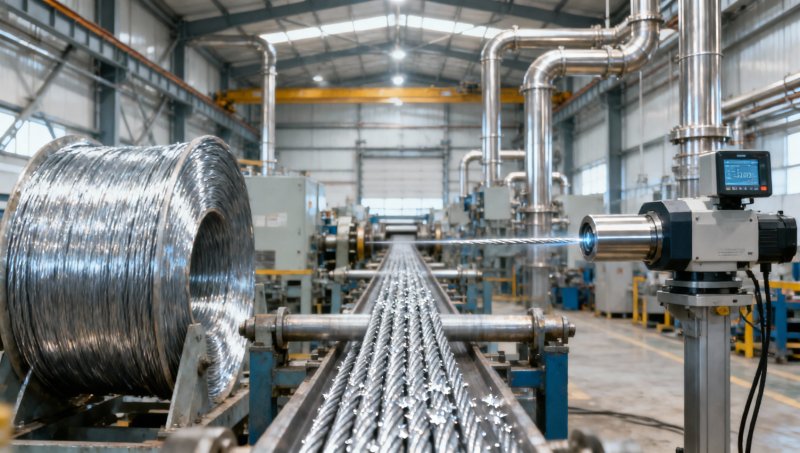
Galvanized cold drawn soft hard steel wire rod isn’t simply “bare wire rod + zinc.” It’s a multi-stage engineered product where each process layer adds verifiable value—and measurable cost. Unlike bare wire rod (typically supplied in hot-rolled condition, meeting ASTM A510 or GB/T 342), galvanized cold drawn variants undergo at least four sequential value-add stages: controlled hot rolling, pickling & annealing, precision cold drawing (to ±0.03 mm tolerance), and hot-dip galvanizing (with minimum 275 g/m² coating mass per ASTM A123). Each stage requires dedicated equipment, calibrated process parameters, and real-time metallurgical validation.
The cold drawing step alone increases raw material yield loss by 8–12% due to scale removal and dimensional correction. Galvanizing introduces additional overhead: zinc consumption (1.8–2.2 kg per ton of wire), bath temperature control (450–465°C), and post-galvanizing passivation (chromate or phosphate). These aren’t optional steps—they’re mandatory to achieve the 2–4× corrosion resistance uplift that justifies specification in coastal infrastructure, utility grounding systems, or pre-stressed concrete applications.
Moreover, compliance isn’t binary—it’s layered. A single coil must simultaneously satisfy mechanical requirements (e.g., tensile strength ≥ 700 MPa, elongation ≥ 5% per EN 10219), coating adhesion (no flaking after 180° bend test per ASTM A90), and surface finish (Ra ≤ 1.6 µm for drawing dies). This cross-standard verification drives inspection frequency up by 3× versus bare rod, directly impacting labor and QA overhead.
Cost Breakdown: Where the Margins Accumulate
Understanding cost drivers enables smarter trade-offs—not just price comparisons. Below is a realistic cost allocation model based on actual production data from certified Chinese mills exporting to EU and North American markets:
Note: Bare wire rod typically stops at Stage 1, with no cold drawing or galvanizing. Its cost structure reflects only raw material and basic rolling—making it 35–45% lower in landed cost for non-corrosive, non-precision applications. However, when failure risk rises (e.g., underground cable armoring or seismic bracing), the total cost of ownership shifts decisively toward the premium variant.
How S220GD Galvalume Steel Coil Fits Into the Broader Corrosion Protection Strategy
While galvanized cold drawn wire rod excels in high-tensile, high-corrosion environments, alternative protection strategies exist—especially where heat resistance, long-term atmospheric durability, or formability are critical. The S220GD Galvalume Steel Coil represents one such strategic alternative. With its 55% aluminum–43.5% zinc–1.5% silicon alloy coating, it delivers 2–4× the service life of conventional galvanized steel in industrial and marine atmospheres—without requiring cold drawing or secondary processing.
Its yield strength (≥220 MPa) and elongation (≥18%) make it ideal for roll-formed structural components, HVAC ducting, and roofing substrates—applications where galvanized wire rod would be over-engineered. For distributors evaluating material substitution across projects, this distinction matters: galvanized cold drawn wire rod solves *mechanical + environmental* dual challenges, while Galvalume coil solves *long-term atmospheric endurance* at lower forming cost.
Hongteng Fengda supports cross-product evaluation with unified certification coverage (ASTM, EN, GB, JIS) and shared logistics infrastructure—enabling coordinated shipments of structural beams, cold formed profiles, and coated coils under one QC protocol and delivery schedule (typical lead time: 25–35 days ex-works Tianjin).
Procurement Decision Checklist: What to Verify Before Ordering
For procurement, technical, and finance stakeholders jointly assessing wire rod options, here are five non-negotiable verification points—backed by real-world failure analysis from 2021–2023 infrastructure tenders:
- Coating mass verification: Require mill test reports showing actual Zn coating weight (g/m²) measured per ASTM A90, not just nominal spec. Deviation > ±15 g/m² indicates bath instability.
- Cold draw tolerance audit: Confirm dimensional compliance via third-party CMM report on 3 random coils per lot—not just supplier self-declaration.
- Intergranular corrosion testing: For coastal or chemical plant use, insist on ASTM G108 (electrochemical potentiokinetic reactivation) to rule out sensitization risks.
- Traceability documentation: Batch-level heat number linkage from billet to final coil—mandatory for EN 10219-compliant projects in EU public works.
- Lead time buffer: Allow minimum 7-day buffer for galvanizing line scheduling—unlike bare rod, galvanized wire cannot be expedited without compromising coating uniformity.
Why Partner With Hongteng Fengda for Structural Steel Sourcing
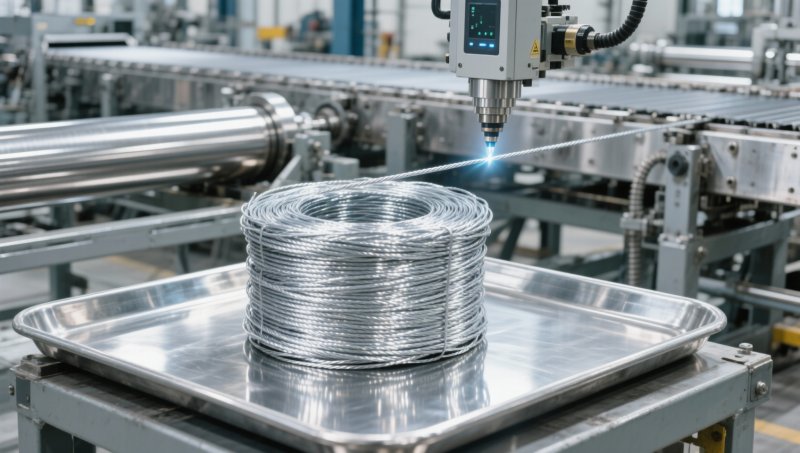
As a vertically integrated structural steel manufacturer—not a trading company—Hongteng Fengda controls every node from billet casting to final coating. Our Tianjin facility maintains dedicated lines for cold drawing (with inline laser micrometers), continuous galvanizing (capacity: 120,000 MT/year), and full-lot mechanical testing (tensile, bend, impact, salt spray per ISO 9227). This integration eliminates supply chain handoffs that inflate cost and delay traceability.
We support your decision-making with actionable data—not brochures: free sample coils with full MTRs, pre-shipment dimensional audits, and co-engineering sessions to validate wire rod performance in your specific die geometry or anchoring system. For buyers managing multi-project portfolios across ASEAN, GCC, or EU regions, we offer consolidated logistics planning, dual-certification batches (ASTM + EN), and flexible payment terms tied to milestone inspections.
Ready to benchmark galvanized cold drawn wire rod against your current specs—or explore how S220GD Galvalume Steel Coil could reduce lifetime maintenance in sheet metal applications? Contact our technical sales team for: (1) custom coating mass calculations, (2) cold draw feasibility assessment, (3) EN/ASTM compliance gap analysis, or (4) OEM packaging and labeling support. Response time: under 4 business hours.
Please give us a message


Please enter what you want to find