What really drives the cost of 304 stainless steel pipe?
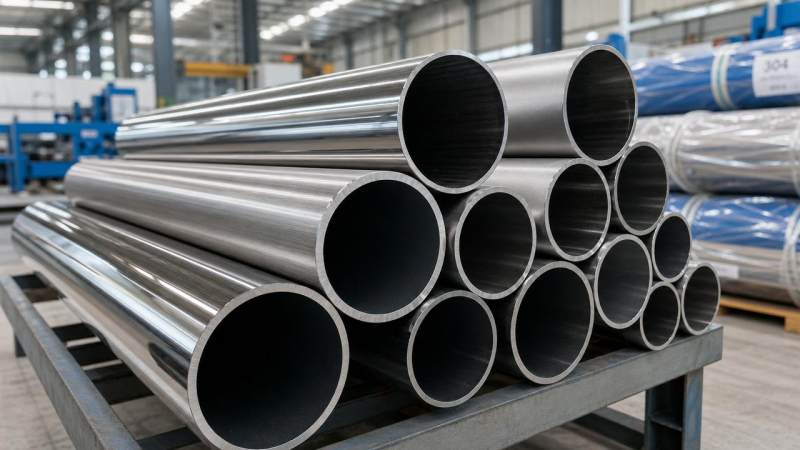
The price of 304 stainless steel pipe rarely comes down to one number.
Quoted rates may look similar at first, yet total landed cost can vary more than expected.
That happens because pipe cost is shaped by dimensions, finish requirements, testing scope, packaging, and order scale.
In practice, the cheapest offer is not always the most economical one.
A lower unit price may hide longer lead times, looser tolerances, or extra processing charges.
For 304 stainless steel pipe used in construction, fabrication, and industrial systems, detail matters.
That is especially true when comparing overseas sources with different standards and production routes.
Suppliers with stable manufacturing, standard compliance, and export experience often help control hidden risk.
Companies such as Hongteng Fengda, known for structural steel and custom supply support, are often evaluated on that basis.
Does pipe size affect cost more than buyers expect?
Yes, and not only because larger pipes use more metal.
With 304 stainless steel pipe, size changes both raw material consumption and manufacturing difficulty.
Outer diameter, wall thickness, and length all influence the final quote.
Thicker wall sections increase weight quickly, which directly raises material cost.
Small diameter pipe can also be expensive when precision tolerances are tight.
Non-standard lengths may add cutting losses, extra handling, and lower production efficiency.
Welded and seamless options should also be separated during comparison.
Even within the same grade, production route changes cost structure.
A useful way to review size impact is to look beyond price per ton.
Check price per meter, weight per piece, and scrap rate after fabrication.
This table often explains why two 304 stainless steel pipe quotes are not truly equal.
How much does surface finish change the final price?
More than many buyers assume, especially in decorative or hygienic applications.
Mill finish pipe is usually the starting point.
Once polishing, brushing, pickling, passivation, or mirror treatment is added, processing cost rises.
The increase is not only labor related.
Higher finish grades need better surface consistency, stronger packaging, and stricter quality checks.
That means a polished 304 stainless steel pipe may carry extra cost before shipping even begins.
It helps to ask one practical question.
Is the finish functional, visual, or both?
For concealed industrial lines, a premium finish may add little value.
For exposed architectural work, finish quality can affect installation appearance and downstream rework.
In related stainless projects, this logic also applies to bar and profile products.
For example, 306 Stainless Square steel rod may be selected with black, bright polished, rough turning, matt, No. 4, or BA surfaces depending on application.
That kind of finish choice changes appearance, handling, and process cost in much the same way.
Is order volume the easiest way to reduce 304 stainless steel pipe cost?
Often yes, but only when volume matches production logic.
Larger orders can lower the unit price of 304 stainless steel pipe through better coil utilization and fewer setup changes.
Batch production also improves packaging efficiency and container loading.
Still, volume discounts are not automatic.
Mixed sizes, split finishes, or repeated partial shipments can weaken the benefit.
A large order with many special requirements may cost more than a smaller standard batch.
More common savings come from smart consolidation.
- Combine similar wall thicknesses where design allows.
- Use standard export lengths when secondary cutting is acceptable.
- Align finish requirements across the same project section.
- Plan full-container quantities to improve freight economics.
This is where an experienced exporter can be useful.
A supplier familiar with ASTM, EN, JIS, and GB workflows can often suggest order structures that reduce waste without changing the design intent.
Why do two quotes for the same 304 stainless steel pipe still look different?
Because “same pipe” can mean very different commercial assumptions.
One quotation may include test certificates, end protection, seaworthy packaging, and third-party inspection.
Another may cover only basic production.
Lead time is another hidden difference.
Faster delivery often means priority scheduling or using smaller stock lots, both of which can raise cost.
Freight terms also reshape comparisons.
EXW, FOB, CFR, and delivered pricing should never be treated as interchangeable.
The same caution applies when comparing stainless pipe with adjacent stainless products.
A material such as the linked square rod in 201 stainless steel may offer higher formability and good pressure flexibility for certain parts, yet it is not a direct substitute for 304 pipe in corrosion-sensitive service.
That distinction matters when quotes seem unusually low.
A quick comparison checklist helps
- Grade confirmation: 304 chemistry and standard reference.
- Pipe type: welded or seamless.
- Tolerance basis: OD, wall, straightness, length.
- Finish scope: mill, brushed, polished, passivated.
- Documentation: MTC, test reports, inspection witness.
- Trade term and packing standard.
What mistakes usually lead to higher total procurement cost?
The most common mistake is focusing only on the headline ton price.
That overlooks processing losses, replacement risk, and shipment timing.
Another issue is under-specifying the order.
If the finish, tolerance, or testing requirements stay unclear, suppliers will quote on different assumptions.
The result is confusion rather than a true price comparison.
There is also a timing mistake.
Buying small emergency batches of 304 stainless steel pipe usually costs more than planning regular releases.
Material volatility can be managed better when demand is forecasted earlier.
A short decision table makes this easier to judge.
So how should 304 stainless steel pipe quotes be evaluated?
Start with the technical baseline, not the price line.
Confirm grade, dimensions, tolerance, finish, standard, and delivery term first.
Then compare production route, inspection scope, and packaging detail.
Only after that does the unit price of 304 stainless steel pipe become meaningful.
In steel sourcing, cost control is usually a combination of specification clarity and supplier stability.
That is why long-term exporters with modern facilities, quality control discipline, and dependable lead times often deliver better project value than isolated low-price offers.
A practical next step is simple.
List your exact sizes, define the necessary finish, group realistic order volumes, and compare quotations on the same commercial basis.
That approach makes it much easier to judge whether a 304 stainless steel pipe quote is genuinely competitive or only looks cheaper at first glance.
Please give us a message


Please enter what you want to find