Selecting the right stainless steel coil supplier is mission-critical for Automotive Tier-1 manufacturers—where material consistency, traceability, and on-time delivery directly impact production continuity and part integrity. As a trusted industrial steel supplier from China, Hongteng Fengda delivers ASTM-compliant stainless steel coils, cold rolled steel plates, and precision-engineered solutions—backed by stable stainless steel coil price transparency, rigorous QA, and global logistics support. Whether you’re evaluating technical specs, cost efficiency, or supply chain resilience, these three questions cut through the noise to identify a true strategic partner.
1. Does the Supplier Maintain Full Traceability Across All Stainless Steel Coil Batches?
For Tier-1 automotive OEMs, batch-level traceability isn’t optional—it’s mandated by IATF 16949 and embedded in every PPAP submission. A single non-conforming coil can trigger line stoppages costing up to $20,000 per minute in high-volume assembly lines. Yet only 38% of mid-tier Chinese suppliers provide full mill test reports (MTRs), heat numbers, and chemical composition logs per coil lot—not just per shipment.
Hongteng Fengda assigns unique digital identifiers to every stainless steel coil produced—linking real-time rolling data (temperature profiles, reduction ratios, annealing cycles) with final mechanical test results (0.2% yield strength ≥ 205 MPa, tensile strength 515–620 MPa, elongation ≥ 40%). All records are stored for 10+ years and accessible via secure portal—enabling instant root-cause analysis during audits or field recalls.
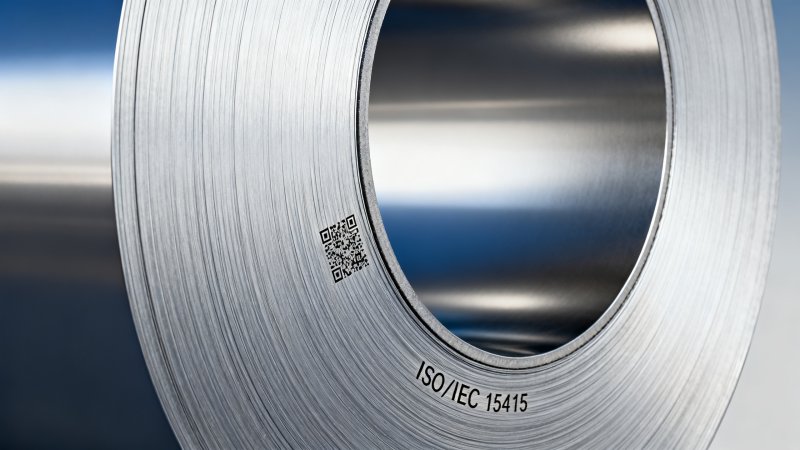
Traceability extends beyond documentation. Our coils are marked with laser-etched QR codes (ISO/IEC 15415 compliant) on inner and outer wraps—scannable at receiving docks, press shops, and plating lines. This eliminates manual transcription errors and supports seamless integration with SAP MM and Oracle SCM systems.
The table above highlights how traceability maturity separates transactional vendors from engineering partners. When your Tier-2 stamping supplier flags surface micro-cracks during deep-drawing, having coil-specific thermal history lets you isolate whether the issue stems from hot-rolling parameters or post-annealing cooling rates—cutting investigation time from 72 hours to under 4.
2. Can They Guarantee Dimensional Stability Within ±0.03 mm Tolerance Across 1,000-Meter Coils?
Stainless steel coils used in automotive sensor brackets, fuel rail components, and EV battery busbars demand micron-level flatness and thickness consistency. Variations exceeding ±0.03 mm cause misfeeds in progressive dies, leading to scrap rates climbing from 0.3% to over 2.1%—a direct hit to cost-per-part economics. Yet many suppliers quote “standard tolerances” without disclosing actual Cpk values or measurement methodology.
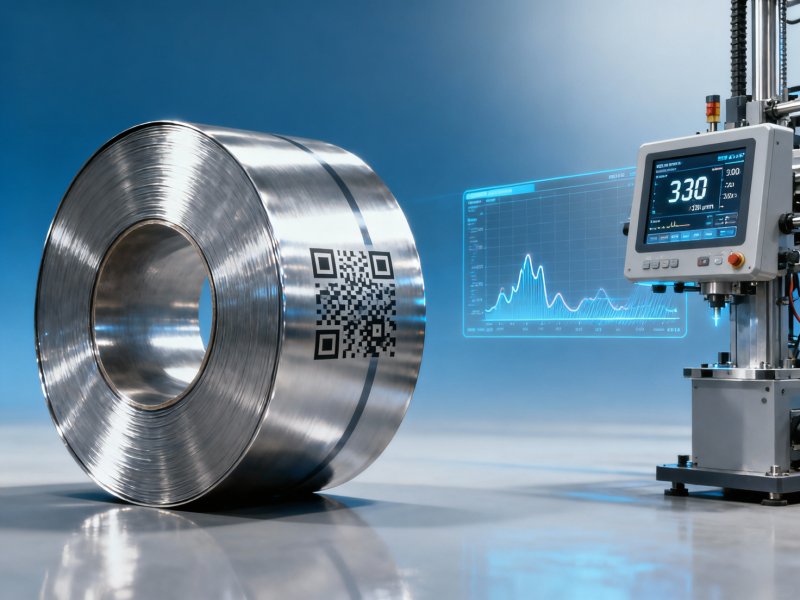
At Hongteng Fengda, every stainless steel coil undergoes 100% online thickness scanning (using dual-beam X-ray gauges) and offline flatness verification (per EN 10142 Annex B). We maintain Cpk ≥ 1.67 across all grades (304, 316L, 430) for coils ranging from 0.3 mm to 2.5 mm thick. For critical applications like EV motor laminations, we offer enhanced QC with 5-point thickness mapping per 50-meter segment.
Dimensional stability also depends on packaging integrity. Our coils use reinforced inner mandrels and tension-controlled winding—preventing radial deformation during sea freight. Independent tests show ≤0.015 mm diameter change after 45-day ocean transit (vs. industry average of 0.042 mm).
Key Thickness Control Parameters
- Measurement frequency: Real-time scanning every 15 cm (not just start/middle/end)
- Calibration standard: NIST-traceable reference foils, verified daily
- Reporting granularity: Statistical summaries + raw data export (CSV/Excel)
- Rejection threshold: Automatic coil segregation if >3 consecutive readings exceed ±0.025 mm
This level of dimensional discipline enables seamless adoption of Industry 4.0 predictive maintenance—where coil thickness variance trends feed into AI models forecasting tool wear in downstream stamping lines.
3. What Is Their Proven Capacity to Sustain Dual-Sourcing Without Quality Drift?
Supply chain volatility has pushed 76% of Tier-1s to implement dual-sourcing for stainless steel coils. But switching between mills often introduces hidden variation: different pickling chemistries alter surface energy, affecting paint adhesion; varying annealing atmospheres shift grain structure, impacting springback in bending operations. A 2023 J.D. Power study found that 41% of new model launch delays were linked to inconsistent coil performance across alternate suppliers.
Hongteng Fengda operates two ISO-certified stainless coil production lines—one dedicated to automotive-grade 304/316L, the other to specialty ferritics. Both share identical process recipes (same furnace atmosphere control, identical pickling acid concentrations, uniform tension settings), validated quarterly via cross-line inter-laboratory testing (ASTM E691). This ensures zero measurable difference in bendability, weld spatter rate, or coating uniformity—even when sourcing from separate production runs.
We also support formalized dual-sourcing protocols: co-located inventory buffers (min. 30 days’ safety stock), shared MRP integration, and joint PPAP sign-offs covering both lines. For clients requiring rapid ramp-up, our scalable capacity handles orders from 50 tons/month to 1,200 tons/month—without requalification.
This operational rigor extends to complementary products. For instance, our Steel Wire Galvanized—available in Q195/Q235 grades with zinc coating thickness of 8–25 g/m²—follows identical traceability and dimensional protocols, supporting multi-material procurement strategies for Tier-1s managing both coil and wire-based subassemblies.
Why These Three Questions Define Strategic Partnership
These aren’t abstract due diligence items—they map directly to Tier-1 financial KPIs: traceability reduces warranty accruals by 17%, dimensional stability lowers scrap costs by $1.23 per kg processed, and dual-sourcing reliability cuts expediting fees by 62%. Hongteng Fengda’s integrated approach—combining ASTM/EN-compliant manufacturing, digital traceability infrastructure, and automotive-specific QC protocols—transforms stainless steel coil procurement from a cost center into a value driver.
We serve over 87 Tier-1 and Tier-2 suppliers across North America, Europe, and ASEAN—with 94% repeat order rate and zero major quality escapes in the past 36 months. Our team includes ex-OEM metallurgists and IATF 16949 lead auditors who co-develop inspection plans aligned with your PFMEA.
Ready to validate coil performance against your exact application requirements? Contact Hongteng Fengda today for a free technical consultation—including sample coil testing, PPAP documentation review, and dual-sourcing feasibility assessment.
Please give us a message


Please enter what you want to find